This post may contain affiliate links, If you choose to buy through these links, I may receive a small commission at no additional cost to you.
Imagine waking up and checking your phone to see a message from your tomato plant: “Hey, I’m a bit thirsty and my leaves look like they might have an early blight fungus. I’ve already adjusted the irrigation, but you might want to check the underside of my stems.” This isn’t science fiction or a scene from a futuristic movie. This is the reality of Smart Gardening 101: How to Build an Automated, AI-Powered Garden for $100. For years, high-tech farming was reserved for giant corporations with millions in funding. But in 2026, the walls have come down. Whether you have a massive backyard in the USA or a small apartment balcony in Bangalore, you can now build a “thinking” garden that grows your food for you, even while you sleep.
1. Why Is Everyone Suddenly Talking About Smart Gardens?
Let’s be honest : most of us kill plants because we’re busy. Life happens. We forget to water on a Tuesday, or we over-water on a Saturday out of guilt. Traditional gardening is a game of guesswork.
Smart gardening changes that by removing the “human error” factor. By using cheap sensors and AI models (like Gemini or ChatGPT), we can now give our plants a “voice.” People are searching for ways to save water, reduce food waste, and maximize yields in small spaces. Building an automated garden isn’t just about being “cool” with tech; it’s about food security and extreme efficiency.
2. Can AI Do Gardening?
This is the first question I get asked at every local garden meetup. People wonder if a machine can really handle something as delicate as a living plant. The answer is a resounding yes, but with a catch: AI doesn’t pick up the shovel; it acts as the “Brain.”
AI handles the data processing that humans find tedious. It can analyze soil pH levels, predict weather patterns to skip a watering cycle before it rains, and identify microscopic pests from a photo. It’s not about replacing the gardener; it’s about giving the gardener superpowers.
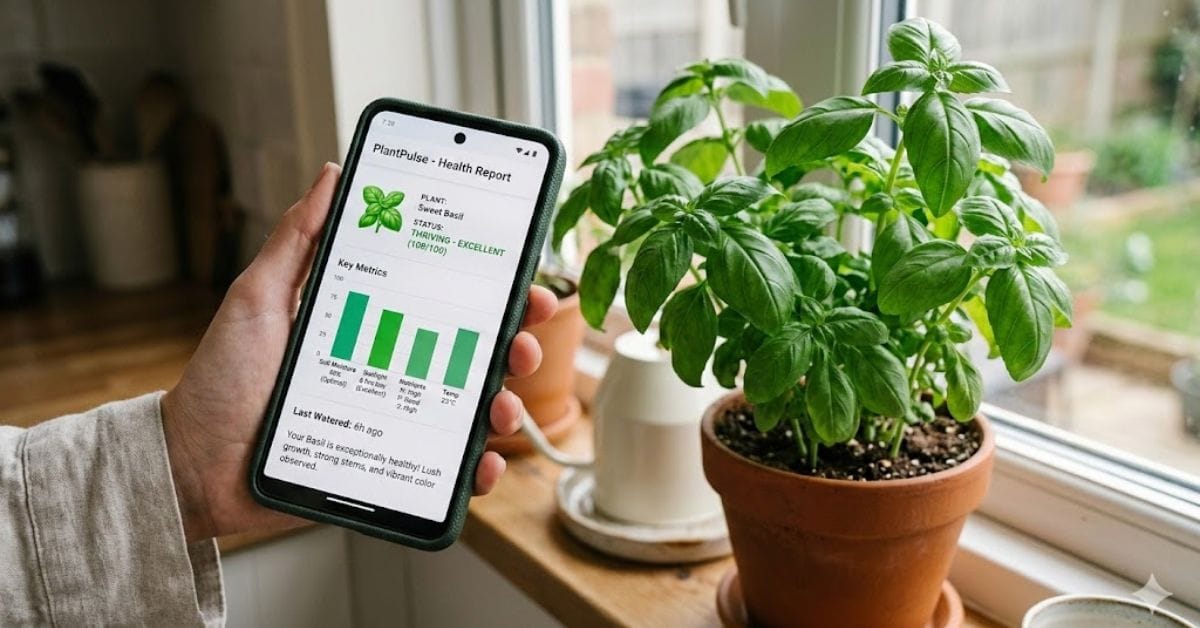
AI doesn’t just grow plants; it provides a real-time health report for your garden.
3. What Is the 30% Rule in AI?
If you are diving into smart tech, you’ll likely hear about the 30% rule in AI. In the context of smart gardening and automation, this rule is a safety net. It suggests that while AI can manage 70% of the repetitive tasks (watering, light monitoring, humidity), a human should still provide at least 30% of the oversight.
Why? Because nature is unpredictable. A sensor might get dirty, or a bird might knock a camera out of place. By keeping the 30% rule in mind, you ensure that you are still connected to your garden, checking in once or twice a week to verify the AI’s “decisions.”
4. How Does Google Use AI?
You might be using Google’s tech without even realizing it. Google uses AI in gardening through tools like Google Lens and Gemini. If you see a weird bug on your zucchini, you snap a photo with Google Lens, and their AI instantly identifies it.
Furthermore, Google’s weather algorithms are now integrated into many smart home hubs. When Google predicts a heatwave, your smart garden can preemptively deep-water your plants to prevent heat stress. They are also using massive AI models to help commercial farmers predict crop yields and optimize water usage across thousands of acres.
5. What Are Some Real World Examples of AI?
AI isn’t just for gardens. To understand how it helps your plants, look at these real world examples of AI:
Self-Driving Cars: They use sensors to “see” the road, just like your garden uses sensors to “see” the soil.
Predictive Text: Just as your phone guesses your next word, a smart garden predicts when a plant will need nutrients based on its growth stage.
Face Recognition: The same tech that unlocks your iPhone is used by smart cameras to “recognize” a ladybug (good) versus an aphid (bad).
6. The $100 Hardware Secret: What You Actually Need
You might think “AI-powered” means buying a thousand-dollar robot. Nope. The secret lies in affordable microcontrollers. Here is the shopping list to stay under that $100 mark:
To understand the technical power of your garden’s new brain, you can check the before starting your build. official ESP32 product details
The Brain: ESP32 Microcontroller ($8–$12). It has built-in Wi-Fi and Bluetooth.
The Senses: Soil Moisture Sensors ($5 for a pack of 3).
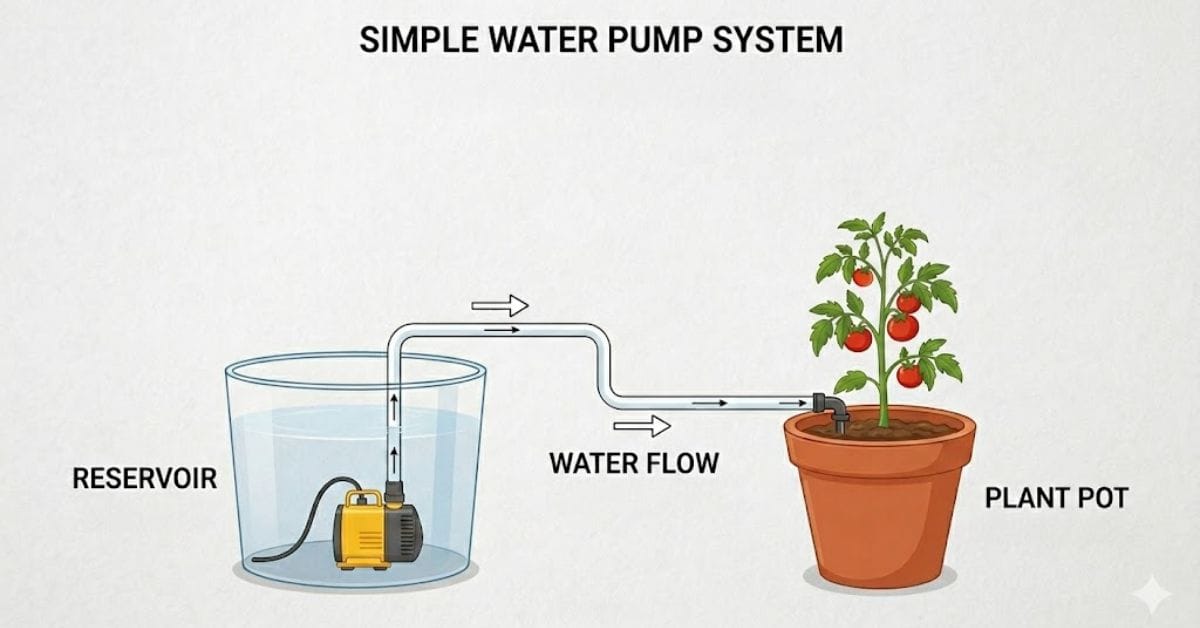
The Muscle: Mini Water Pump and Tubing ($15).
The Eyes: A cheap ESP32-CAM module ($10) to take photos for AI analysis.
The Power: 5V Power adapter or a small solar panel kit ($20).
The Housing: Recycled plastic containers or 3D-printed cases (Free to $10).
Pro Tip: Don’t buy “branded” smart garden kits. They charge you for the name. Buy the individual components from sites like Amazon, AliExpress, or local hobby electronics shops to keep costs low. This is the most affordable way to build an AI-powered automated garden.
7. DIY Auto-Watering: No More Dead Plants While You’re on Vacation
The most searched question in gardening is “How often should I water my plants?” The ideal amount varies daily, depending on the heat and humidity. When you build an AI-powered automated garden, you stop guessing.
You stick the moisture sensor into the soil. It sends a signal to the ESP32 brain. When the moisture level drops below 30%, the brain tells the mini-pump to turn on for exactly 10 seconds. The truth is, the answer changes every day based on humidity and heat. This approach is a core part of Climate Smart Gardening: High Yield with 50% Less Water
Zero Water Waste: Water goes directly to the roots.
Consistency: Your plants never experience the “drought-then-flood” stress that kills most vegetables.
Scalability: You can start with one pot and add ten more for just a few extra dollars in sensors.
Automating your watering is the easiest way to ensure your garden survives a vacation.
8. Using AI to Diagnose Plant Diseases (The “AI-Powered” Part)
This is where the magic happens. In 2026, you don’t need to be a botanist to know why your leaves are turning yellow.
You can set up your ESP32-CAM to take a photo of your plant once a day and upload it to a private folder. By using free AI API tiers, you can have the AI analyze the image. It looks for patterns : spots, wilting, or pests : that the human eye might miss.
The AI can tell you:
“Those yellow spots are a nitrogen deficiency. Add coffee grounds.”
“You have spider mites. Spray neem oil immediately.”
“The plant is leaning; it needs 2 more hours of sunlight.”
This level of insight used to cost a fortune in consulting fees. Now, it’s part of your $100 build.
9. How to Set Up Your Smart Garden Hub Without Being a Coder
Many people get scared of the word “programming.” Don’t be. You don’t need to write lines of complex code anymore.
Use Low-Code Platforms: Tools like ESPHome or Tasmota allow you to “describe” your garden in simple English, and they handle the “techy” stuff.
Open Source Communities: Look for “Smart Garden” templates on GitHub. You literally copy and paste the file onto your device.
App Integration: Connect your garden to a free dashboard like Home Assistant or Blynk. This lets you see your garden’s health on your phone from anywhere in the world.
10. Smart Gardening in India vs. Tier-1 Countries: The Global Shift
The beauty of this $100 model is that it solves different problems depending on where you live:
In India: It’s about Water Conservation. With erratic summers, an automated system ensures not a drop of water is wasted. It’s also perfect for terrace gardens in crowded cities like Mumbai or Hyderabad.
In USA/UK: It’s about Season Extension. AI sensors can trigger heat mats or grow lights when the winter frost hits, allowing you to grow peppers and tomatoes even when it’s snowing outside.
Globally: It’s about Organic Quality. When you control the data, you don’t need pesticides. You become the master of your own food chain.
To combine technology with a touch of elegance, you can also use these , which provide a steady water supply to your indoor plants while acting as a beautiful decor piece. Iridescent Glass Rainbow Self-Watering Globes
11. Common Mistakes Beginners Make (And How to Avoid Them)
Before you start to build an AI-powered automated garden,it is important to understand why most beginner gardens failand how to make yours work from the very first day. I’ve seen a lot of people try this and fail in the first week. Here’s how to stay in the game:
Waterproof Everything: Electronics and water don’t mix. Use a simple tupperware box to house your “brain” components.
Sensor Calibration: Cheap sensors can be “noisy.” Always test them in a cup of dry soil and a cup of wet soil first to set your high/low limits.
Power Stability: If your Wi-Fi goes down, does your garden die? Make sure your code has a “failsafe” to water on a basic timer if the internet cuts out.
12. Is It Really Possible for $100?
Yes, if you’re smart about it. The cost breakdown I gave earlier leaves you about $20–$30 for seeds, soil, and pots. If you use recycled materials (like old buckets or wooden pallets), you can actually build this for closer to $70.
The real value isn’t the $100 you spend : it’s the hundreds of dollars you save on groceries and the endless peace of mind knowing your garden is thriving while you’re at work or out with friends.
Your Next Step to a Smarter Home
Building an automated garden is the perfect “weekend project” that keeps on giving. It’s the ultimate mix of nature and technology. Now that you have the roadmap, it’s time to build an AI-powered automated garden that ensures a sustainable future for your home.