
This post may contain affiliate links, If you choose to buy through these links, I may receive a small commission at no additional cost to you.
Have you ever looked at the white bottom of a spring onion or the stump of a head of lettuce and just tossed it into the bin? It was my daily routine for a long time. Then, I realized I was throwing away free food.
Seriously, I felt like a total idiot when I realized how much money I was literally chucking into the trash can. We all complain about how expensive groceries are, and then we go home and throw away the very part of the plant that wants to keep living. It’s a habit we’ve been fed by supermarkets, but once you break it, you feel like you’ve found a secret cheat code for your kitchen.
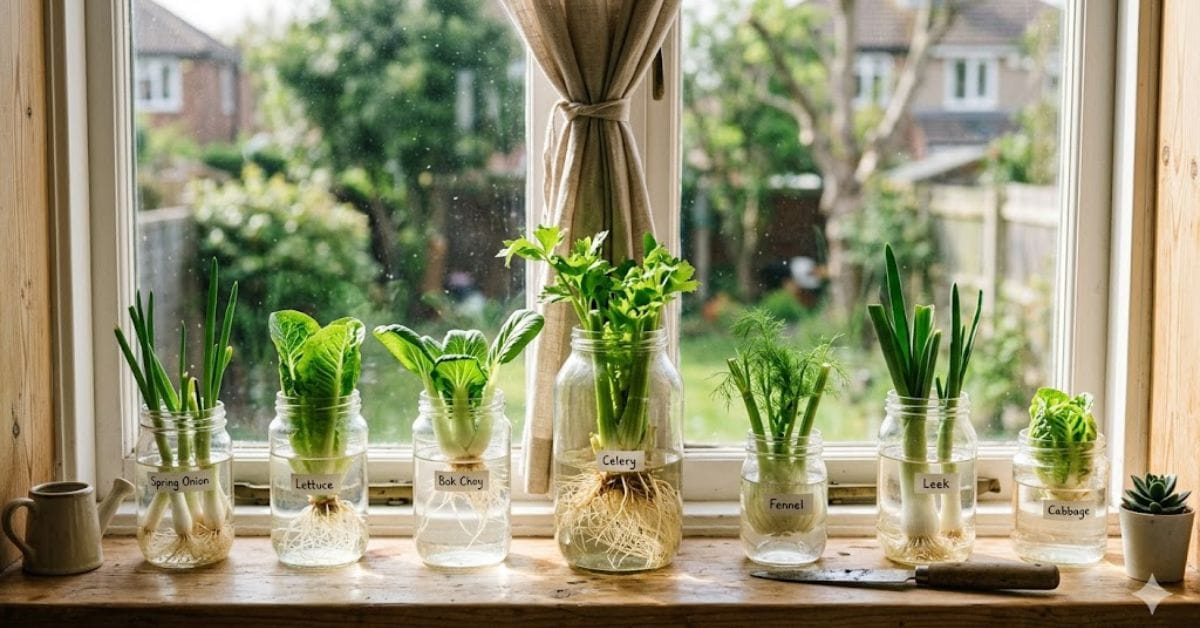
There is a weird, almost magical side of nature that most people ignore. Some vegetables are basically “immortal.” You can cut them, eat the top, put the leftover scrap in a simple glass of water, and they just… come back to life. No soil, no expensive fertilizers, and no backyard required. In the gardening world, we call these 7 ‘Zombie’ Vegetables You Can Regrow Indefinitely in Just Water.
Also Read: How Growing Your Own Greens Reduces Food Waste
Whether you are living in a cramped apartment in New York or a sunny flat in Mumbai, this is the ultimate hack to beat rising grocery prices. It’s not just about saving a few bucks; it’s about the pure satisfaction of seeing life sprout on your windowsill while you sip your morning coffee. Honestly, it’s a vibe. Seeing a tiny green shoot pop out of a piece of “trash” is the kind of small win we all need these days.
Can You Really Grow Food in Just a Glass of Water?
The short answer? Yes. But there’s a catch. You aren’t growing a 10-pound pumpkin in a jar. We are talking about regenerative growth.
I know, it sounds like some weird “internet myth,” but it’s just basic biology. Most people think plants need soil to survive. While soil provides nutrients, many vegetables have enough energy stored in their roots and stems to rebuild themselves using only water and sunlight. It’s like a biological “reset” button.
I started doing this during a rainy week when I couldn’t get to the store, and honestly, I haven’t bought green onions in three years. Three years! Think about that. You’re basically hijacking the plant’s survival instinct. It reacts as if saying, ‘Wait, I’ve lost my top! I need to grow back fast!” And because you’ve given it a clean glass of water and some sun, it has exactly what it needs to perform a mini-miracle right on your counter.
What Vegetables Can You Regrow in Water?
If you’re wondering exactly what can make the jump from your cutting board back to life, the list is surprisingly diverse. Generally, any vegetable that has a distinct “base” or “root crown” is a candidate. This includes:
Alliums: Spring onions, leeks, and shallots. (The easiest ones, hands down).
Leafy Greens: Lettuce, Bok Choy, and Cabbage. (These look the coolest as they unfurl).
Root Bases: Celery, Fennel, and even the tops of Carrots (for the greens, not the root).
Herbs: Mint, Basil, and Cilantro (via stem cuttings).
Now, when I’m at the grocery store, I don’t just look for “fresh” veggies. I’m looking for the ones with the biggest, healthiest-looking “butts.” If that base looks strong and has some roots attached, I know I’m getting a second and third meal for free.
1. Spring Onions: The Gateway “Zombie” Veggie
If you are a beginner, start here. Spring onions (or scallions) are the easiest plant to resurrect. They’re the “instant gratification” of the plant world. If you have kids, show them this it’s like magic to them.
The Method: Cut the green part off to use in your fried rice or soup. Keep the white bulb with the little hairy roots intact (about an inch long).
The Setup: Stand them upright in a small glass. Add enough water to cover the roots, but don’t submerge the whole thing. If you drown the bulb, it’ll turn into a stinky, mushy mess in two days.
The Result: You will literally see green shoots poking out within 24 hours. In a week, they’ll be tall enough to snip again. It’s like a never-ending supply of garnish. I’ve reached a point where I feel physically pained if I ever have to pay for these at a store.
2. Bok Choy: The Leafy Resurrection
Bok Choy is expensive in Tier-1 countries and often hard to find fresh in some parts of India. Instead of buying a new head every time, just save the base.
The Hack: Cut the base of the Bok Choy (the thick white part) and place it in a shallow bowl of water.
Maintenance: Change the water every two days. Slime is the enemy of the zombie garden.
What happens next: Within a week, you’ll see tiny yellow-green leaves emerging from the very center. It won’t grow back to a giant size, but you’ll get fresh, tender leaves perfect for a quick stir-fry. It’s basically free “baby” bok choy.
3. Celery: From Scrap to Crunchy Stalks
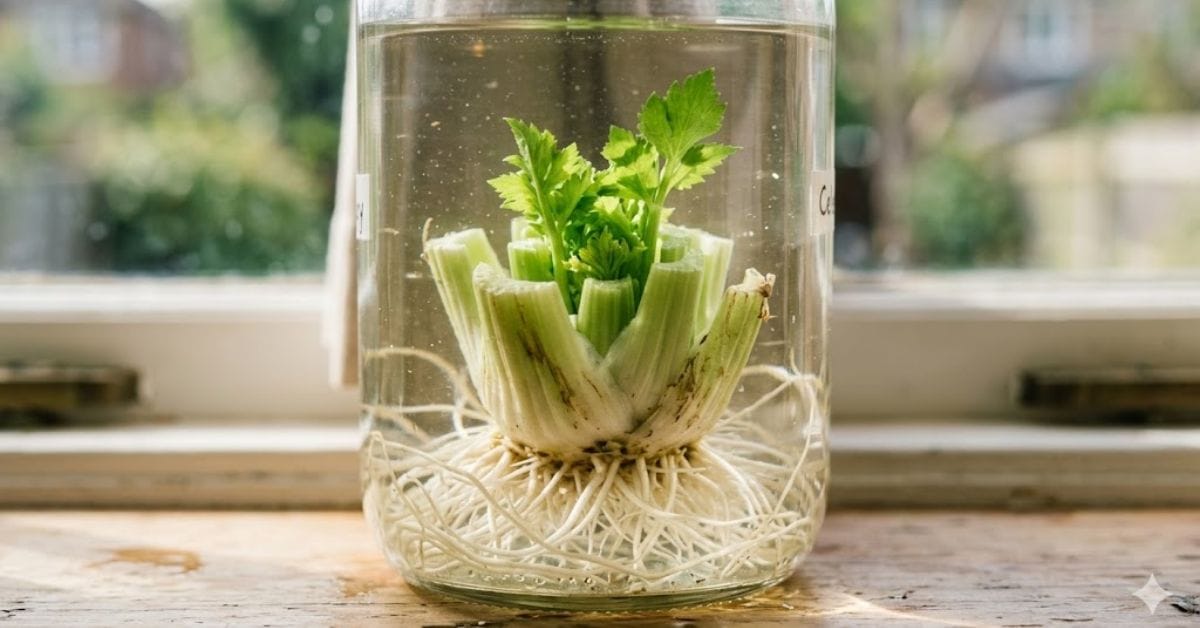
The thick, woody base of a celery bunch is usually disliked by most. To a “zombie” gardener, that base is gold. Seriously, don’t throw that chunky bottom part away it’s the powerhouse of the plant.
How to do it: Slice off the bottom two inches of the celery stalks. Place the flat base in a saucer of water.
Pro Tip: Keep it in a spot that gets plenty of bright, indirect light. Direct, scorching sun can sometimes “cook” the water and rot the base before it has a chance to grow.
The Timeline: Around day 5, you’ll see a miniature celery forest growing from the middle. Once the roots are strong, you can keep it in water or move it to a pot if you want it to get massive. The flavor of these homegrown stalks is so much punchier than the watery stuff from the supermarket.
4. Lettuce (Romaine and Butterhead)
Stop buying those plastic-wrapped heads of lettuce that wilt in three days. It results in an enormous drain on your wallet and a huge burden of plastic waste.
The Trick: Just like Bok Choy, keep the bottom core.
The Water Factor: Lettuce is mostly water, so it’s very sensitive to slime. You MUST change the water daily. If the water gets cloudy, your lettuce is basically screaming for a fresh drink.
The Harvest: You won’t get a whole new “head” of lettuce, but you will get enough fresh leaves for a sandwich or a side salad every few days. It’s the freshest crunch you’ll ever experience : literally minutes from “harvest” to plate.
5. Cabbage: The Hardy Survivor
Cabbage is tough. It can handle temperature swings and a bit of neglect, making it a great “zombie” candidate. I’ve forgotten about cabbage stumps for days and they still keep trying to push out new leaves.
The Process: Take the leftover root end and put it in a shallow container.
Growth: It grows a bit slower than onions, but the leaves that sprout are incredibly nutrient-dense.
India/Global context: This works with almost any variety : red cabbage, green cabbage, or even Savoy. It’s a great way to always have a little extra “crunch” for your salads or tacos.
6. Leeks: The Gourmet “Grown-for-Free” Herb
Leeks can be pricey. They look like giant spring onions and behave exactly like them. If you like fancy French cooking or just a solid potato-leek soup, this is your new best friend.
The Method: Use the white bottom part. Since leeks are thicker and taller, use a slightly deeper jar so they don’t tip over once the new growth gets heavy.
Benefit: Leeks grown in water tend to have a milder, sweeter flavor than the ones grown in dirt. Plus, you don’t have to spend half an hour washing sand out of the layers!
7. Fennel: The Aromatic Surprise
Fennel is a favorite in European kitchens and used for its seeds in India (Saunf). But the fresh fronds are amazing in salads.
The Setup: Take the base of the bulb, leave about an inch, and sit it in a cup of water.
The Result: The feathery green fronds will shoot up quickly. They have a light licorice flavor that elevates any dish from “home-cooked” to “restaurant quality.” It makes you look like a pro chef with zero effort.
Which one truly deserves the title of the King of Vegetables?
While we love our water-grown scraps, if we talk about nutritional dominance and versatility, The Brinjal (Eggplant) is often crowned the “King of Vegetables” in South Asia. In the West, though, Broccoli or Kale usually takes the crown because everyone is obsessed with “superfoods.”
But, in the context of a home garden, many consider the Tomato the king because of its massive yield and the sheer difference in taste between home-grown and store-bought. But for us “zombie” gardeners? The Spring Onion is the undisputed king of convenience.
What Plants Can Grow in Water Indefinitely?
If you want a “set it and forget it” vibe, some plants are better suited for permanent water living than others. These aren’t just food; they’re roommates.
| Plant Name | Regrow vegetables in water status |
| Lucky Bamboo | High – Excellent for indoor water growth. |
| Pothos | Permanent – Can stay in water forever. |
| Spider Plants | High – Roots easily in water jars. |
| Mint | Unlimited – Use clippings to regrow vegetables in water. |
Curious about the 5 most nutrient-dense vegetables you can have?
To make your “Zombie Garden” even more effective, try to include these nutritional powerhouses in your diet. If you’re going to eat, eat the stuff that actually makes you feel good:
Spinach: Loaded with iron and vitamins.
Kale: A superfood packed with antioxidants.
Broccoli: High in fiber and Vitamin C.
Garlic: Famous for its medicinal and immune-boosting properties.
Sweet Potatoes: The ultimate source of healthy carbs and Vitamin A.
Why is Everyone Talking About This? The Global Shift to Reducing Food Waste
Let’s be real: inflation is hitting everyone hard. Whether you’re looking at the price of groceries in London or the local market in Hyderabad, prices are up. This era has been a bit of a wake-up call for our wallets. But beyond the money, there’s a huge movement toward Reducing Food Waste.
We waste nearly 30% of the food we buy. It’s insane. By regrowing these 7 ‘Zombie’ vegetables, you are effectively cutting your waste to zero. Plus, there’s no pesticide, no plastic packaging, and no “food miles” because the food traveled about three feet from your window to your plate. It’s a small way to take a little bit of power back.
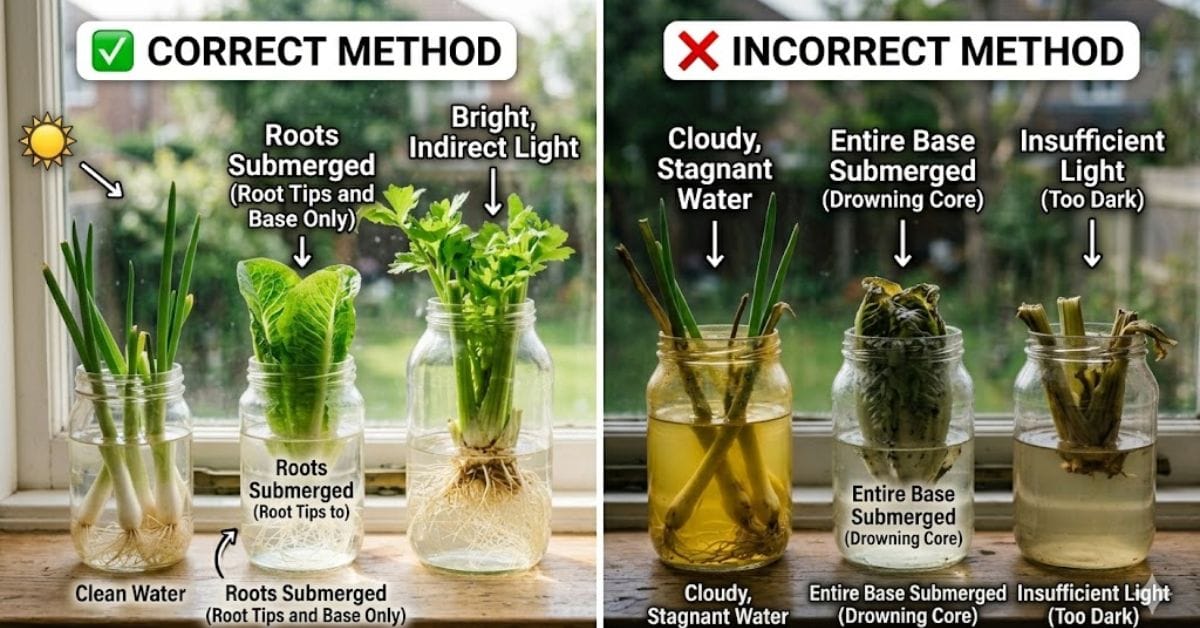
Common Mistakes: Why Do My Plants Rot?
Look, I’ve killed a lot of plants. If you’ve tried this before and failed, don’t sweat it. You probably made one of these three mistakes:
Too Much Water: You only need to cover the roots. If the whole stump is underwater, it can’t breathe. It’ll just turn into mush.
Dirty Water: Water gets stagnant. Bacteria moves in. Make sure to refresh the water every day or two. If it looks cloudy, it’s already rotting.
No Sunlight: These aren’t cave plants. They need light to do their magic. A windowsill is perfect, but don’t let them “cook” in direct, intense sun for 10 hours straight.
If your kitchen doesn’t get enough natural sunlight, using a GooingTop LED Grow Light with full spectrum white and red LEDs can ensure your plants stay healthy and vibrant year-round.
The “Indefinite” Myth: Can They Really Live Forever?
I want to be honest with you. While you can regrow these indefinitely in the sense that they will keep producing new growth, eventually, the plant might run out of “fuel.” Water is great, but it doesn’t have the minerals that soil does.
The Secret Hack: If you notice the growth slowing down after a few harvests, add a tiny drop of liquid organic fertilizer to the water. Or, better yet, once the roots are about 2 inches long, move them into a small pot with soil. They will go from “zombie” mode to “super-plant” mode instantly. It acts as an instant energy boost for your plants.
To give your plants that ‘espresso shot’ of energy, I recommend using a high-quality Hydroponic Plant Nutrients A and B set to provide the essential minerals needed for lush, long-term growth.
Don’t forget to reuse your leftovers: How to Turn Kitchen Scraps Into Useful Garden Fertilizer
How This Changes Your Kitchen Vibes
There is something incredibly peaceful about a “Water Garden.” It turns your kitchen into a living laboratory. Kids love it because they can see the roots growing : it’s like a science experiment they can actually eat.
If you are tired of the “buy-consume-trash” cycle, this is your way out. It’s simple, it’s free, and it’s honestly a bit addictive. Once you see that first green shoot emerge from a scrap of onion you were going to throw away, you’ll never look at your kitchen scraps the same way again. You start looking at every piece of “trash” as a potential plant.
Ready to start your own immortal garden? Grab an old jam jar, find a leftover onion, and let’s get growing. You’ve got nothing to lose but some trash.