
This post may contain affiliate links, If you choose to buy through these links, I may receive a small commission at no additional cost to you.
Watch the full video guide for this article here :
That question usually comes when you want to grow something but don’t have much space, time, or budget.
A pallet garden is one of those ideas that sounds simple and actually is if you do it the right way.
With one wooden pallet, a few basic tools, and some patience, you can grow herbs, greens, or even flowers right against a wall or on the ground.
This article walks you through the process like a friend explaining it, not like a manual. Small steps, practical tips, and things I wish people told me earlier.
1. What Is a Pallet Garden and How Do I Build a Pallet Garden?
A pallet garden uses a wooden shipping pallet as a vertical or flat planter. Instead of rows in the ground, plants grow in the gaps between pallet slats.
Why people like pallet gardens:
They save space
They’re low-cost or almost free
They work well for herbs and shallow-root plants
They look rustic and natural
You’ll often see them on balconies, small backyards, patios, or even leaning against a sunny wall.
2. Choosing the Right Pallet
Not all pallets are safe for gardening.
Look for:
Heat-treated pallets (marked HT)
Clean, dry wood
Strong boards that don’t crack easily
Avoid:
Pallets marked MB (chemically treated)
Pallets with oil stains or strange smells
Painted pallets (unless you know the paint is safe)
If the pallet smells odd or looks damaged, skip it. There’s always another one.
When using recycled materials like pallets for gardening, it’s important to choose safe, untreated wood. This guide from GrowVeg explains how to use recycled materials responsibly in the garden.
Simple bamboo plant support stakes like these help keep plants upright and healthy in a pallet garden.
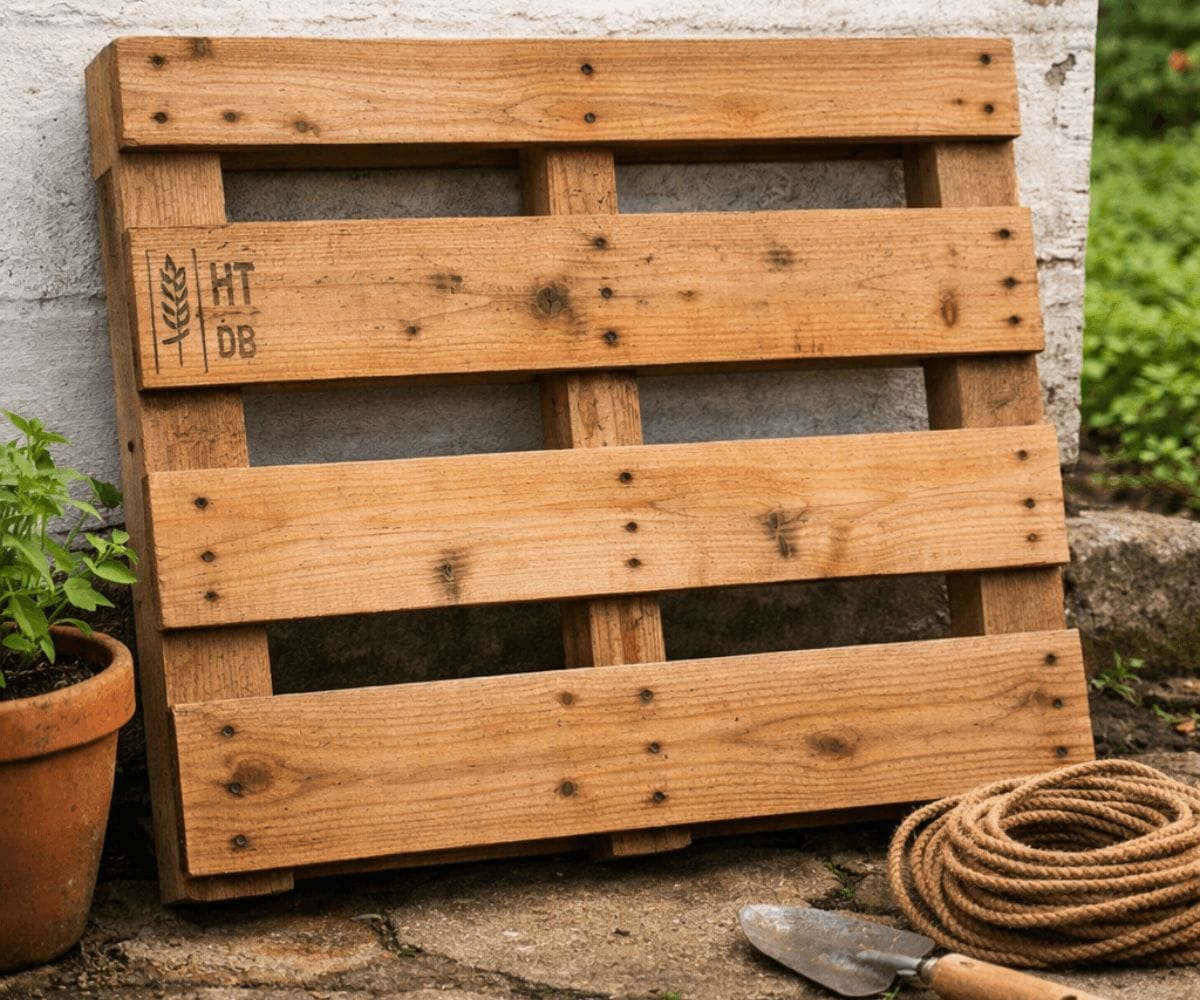
3. Tools and Materials You’ll Need
You don’t need much.
Basic list:
One wooden pallet
Landscape fabric or burlap
Staple gun and staples
Potting soil
Small hand trowel
Plants or seeds
Sandpaper (optional)
If you want to hang it:
Screws
Wall hooks or brackets
Keep it simple the first time.
4. Preparing the Pallet
Lay the pallet flat on the ground with the back facing up.
Step-by-step:
Sand rough edges so you don’t get splinters
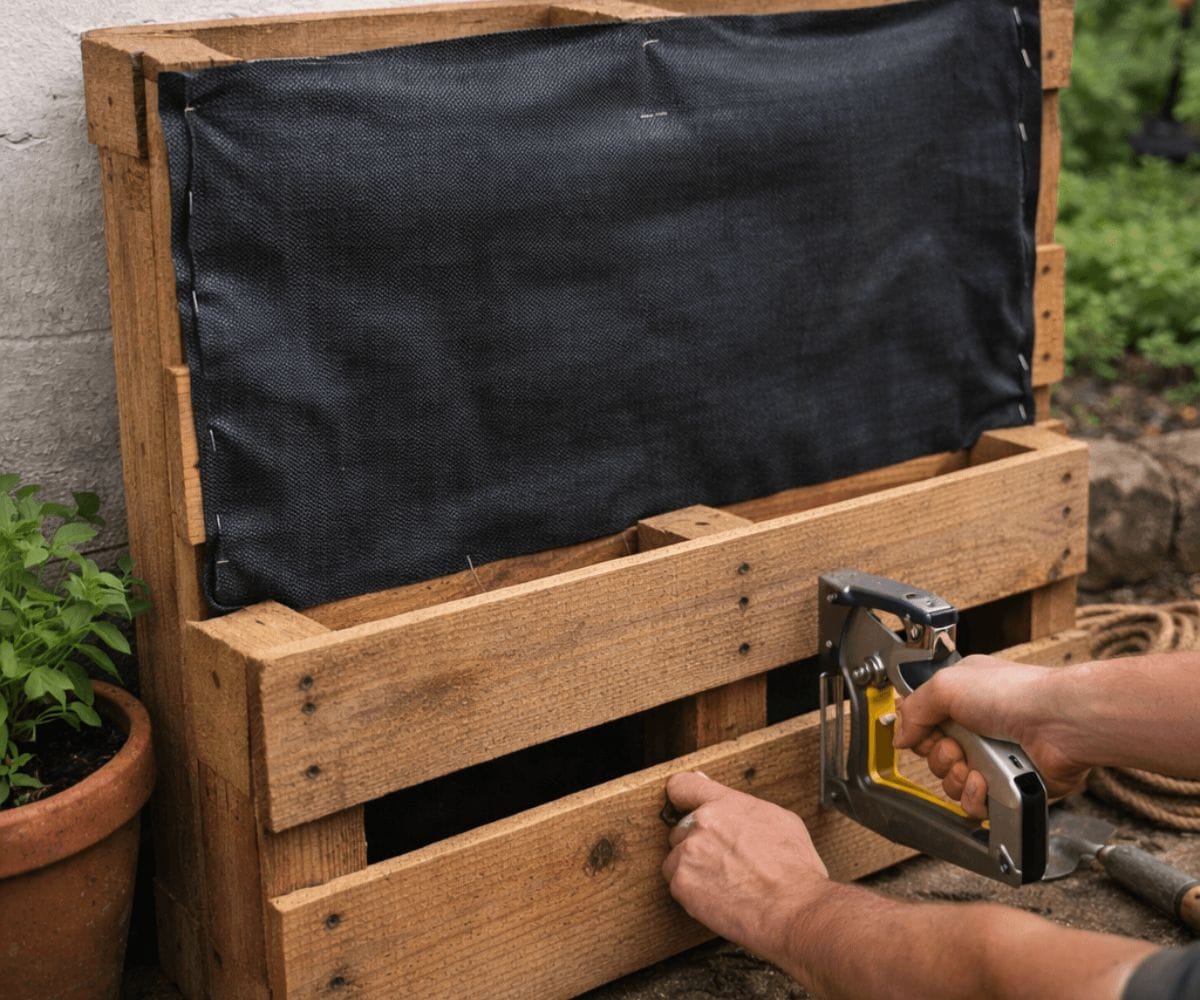
Cut landscape fabric to cover the back and sides
Staple the fabric tightly across the back
Leave the front open where plants will grow
The fabric holds soil in place but lets water drain out.
5. Filling the Pallet with Soil
Turn the pallet upright slightly (leaning position helps).
Slowly add potting soil from the top
Shake gently so soil settles into gaps
Fill all planting pockets evenly
Don’t pack the soil too tight. Roots need air.
Once filled, water lightly to help soil settle before planting.
6. Choosing the Right Plants for a Pallet Garden
Not all plants enjoy tight spaces.
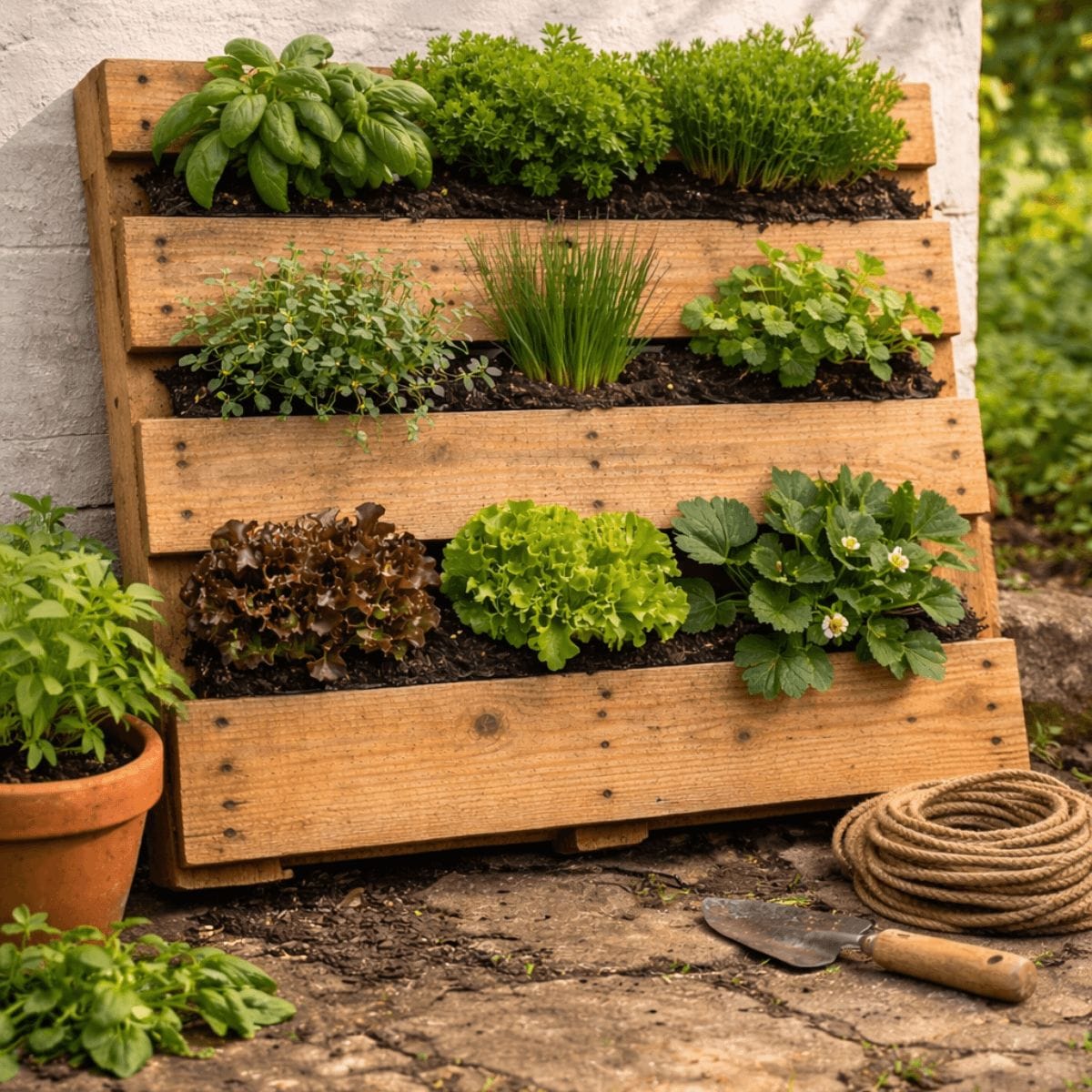
Best plants for pallet gardens:
Basil
Mint (great for pallets, bad for ground beds)
Parsley
Chives
Lettuce
Spinach
Strawberries
Small flowers like pansies or marigolds
Avoid deep-root vegetables like tomatoes or carrots.
Using sturdy plant support stakes makes it easier to guide growing plants and prevents them from bending or breaking in a pallet garden
7. Planting Tips When You Build a Pallet Garden
Use your hand or trowel to create small openings in the soil.
Planting tips:
Start from the bottom row and work upward
Firm soil gently around roots
Water lightly after planting
8. Let It Rest Before Standing Upright
This is a step many people skip and regret.
After planting:
Keep the pallet flat or slightly angled for 7–10 days
Water regularly
Let roots establish
After roots settle, you can safely move the pallet upright.
9. Positioning the Pallet Garden
Sunlight matters more than style.
Place your pallet:
Where it gets 4–6 hours of sunlight
Near a wall, fence, or railing for support
Away from strong winds
If hanging, make sure the wall can handle the weight of wet soil.
Using sturdy plant support stakes makes it easier to guide growing plants and prevents them from bending or breaking in a pallet garden
10. Watering a Pallet Garden (A Little Different)
Pallet gardens dry out faster than ground beds.
Watering tips:
Water slowly from the top
Let water drip down evenly
Check daily in hot weather
If the top plants dry too fast, mist them lightly in the evening.
11. Maintenance and Care
Pallet gardens don’t need much, but they do need consistency.
Simple care habits:
Trim herbs often to encourage growth
Remove dead leaves
Check staples and fabric every few months
Refresh soil once or twice a year
If a plant struggles, replace it. That’s normal.
12. Common Mistakes to Avoid
Using treated or dirty pallets
Overwatering
Planting deep-root crops
Skipping the root-settling period
Hanging the pallet before plants establish
Learning comes quickly with pallet gardens.
13. Why Pallet Gardens Are Worth Trying
If you’ve been wondering how do I build a pallet garden without spending much money, this project is one of the easiest ways to start.
A pallet garden isn’t about perfection. It’s about using what you have and making something useful from it.
They’re great if:
You’re short on space
You want a low-cost project
You enjoy DIY with visible results
You like rustic, natural-looking gardens
Even if your first one isn’t perfect, it teaches you a lot.
For more inspiration on making your home and garden feel warm and cozy with inexpensive DIY touches, check out this guide on Low Budget Rustic Decorating Ideas for Warm and Inviting Homes.
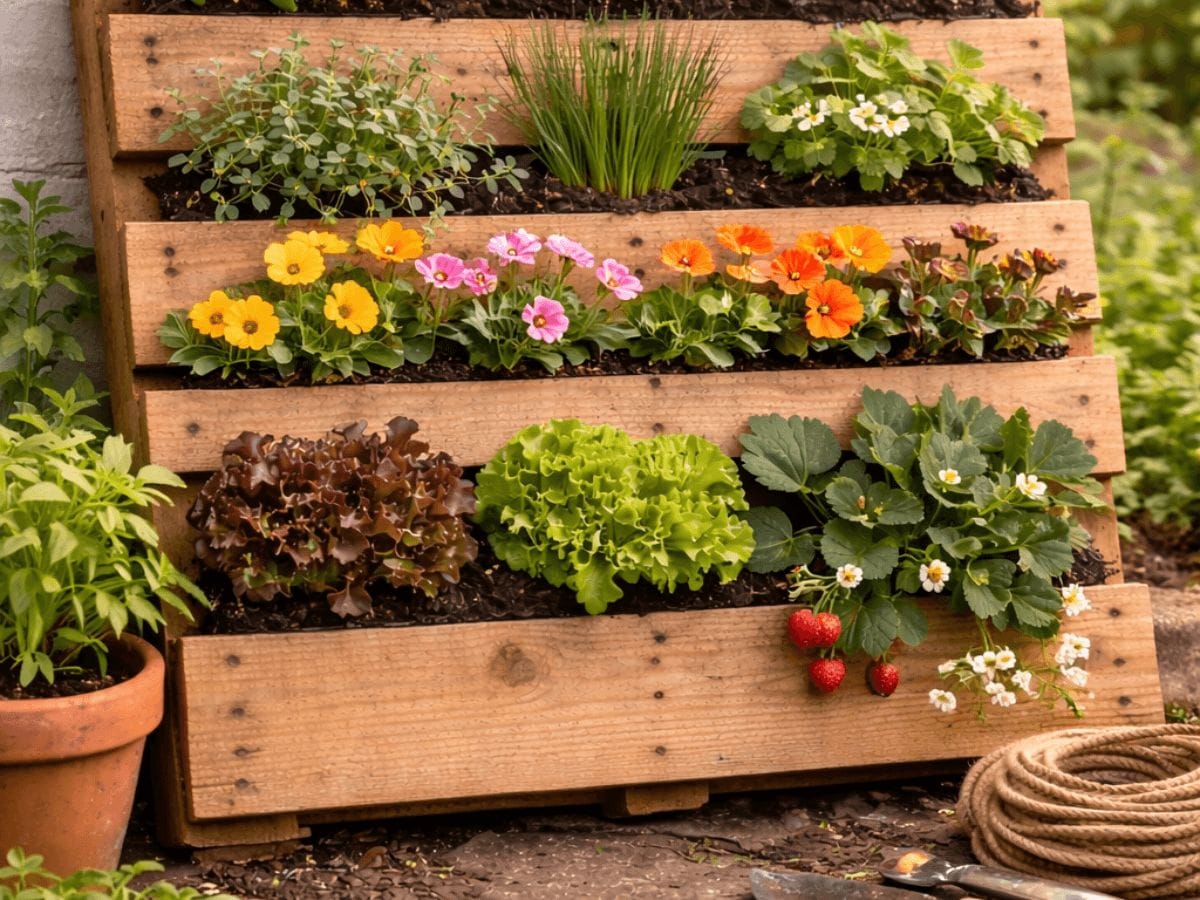
Building a pallet garden is one of those projects that looks impressive but feels surprisingly doable once you start. You don’t need fancy tools or experience-just a little time and curiosity. And once plants begin to grow, it quietly changes how that corner of your home feels.