
This post may contain affiliate links, If you choose to buy through these links, I may receive a small commission at no additional cost to you.
Watch the full video guide for this article here :
Why modern homes feel tiring is not something most people say out loud.
You finish work and come home, expecting relief.
At first glance, everything looks fine.
The floor is clean.
Furniture is in place.
Nothing appears broken or messy.
And yet, your body stays tense.
Your thoughts do not slow down the way you expect them to.
Rest feels incomplete, like it never fully settles in.
This tiredness does not arrive suddenly.
Instead, it builds quietly, layer by layer, often without being noticed.
Day after day, the feeling grows.
Modern homes often look calm on the surface, but feel demanding underneath.
Not because they are poorly designed,
but because they keep your senses active longer than they should.
Your home may look peaceful.
However, your nervous system never fully switches off.
1. Homes That Never Stop Asking for Attention
Many modern interiors are visually busy, even when they appear minimal.
Open shelves filled with objects.
Decor spread across nearly every surface.
Different colors, shapes, and textures competing for attention at the same time.
Nothing is loud on its own.
Yet everything asks to be noticed.
Because of this, your eyes never fully relax.
Even when you sit down, your brain continues scanning the room.
It sorts what it sees.
It makes small decisions again and again.
What is that item?
Should it be there?
Does this still fit the space?
Each decision feels insignificant on its own.
Together, however, they slowly drain energy.
Research in psychology and health science also shows that constant mental demands and sensory overload can quietly increase stress over time.
This is why some homes feel exhausting even when they look beautiful.
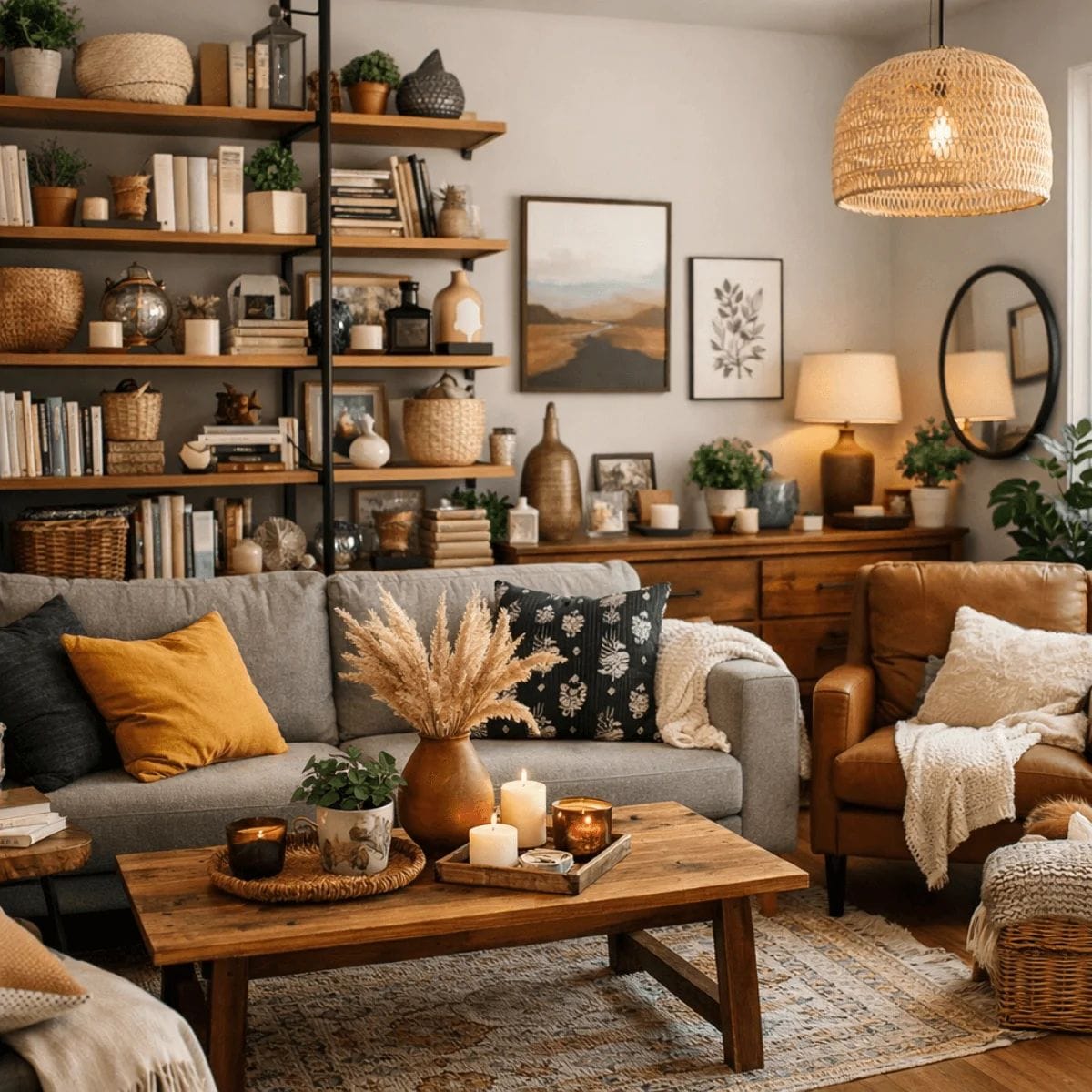
Simple changes like reducing visual clutter, similar to the ideas shared in our guide on minimal home decor ideas for a calm and clutter-free space, can help the mind relax faster.
Fortunately, one simple shift can make a difference.
Clear one surface completely.
Not the whole room.
Not the entire house.
Just one shelf.
One table.
Or one small corner.
That empty space becomes a visual pause.
Pauses matter because tired minds need moments where nothing demands attention.
When your eyes rest, your thoughts naturally follow.
This constant visual demand is one of the main reasons why modern homes feel tiring, even when nothing looks obviously wrong.
2. Lighting That Keeps the Body Alert
Many modern homes rely on a single bright ceiling light.
It works well.
It is efficient.
It lights the entire room instantly.
However, it also keeps the nervous system alert.
Cool, bright light sends a daytime signal to your body.
As a result, even in the evening, your system stays active.
You may feel physically tired.
Still, your body does not recognize it as a time to rest.
This is why evenings often feel restless.
It is also why sleep can feel light or broken.
The good news is that this does not require new lighting.
Instead, a simple change helps.
After sunset, turn off the main ceiling light.
The EDISHINE Tripod Table Lamp adds soft warm lighting that helps create a calm, relaxing atmosphere for evening rest.
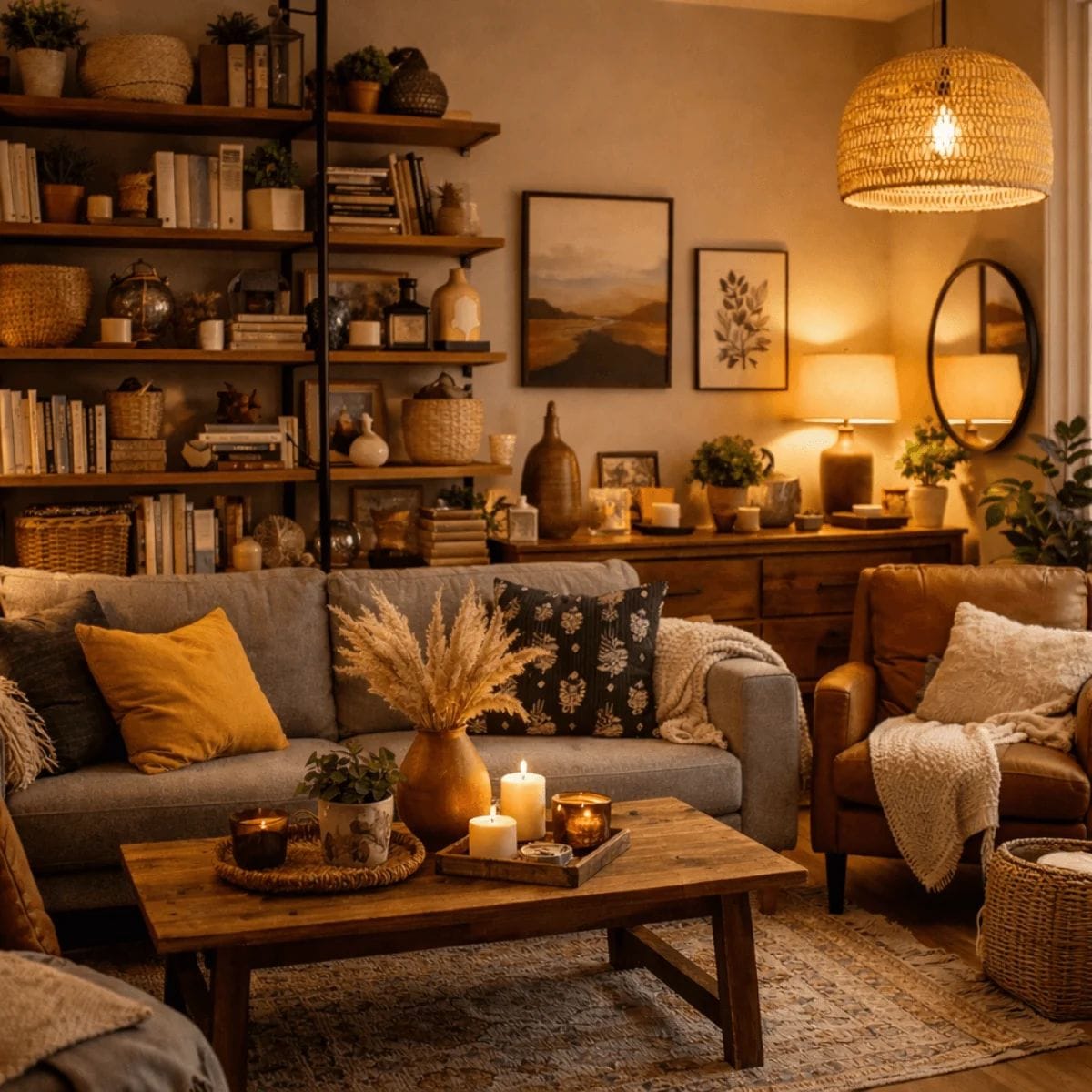
Then, use softer light sources already in your home.
A table lamp.
A side light.
Even light reflecting gently from another room.
As the light softens, your breathing changes.
Your shoulders lower.
Your body begins to understand that the day is ending.
3. When Homes Are Styled for Photos, Not Living
Many homes are designed to look finished at all times.
Perfect.
Controlled.
Always ready to be seen.
But real life is rarely that neat.
Bags end up near the door.
Daily items stay on counters.
Furniture moves, shifts, and changes position.
When a home does not allow visible life, pressure builds quietly.
Over time, you start feeling like you are always correcting the space.
Always adjusting things back into place.
Always fixing something.
That constant tension consumes energy.
Eventually, even rest starts to feel like work.
In most cases, a gentler approach works better.
Let everyday items stay where you actually use them.
Design around habits instead of trying to hide them.
A home that supports your routine feels lighter
than a home that constantly asks you to maintain an image.
Comfort grows when a space adapts to your life, not the other way around.
Using natural textures and simple materials, as shown in our guide on low budget rustic decorating ideas for warm and inviting homes, can help spaces feel more lived-in and comforting without extra effort.
4. The Quiet Stress of Sound and Echo
Silence in modern homes is often sharp rather than soft.
Hard floors reflect sound.
Bare walls bounce noise back into the room.
Appliances hum quietly in the background.
Meanwhile, outside noise slips inside more easily than expected.
Your body notices this constant activity,
even when your mind does not focus on it.
Over time, this background noise contributes to fatigue.
You may not consciously hear it.
Still, your nervous system reacts to it.
Fortunately, soft materials help more than most people realize.
Curtains soften echoes.
Rugs absorb sound.
A fluffy 5×7 shag area rug adds warmth, absorbs noise, and makes the room feel softer and more comfortable instantly.
Throws and cushions reduce harsh reflections.
You do not need more items in your home.
Instead, you need softer ones.
Calm is not only visual.
It is also physical.
5. Nowhere for the Senses to Fully Rest
Screens follow us everywhere now.
Phones.
Laptops.
Televisions.
As a result, movement rarely stops.
Because of this, many modern homes offer no true stillness.
Without stillness, the nervous system never fully resets.
It stays slightly activated all the time.
That is why rest no longer feels deep.
It is also why simply sitting down does not always feel refreshing.
Fortunately, one small change can help.
Create a low-stimulation spot in your home.
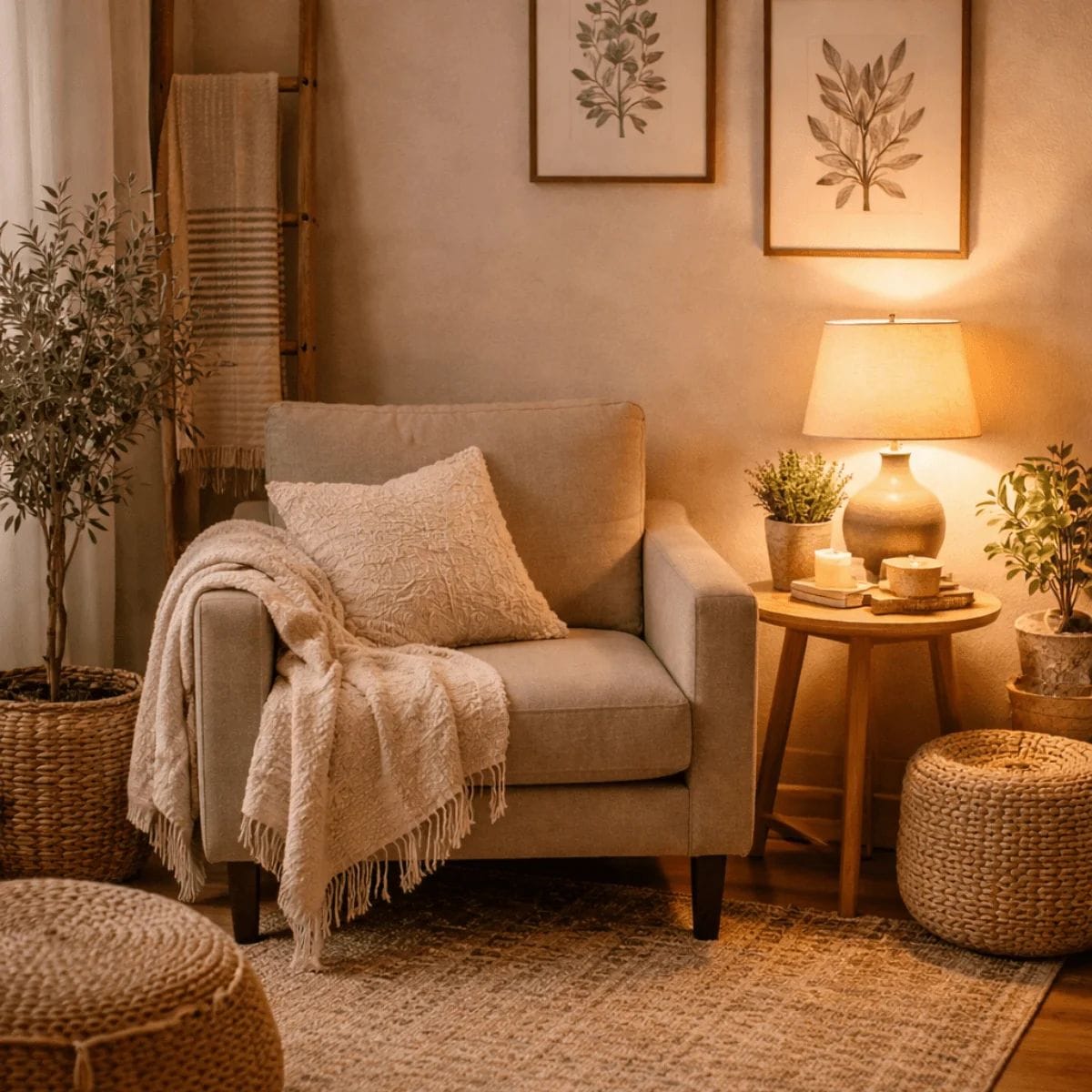
No screens.
Neutral colors.
Soft light.
One chair or cushion.
This space does not need to be large.
It does not need to be perfect.
Even a small corner can teach your body how to slow down again.
Many people find that setting up a quiet corner, like a simple study nook at home, helps reduce daily mental fatigue.
Stillness is not emptiness.
It is support.
6. Emotional Weight Builds Inside Spaces
Homes hold more than furniture and decor.
They also hold unfinished tasks.
Repeated routines.
Emotional residue from busy days.
Arguments linger longer than expected.
Stress settles quietly.
Unfinished thoughts stay in corners.
When nothing resets, the space begins to feel heavy.
This is not about deep cleaning.
Instead, it is about emotional breathing room.
A simple habit can make a difference.
Reset one small area each evening.
Just one.
Clear a table.
Straighten a chair.
Close the day gently.
That small signal tells your body something important.
The day is ending.
You are allowed to rest.
That message matters more than perfection.
7. Why Buying More Rarely Fixes the Problem
When a home feels tiring, buying something new feels productive.
A new lamp.
A new shelf.
A new decor item.
For a short time, it feels like progress.
However, tired homes are rarely fixed by adding objects.
They are fixed by reducing demands.
Less visual noise.
Less harsh light.
Less pressure to maintain appearances.
Most calm homes are created by removing, not adding.
Relief begins when a space asks less of you.
8. What a Supportive Home Actually Feels Like
A supportive home does not try to impress you.
It does not demand attention.
It does not compete for focus.
Instead, it allows:
Your shoulders to drop.
Your thoughts to slow.
Silence to feel safe.
You hardly notice it working.
And that is exactly why it works.
Supportive spaces do not announce themselves.
They quietly give energy back.
When a Home Begins to Give Energy Back
Why modern homes feel tiring is not about bad taste or wrong choices.
It is about homes forgetting the human nervous system.
The moment you stop trying to fix everything at once
and begin removing small pressures instead,
your space starts to change.
Not dramatically.
Not visually.
But in a way your body understands immediately.
You breathe deeper.
You move slower.
Rest feels closer than before.
And when a home supports you quietly,
rest no longer feels like something you have to chase.
It simply meets you where you are.
Understanding why modern homes feel tiring helps you change your space gently, without pressure or unnecessary spending.