This post may contain affiliate links, If you choose to buy through these links, I may receive a small commission at no additional cost to you.
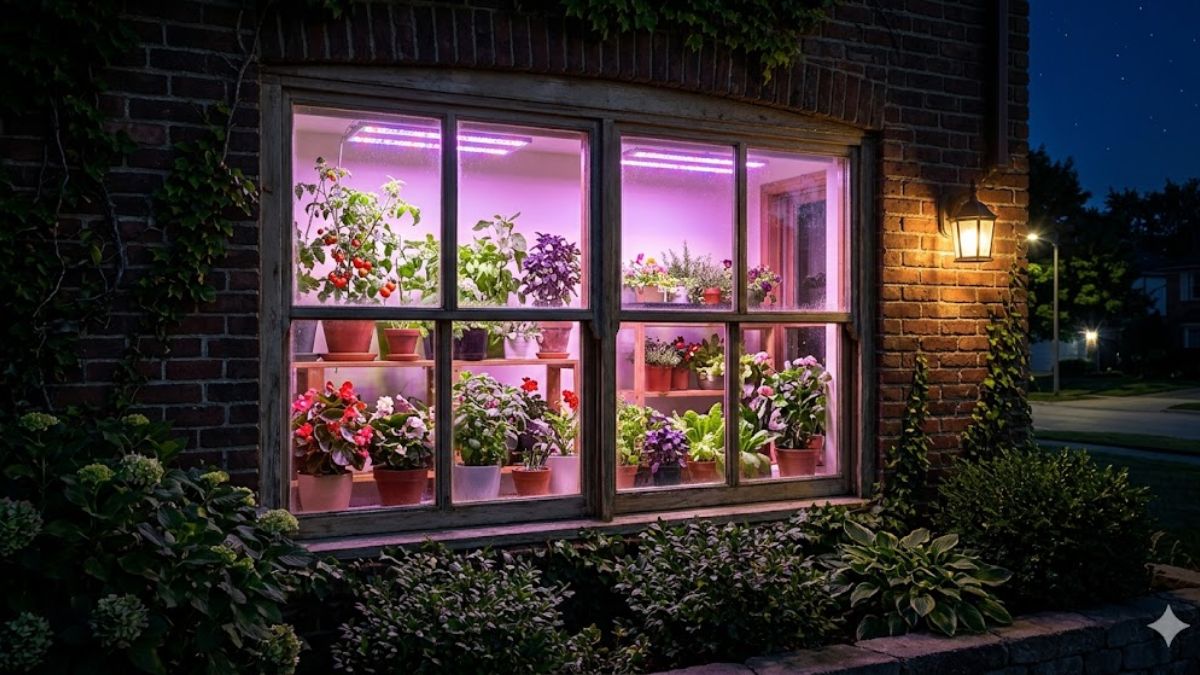
I remember the first time I saw a neighbor’s window glowing with a bright, almost eerie neon pink light. I honestly thought they were running some kind of underground disco for their succulents. It looked cool, sure, but I figured it was just another “Instagram aesthetic” trend that didn’t actually do anything.
Boy, was I wrong.
If you’ve been struggling to get your indoor peppers to actually produce a fruit, or if your favorite flowering plant looks like it’s just “stuck” in a permanent teenage phase of only growing leaves, you might be missing out on the most important color in the rainbow. We’re talking about Red Light.
It’s not just for vibes. It’s basically a shot of espresso for a plant’s reproductive system. But before you go out and buy the best red grow lights you find on Amazon, there’s a bit of a “mad scientist” catch you need to know about.
Why “Full Spectrum” Isn’t Always Enough for Your Plants
What people are searching for: Best grow lights for indoor vegetables vs flowers
Most of us start with a basic white “full spectrum” LED. It’s safe, it’s easy, and it mimics the sun. And for a while, it works! But have you ever noticed your plants getting tall and “leggy” (where they look stretched out and weak)?
That’s usually because they are starving for a specific “flavor” of light.
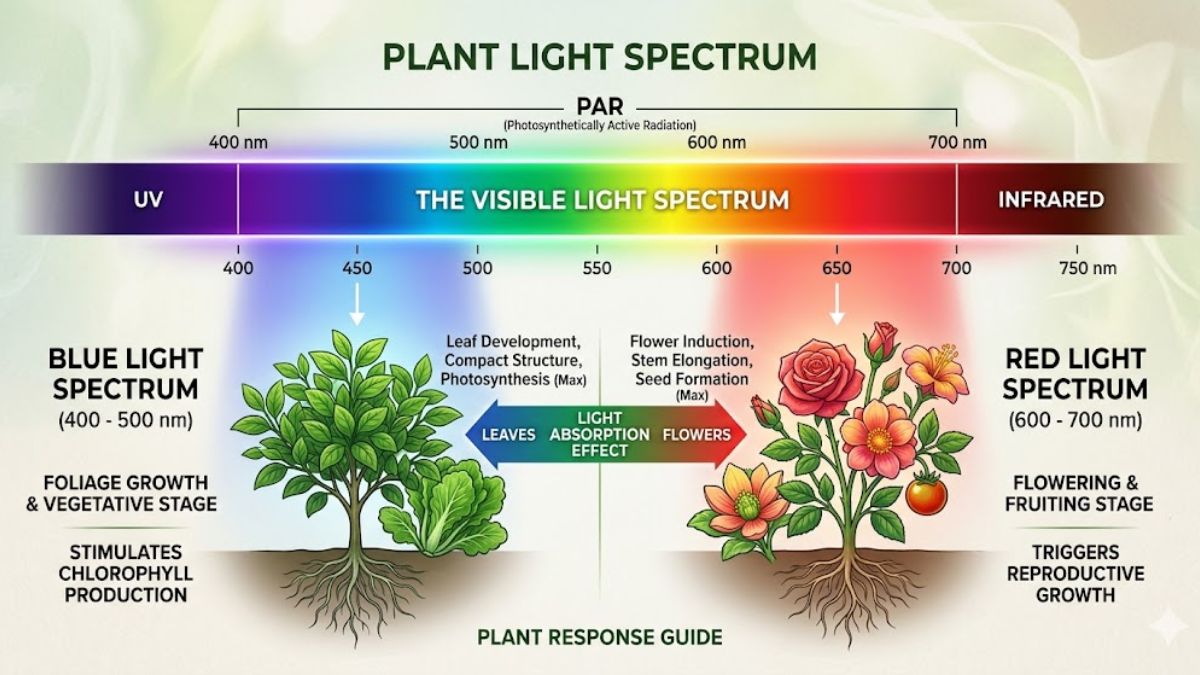
Plants don’t see light the way we do. While we see a white glow, they are busy breaking that light down into colors like a prism. Blue light is what tells a plant to grow big, strong green leaves. But Red Light? That’s the signal that tells the plant, “Hey, it’s time to stop making leaves and start making babies” (aka flowers and fruit).
If you’re trying to grow heirloom peppers or juicy indoor tomatoes in the middle of a Boston winter or a rainy monsoon in India, red light is your best friend. It’s the difference between a green bush and a harvest you can actually eat.
Red vs. Infrared: Don’t Accidentally Cook Your Plants
What people are searching for: Difference between red light and infrared for plants
Here’s where it gets a little technical, but hang with me because this is where most beginners mess up. There are actually three “shades” of red you need to worry about:
-
Visible Red Light: This is the stuff you can see. It’s the primary fuel for photosynthesis. It’s like the main course of a meal.
-
Far Red Light: This sits right on the edge of what humans can see. Scientists and pro growers are starting to realize this might be the “secret sauce.” It tells the plant how to stretch and position its leaves to get the most energy.
-
Infrared Light: You can’t see this, but you can feel it as heat.
I’ve talked to experts deep in the world of grow lights, and the warning is clear: Too much infrared equals heat stress. If your grow light feels like a space heater, you’re likely hurting your plants more than helping them. You want light, not a microwave.
When searching for the best red grow lights, most people confuse heat with light. You want a spectrum that triggers flowering, not a bulb that cooks your soil.
To get that professional-grade harvest without the risk of heat stress, I suggest using the Bloom Lume LED Grow Light with Multi-Mode Color Spectrums because its specialized red-boost mode and dimmable settings give you total control over your plant’s flowering phase.
To avoid this heat stress while still giving your plants the boost they need, I recommend using an Upgraded 80 LED Grow Light with 10 Dimmable Levels because it allows you to precisely control the light intensity, ensuring your indoor garden gets the perfect red spectrum without the ‘microwave’ effect.
The “Far Red” Mystery: Why Pros are Obsessed
What people are searching for: Benefits of far red light in horticulture
If you hang out in grower forums long enough, you’ll hear people whispering about Far Red wavelengths. While we don’t have a mountain of “official” peer-reviewed studies yet, the anecdotal evidence from people who grow for a living is insane.
They call it the “Emerson Effect.” Basically, when you combine regular red light with far red light, the plant’s photosynthesis rate doesn’t just increase : it explodes. It’s like $1+1$ equaling $5$. It tricks the plant into thinking it’s in the shade of another plant, which triggers a biological “survival mode” that makes it grow faster and flower more aggressively. If managing these light spectrums manually feels overwhelming, you can use AI Garden Assistants: 7 Best Tools to Monitor Plant Health to keep an eye on your plant’s vital signs and optimize their growth automatically.
LED vs. Everything Else: Is the Upfront Cost Worth It?
What people are searching for: Energy efficient grow lights for home
Back in the day, if you wanted grow lights, you had to use these massive, buzzing fluorescent tubes or incandescent bulbs that sucked up electricity like a vacuum cleaner. Today? It’s all about LEDs. Even NASA has conducted extensive research on LED lighting to grow crops in space, proving that targeting specific wavelengths like Red and Blue is the most efficient way to trigger photosynthesis without wasting energy.
-
Low Heat: You can keep them closer to your plants without burning the leaves.
-
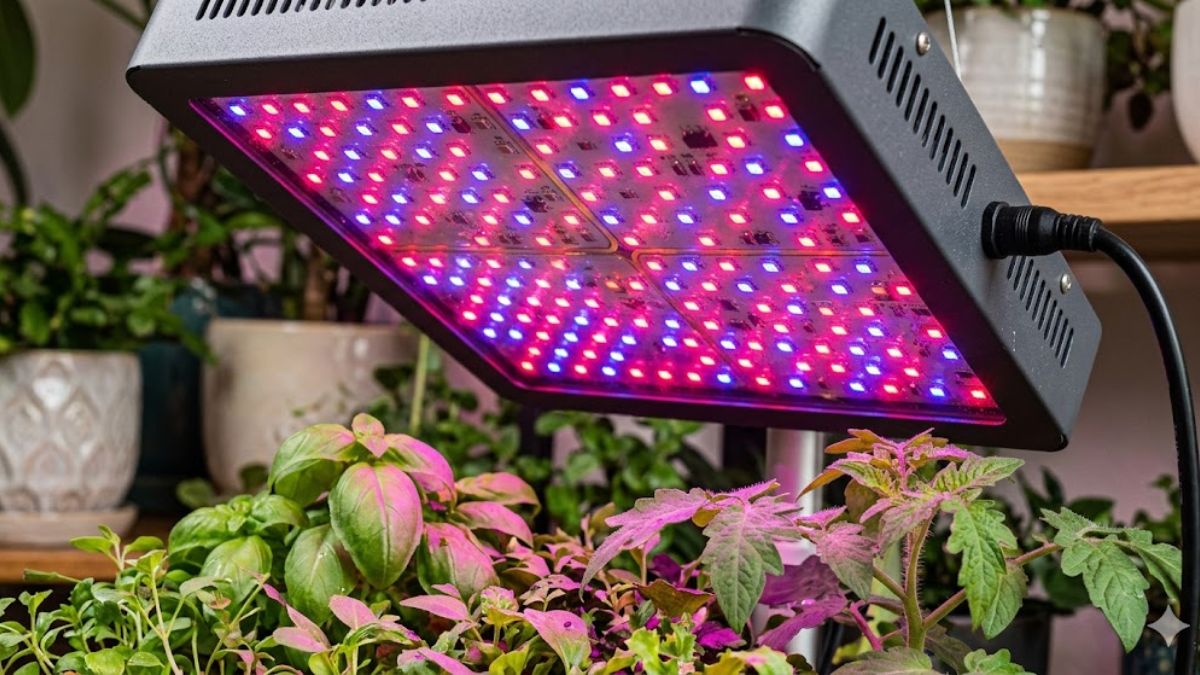
Specific Wavelengths: You can actually buy “Targeted LEDs” that only output Red and Blue, which is why those “Blurple” (Blue + Purple) lights are so common.
-
Wallet Friendly: Yeah, a good LED panel might cost you $50-$100 upfront, but your electricity bill won’t give you a heart attack.
Timing is Everything: Don’t Keep the Lights on 24/7
What people are searching for: How many hours of grow light for seedlings
One of the biggest mistakes I made early on was thinking, “If 12 hours of light is good, 24 hours must be amazing!”
Wrong. Plants need to “sleep” just like we do. They have a biological clock called a circadian rhythm. If you keep the lights on forever, you’re basically giving your plant permanent jet lag.
-
For Seedlings: Aim for 16-18 hours of light per day to build strong roots.
-
For Flowering Plants: Usually 12-14 hours is the sweet spot for big blooms.
-
For Herbs (Basil/Lettuce): Around 14-16 hours keeps them tasty and prevents them from “bolting” (going to seed too early).
Real Talk: Do You Actually Need This?
Look, if you have a sunny window and you’re just growing some basic ivy, you probably don’t need a pink neon lab. But, if you are serious about growing your own food indoors or saving rare flowers, red light is a tool, not a luxury.
It’s about working with the plant’s natural “programming” to get the best results possible.
FAQ: Everything You Still Want to Know
Which grow light works best for an indoor garden?
The “best” light depends on your budget, but for most home growers, a Full Spectrum LED panel with adjustable “Veg” and “Bloom” switches is the gold standard. It provides the blue light needed for growth and the red light needed for flowering.
Which light brand is best in India?
In India, brands like Falcon, Philips (GreenPower range), and Mars Hydro (available via importers) are highly rated. If you are on a budget, look for reputable Indian sellers on Amazon that provide true PAR (Photosynthetically Active Radiation) values rather than just high wattage.
What plants don’t like light?
While all plants need light to survive, “low-light” plants like Snake Plants, ZZ Plants, and Peace Lilies can get “sunburned” if placed under intense, direct red grow lights for too long. Always keep these further away from the light source.
Always keep low-light plants further away from the light source. However, light isn’t the only thing you should monitor; sometimes, what looks like light burn might actually be a pest problem. Check out this guide on Is Your Indoor Jungle Under Attack? 8 Sneaky Pests That Are Secretly Killing Your Houseplants This Summer to ensure your plants stay healthy and pest-free.
Are red grow lights better?
Red grow lights aren’t “better” than white lights : they are specialized. Red light is superior for encouraging flowering and fruiting. However, for a healthy plant, you usually need a balance of blue (for structure) and red (for reproduction).
My Advice for the Busy Homeowner:
If you’re just starting, grab a decent Full Spectrum LED. It offers the perfect balance of both essential features. You get the healthy green growth from the blue/white light, and when you’re ready for flowers, you flick that red switch and let the magic happen.
So, is your indoor garden dying? Maybe it’s just bored. Give it a little bit of the right “color” and watch it wake up.