This post may contain affiliate links, If you choose to buy through these links, I may receive a small commission at no additional cost to you.
Have you ever wondered why you feel like a zombie after a Friday night out with friends, even if you didn’t drink much? Or why some people are buzzing with energy at 6 AM while you can barely find your toothbrush? Proper sleep is only one piece of the puzzle; the real foundation lies much deeper. It’s about Circadian Co-Living.
For years, we’ve been told to fix our “body clock” for better sleep. But the entire landscape has shifted. We are finally realizing that our social lives are the biggest disruptors of our internal rhythms. If your social life and your biological clock are fighting each other, you will always feel exhausted.
This isn’t just another wellness trend; it’s a survival guide for the modern, hyper-connected human.
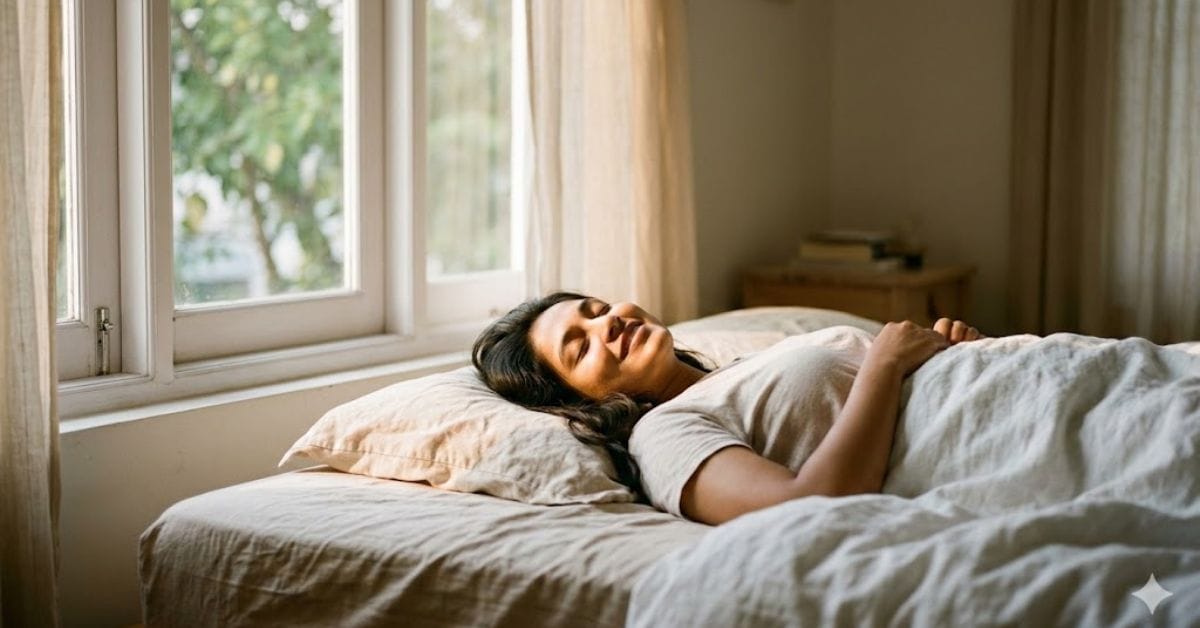
Why is 8 hours of sleep still leaving me exhausted?
This is the most searched question on Google right now. The answer isn’t more coffee; it’s fixing your Social Jetlag.
Think about it. From Monday to Friday, you follow a strict routine. Then Saturday comes, and you stay up late, wake up late, and eat at weird times. By Monday morning, your brain feels like it’s in a different time zone. Your body is confused. This internal tug-of-war is what kills your peak energy.
When we talk about Circadian Co-Living, we are talking about aligning your hangouts, your meetings, and even your family dinners with your body’s natural peaks and valleys.
What is Circadian Rhythm Syncing?
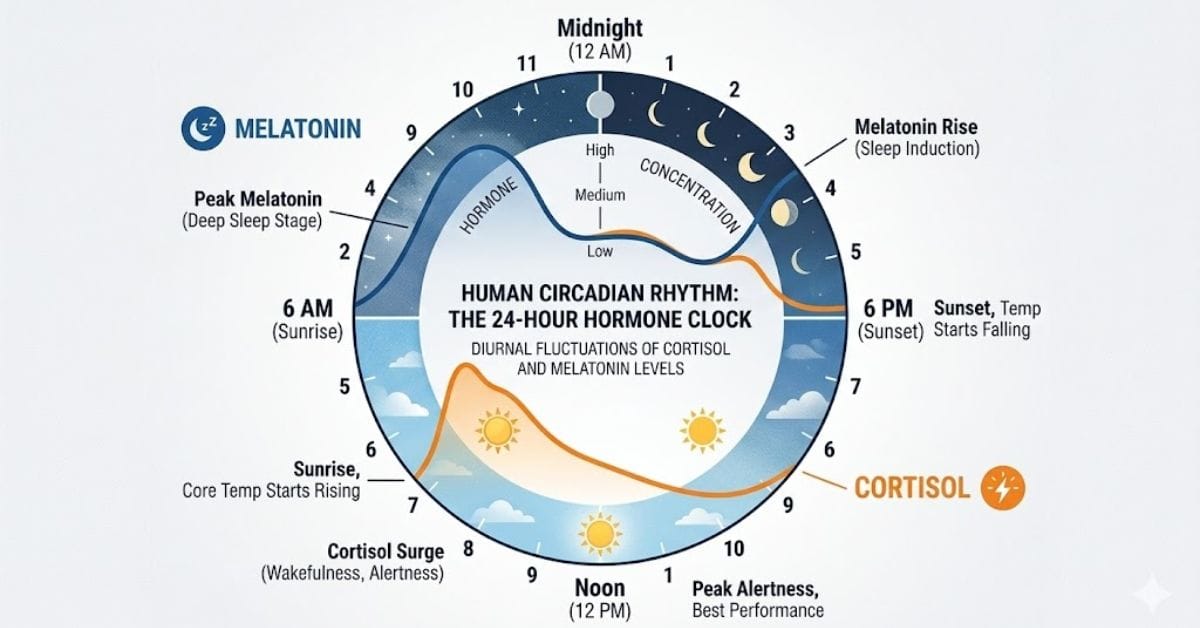
To understand this new way of living, we first need to look at the science. Circadian rhythm syncing is the process of aligning your external environment : like light, food, and social interactions : with your internal biological clock. Your entire biology is run by trillions of internal timekeepers. To dive deeper into the science behind these internal clocks, you can explore the official fact sheet from the National Institute of General Medical Sciences. When you see sunlight in the morning, you “sync” those clocks. Timing your meals correctly acts as a reset button for your metabolic engine. Syncing ensures your body releases cortisol when you need to be awake and melatonin when you need to rest. Without syncing, your hormones are basically shouting at each other in the dark.
What Exactly is Your Chronotype? (And Why it Matters)
Before you can sync your life, you need to know who you are. Science breaks us down into four main categories, or “Chronotypes.” Most of the world’s stress comes from a “Wolf” trying to live like a “Lion.”
-
The Lion: These are the 5 AM club members. They are powerhouses in the morning but are socially “dead” by 8 PM.
-
The Bear: Most people fall here. Their energy follows the sun. They are productive in the mid-morning and crash in the afternoon.
-
The Wolf: The night owls. They hate mornings but get their best creative sparks after 9 PM.
-
The Dolphin: The restless ones. Often tired but wired, they struggle with a consistent sleep-wake cycle.
If you are a Wolf and you’ve joined a morning running club because it’s “healthy,” you’re actually hurting your long-term healthspan. Circadian Co-Living starts with accepting your type and stopped forcing yourself into someone else’s schedule.
Knowing your chronotype is just one part of the bigger picture. For a complete guide on extending your vitals, check out our Longevity Blueprint: How to Increase Your Healthspan.
What is Circadian Living?
While “syncing” is the act, circadian living is the lifestyle. It is a commitment to respecting your biological boundaries in everything you do. It’s a philosophy where you stop treating your body like a machine that can be switched on and off. Circadian living means you don’t just “fit in” a workout or a meal whenever you have a gap in your calendar. Instead, you build your calendar around your biology. It’s the ultimate form of self-respect in a world that wants you to be “always on.”The Secret to High Energy: Social Timing
Most people plan their social life based on “whenever everyone is free.” That is a mistake. To maintain peak energy, you need to start practicing Social Syncing.
-
Deep Work for Lions/Bears: Schedule your toughest meetings before 11 AM.
-
Collaborative Brainstorming: Do this during the “afternoon slump” when your analytical brain relaxes, allowing more creativity.
-
The 9 PM Rule for Wolves: If you’re a night owl, don’t force a heavy dinner at 7 PM. Your metabolism isn’t ready.
The Secret to High Energy: Social Timing
Most people plan their social life based on “whenever everyone is free.” That is a mistake. To maintain peak energy, you need to start practicing Social Syncing.
-
Deep Work for Lions/Bears: Schedule your toughest meetings before 11 AM.
-
Collaborative Brainstorming: Do this during the “afternoon slump” when your analytical brain relaxes, allowing more creativity.
-
The 9 PM Rule for Wolves: If you’re a night owl, don’t force a heavy dinner at 7 PM. Your metabolism isn’t ready.
How to Live in Sync with Circadian Rhythm?
Transitioning to this lifestyle isn’t an overnight fix. Here is how you can practically live in sync:
-
Light Anchoring: Get bright light in your eyes early, and dim the lights after sunset.
-
Consistent Wake Times: Even on weekends, try to wake up within an hour of your weekday time to avoid social jetlag.
-
Timed Eating: Try to keep your “eating window” during daylight hours when your digestion is most active.
-
Listen to Your Temp: Use cool temperatures at night to signal to your brain that it’s time to shut down.
How Blue Light is Actually Ruining Your Relationships
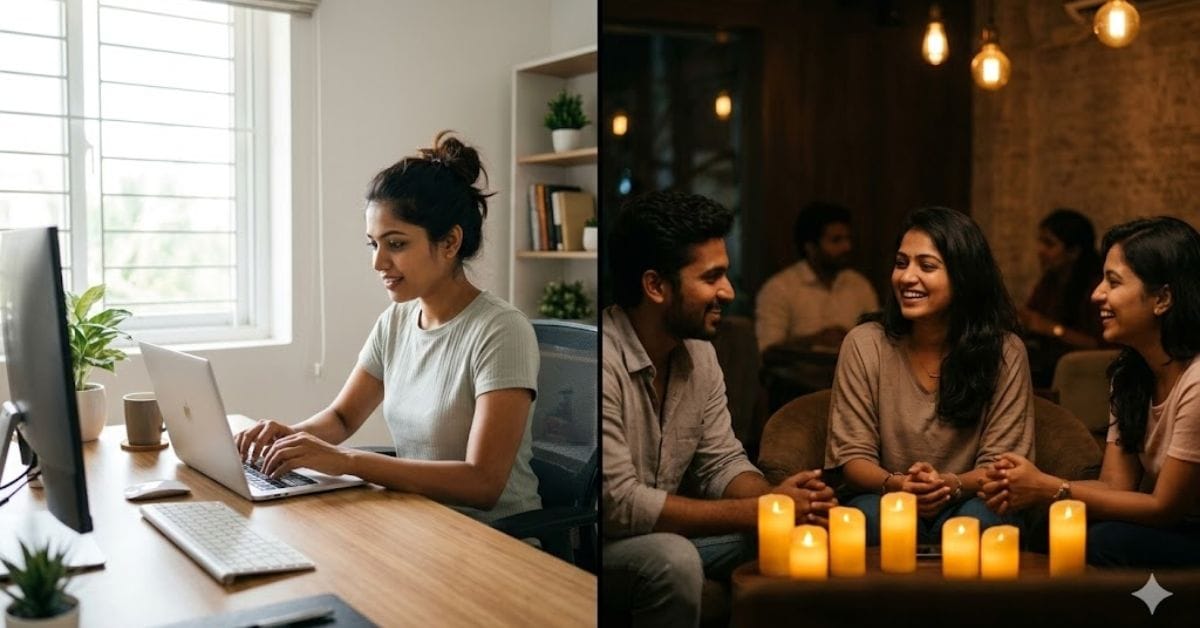
It sounds dramatic, but it’s true. We are more screen-addicted than ever. When you sit in a brightly lit restaurant at 10 PM, the blue light tells your brain it’s noon. This suppresses melatonin.
The result? You stay up late, you wake up cranky, and you snap at your partner or colleagues the next day. A huge part of the Circadian Co-Living movement is about “Dark Socializing” : hanging out in low-light environments in the evening to protect each other’s sleep cycles. It sounds simple, but the impact on your collective mood is massive.
Living Together Without Killing Each Other’s Vibe
One of the biggest lifestyle challenges in India and Tier-1 countries is when a “Lion” marries a “Wolf.” One wants to talk at 6 AM; the other wants to watch a movie at midnight. Circadian Co-Living offers a fix:
-
Shared Zones: Identify the “overlap” hours when both energy levels are decent (usually between 11 AM and 3 PM).
-
Solo Windows: Respect each other’s “off” times. Don’t force a serious conversation when your partner’s brain is biologically “offline.”
-
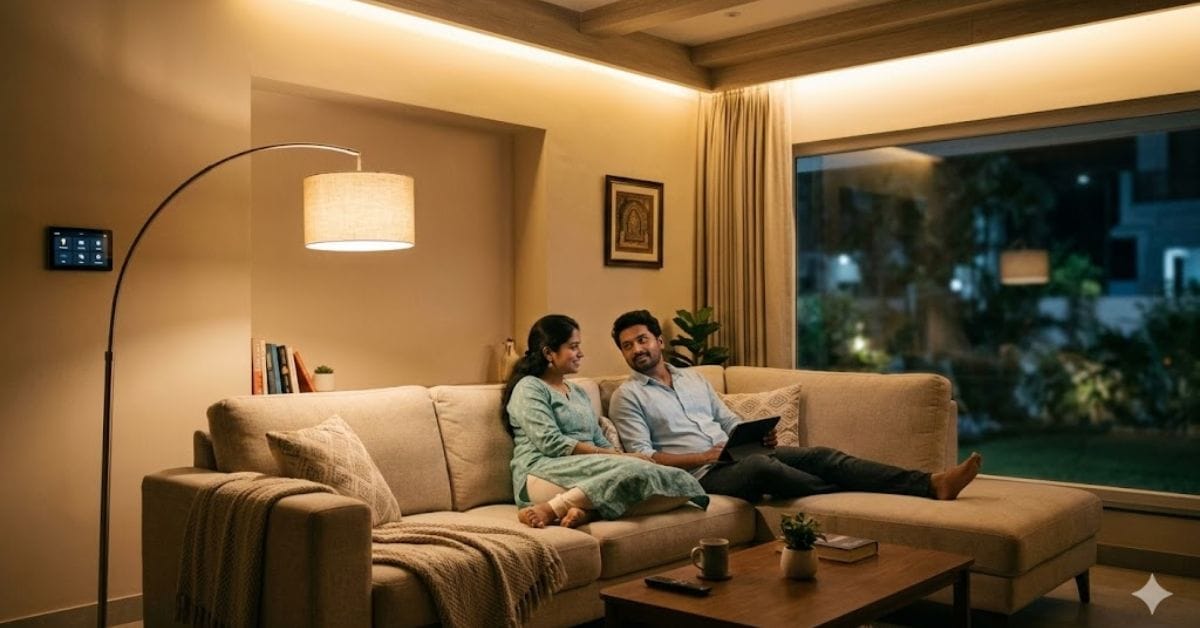
Light Management: Use smart lighting to create different “energy zones” in the house.
What is the Circadian Rhythm of Your Life?
Every person has a unique “rhythm of life.” For some, it’s a fast, morning-heavy tempo. For others, it’s a slow, steady afternoon build. Understanding what is the circadian rhythm of your life means identifying when you are most creative, when you are most social, and when you are most vulnerable to stress. Once you map this rhythm, you stop swimming against the current. You start gliding.
The Energy Economy: Why Your Biological Clock is Your New Net Worth
You might wonder why companies are pouring money into this topic. It’s because the solutions involve high-value tech. From Oura rings that track your readiness score to circadian-synced lighting systems and DNA-based nutrition plans, the industry is worth billions.
When you optimize your life for your biological clock, you aren’t just “feeling better.” You are becoming a high-performance machine. That’s why the “Brain Wealth” trend is merging with lifestyle your energy is your greatest currency.
To truly master this biological wealth, the WHOOP 5.0 Activity Tracker is the ultimate bio-hacking tool. With its 14-day battery life and personalized coaching, it tracks your recovery, strain, and sleep 24/7, helping you treat your energy like a high-value investment.
Practical Steps to Start Your Circadian Co-Living Journey
Living in sync doesn’t require radical life changes or complete isolation. Start with these small, human shifts:
-
.Morning Sunlight is Non-Negotiable: Get 10 minutes of sun in your eyes within 30 minutes of waking up. It sets your timer for the entire day.
If you struggle with dark mornings or heavy sleeping, using a Wake Up Light Sunrise Alarm Clock can be a game-changer. Its sunrise simulation and natural sounds gently trigger your body to stop producing melatonin, helping you wake up in sync with your biological clock even before the sun is fully up.
-
Front-Load Your Calories: Eat your biggest meal when your energy is highest. For most, that’s lunch, not dinner.
-
The “Social Buffer”: Don’t book social events back-to-back on weekends. Give your body 24 hours of “rhythm recovery.”
-
Temperature Control: Your body needs to drop by 1-2 degrees to sleep. If your bedroom is warm, you’ll never reach deep sleep, no matter how long you lay there.
Is This the End of “Hustle Culture”?
In a way, yes. We are moving from “work hard, play hard” to “sync well, live better.” The old way was about forcing the body to follow the clock on the wall. The new way : Circadian Co-Living : is about making the world follow the clock inside your cells.
When you sync your social life for peak energy, everything gets easier. Your workouts are more effective, your brain is sharper, and your relationships are smoother because you aren’t constantly fighting exhaustion.
The shift from working hard to syncing well is part of a larger global movement. We explore this further in our deep dive into the Soft Saving Trend: Soft Saving vs Hustle Culture , where peace of mind takes priority over the rat race.

Making the Shift Today
Look at your calendar for next week. How many of those appointments are actually “energy killers” for your specific type? Can you move that 8 AM coffee to 10 AM? Can you swap that late-night movie for a late-afternoon walk?
Small changes in timing lead to massive changes in how you feel. It’s time to stop fighting your biology and start living with it.