
This post may contain affiliate links, If you choose to buy through these links, I may receive a small commission at no additional cost to you.
Digital Detox at Home: Practical Ways to Reduce Screen Overload started for me in a very ordinary way – not because I wanted to “change my life,” but because one evening I realized I was tired without doing anything physically tiring.
It was one of those evenings where nothing big had happened.
Work was normal.
Travel was minimal.
Yet my mind felt crowded, as if the day had been louder than usual.
Later, while placing the phone on the table, I noticed the battery had already dropped close to zero.
That made me pause for a moment.
“How many times did this end up in my hand today?”
I honestly couldn’t remember.
That question lingered in my mind longer than I expected.
Over the next few days I began noticing something simple.
Every small gap – waiting for tea to boil, sitting down after lunch, even walking from one room to another : was automatically filled with a quick phone check.
None of those moments felt harmful individually, but together they were leaving very little quiet space in the day.
Reducing screen overload did not happen through a strict decision.
Over time, Digital Detox at Home: Practical Ways to Reduce Screen Overload becomes a natural lifestyle habit rather than a strict rule.
1. Leaving One Hour Untouched by Screens

The first thing I tried was choosing one hour in the evening when the phone stayed in another room.
Not switched off, not hidden – just placed somewhere out of reach.
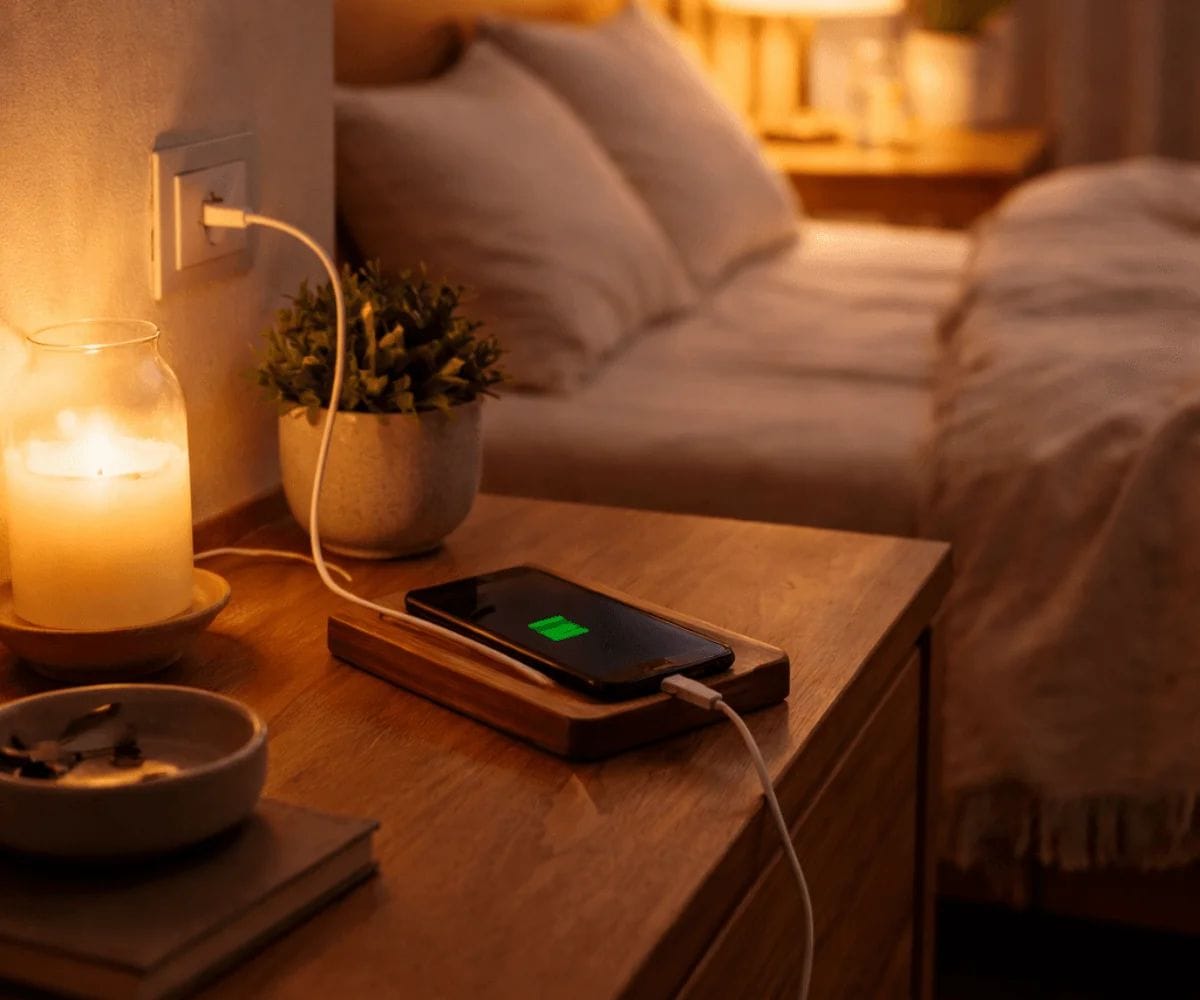
A wooden nightstand charging organizer like the BarvA Two Phone Docking Station helps keep phones, watches, and earbuds in one place, making it easier to maintain a screen-free evening routine.
The first two or three days felt slightly uncomfortable.
I kept thinking I might miss something important.
After a week, I realized nothing urgent had ever happened during that hour anyway.
Instead, something unexpected happened: evenings started feeling slower.
I finished small tasks calmly, sometimes sat quietly with tea, sometimes spoke longer with family members.
That single hour quietly changed the rhythm of the day.
It created a soft boundary between work time and home time, something I had not realized was missing.
2. Changing Night Habits Without Forcing Discipline
Using a simple bedside analog clock instead of checking the phone at night can also help maintain better sleep routines.
Late-night scrolling used to be my biggest habit.
I would lie down planning to sleep early and then check “one or two things,” which somehow stretched longer than intended.
Trying to control it with willpower rarely worked.
A small physical change helped more.
I began charging the phone on a table across the room instead of near the pillow.
It was still accessible, just not within arm’s reach.
Most nights I simply did not feel like getting up again once I was comfortable.
Sleep improved slowly – not dramatically, but noticeably.
Experts also recommend reducing evening screen exposure, as explained in the Healthy sleep habits and screen use recommendations guide.
I fell asleep faster, and mornings felt slightly less rushed because the first thing I saw was not a screen filled with notifications.
3. Discovering the “Automatic Reach” Habit
One of the most surprising things I noticed was how often I picked up the phone without any real purpose.
Sometimes I unlocked it, opened an app, and then realized I did not actually need anything.
It had become a reflex more than a decision.
Instead of trying to stop the habit immediately, I started noticing it.
That awareness alone reduced how often it happened.
When the hand moved automatically, I sometimes paused and placed the phone back down.
Not always, but enough to make a difference.
Small pauses can quietly break large habits.
Many people are now trying Digital Detox at Home: Practical Ways to Reduce Screen Overload to create calmer daily routines.
4. Filling Small Pauses With Gentle Physical Actions

Earlier, scrolling used to fill most waiting moments.
I began replacing some of those with simple physical actions – watering plants, rearranging a small shelf, wiping the kitchen counter slowly instead of rushing.
You can also explore our Easy Vegetables to Grow at Home for Beginners guide to start simple balcony gardening routines.
These were not major tasks, yet they felt different.
There is something calming about interacting with physical space.
The mind becomes quieter when the hands are doing something simple and real.
One afternoon I organized a cluttered drawer that had been ignored for months.
It took less than half an hour, yet the room felt lighter afterward, and strangely, so did my mood.
5. Making the Phone Slightly Less Noisy
Another change that helped more than expected was adjusting notification settings.
I had never realized how many alerts were arriving every day – shopping offers, random reminders, updates that were not truly important.
Each one was small, but together they created constant interruption.
Turning off unnecessary notifications made the phone feel quieter almost instantly.
I still checked messages and important updates, but the device stopped demanding attention every few minutes.
That small silence reduced the urge to check the screen repeatedly.
6. Allowing Conversations to Be Fully Offline
One evening during dinner, I noticed something interesting.
Everyone at the table had their phone nearby, even if they were not actively using it.
The conversation was happening, but attention was slightly divided.
Later we tried a small change – phones stayed on a nearby shelf during dinner.
No strict rule, just a shared habit.
Within days, conversations became longer and more relaxed.
Small details about the day that usually went unmentioned started appearing naturally.
Sometimes connection improves simply by removing the quiet distraction sitting on the table.
7. Keeping Offline Activities Visible
Another reason screens dominate is convenience.
The phone is always within reach, while books, notebooks, or hobby materials are often stored away.
I noticed a difference after placing a book and a small notebook on the table where I usually sat.
Whenever I felt the urge to scroll, sometimes I picked up the notebook instead and wrote a few lines.
Not every time, but often enough that the habit slowly shifted.
Making alternatives easy to start changes behavior more than strict self-control.
8. Accepting That Balance Works Better Than Extremes
At one point I considered trying a full “digital detox day,” but I realized something – completely avoiding technology for a day felt unrealistic and difficult to maintain.
Gradual adjustments felt more natural.
One phone-free hour, fewer notifications, slightly calmer mornings, and quieter evenings slowly created balance without forcing anything.
Over time, the phone remained part of daily life, but it stopped being the center of every moment.
Months later, when I look back, the biggest change is not that I use screens less.
It is that some quiet spaces have returned to the day – the kind that used to exist naturally before every pause became filled with content.
Evenings feel a little slower.
Conversations feel fuller.
Small routines feel more present.
Creating a peaceful environment becomes even easier when you follow our Minimal Home Decor Ideas for a Calm and Clutter-Free Space guide.
Digital detox at home did not happen through dramatic decisions.
It happened through small choices repeated quietly – placing the phone a little farther away, letting a few moments stay undistracted, and allowing daily life to have small stretches where nothing digital is happening.
Those small stretches, surprisingly, make the biggest difference.