This post may contain affiliate links, If you choose to buy through these links, I may receive a small commission at no additional cost to you.
Imagine walking into a home that doesn’t just look like a Pinterest board but actually breathes. The definition of “luxury” has shifted. It’s no longer about how much gold leaf you can stick on a wall or buying the most expensive Italian leather sofa that was shipped halfway across the world. Real luxury now is about soul, health, and sustainability. We’re finally moving away from “fast furniture” : the kind that looks great for six months then ends up in a landfill and moving toward a thoughtful, Eco-Home DIY Upgrades
But here is the real kicker that most people miss: these aren’t just “feel-good” projects for the planet. They are cold, hard financial investments. Whether you’re living in a high-rise in New York, a sleek villa in Dubai, or a modern gated community in Hyderabad, the market has changed. Today’s buyers are hunting for homes that are energy-efficient, chemically non-toxic, and “future-proofed” against rising utility costs. If you play your cards right with these 10 Sustainable DIY Upgrades That Increase Property Value, you aren’t just decorating a room; you are building massive equity in an increasingly green-obsessed real estate market.
Let’s be honest, we’ve all felt that “new house smell” that’s actually just a cocktail of chemicals. We’ve all seen the electricity bills during a heatwave and winced. I’ve spent the last few years experimenting with these exact upgrades in my own space, failing at some and striking gold with others. What follows is the blueprint for a home that pays you back.
Can I get eco-friendly home upgrades?
If you’re wondering where to start, these Eco-Home DIY Upgrades offer the perfect balance of low cost and high return.
Absolutely. Many people ask this thinking it requires a total demolition, but eco-friendly upgrades are more accessible now than ever. You don’t need to be a LEED-certified architect to make a difference. From switching to mineral-based paints to installing simple water-saving tech, the “green” transition is a series of small, manageable DIY steps. Here are the 10 most impactful ones:
1. The “Living Wall” Investment: Biophilic Design is the New Granite
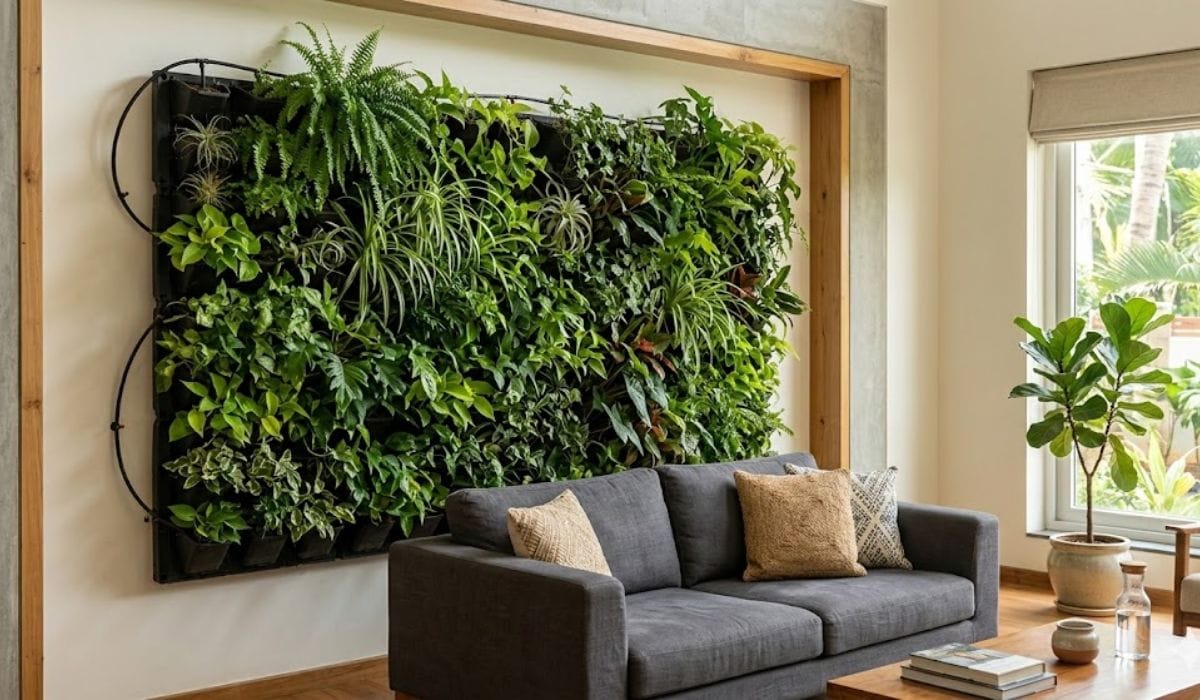
People are tired of staring at lifeless concrete. The global obsession with “Biophilic Design” : the practice of bringing the outdoors in is at an all-time high. A DIY vertical garden isn’t just a collection of pots; it’s a living, breathing lungs-system for your home. I started my first living wall using recycled felt pockets I found at a local market. It felt like a gamble, but two years later, it’s the first thing people comment on. It purifies the indoor air by filtering out common household toxins and acts as a natural sound insulator, which is a godsend if you live near a busy road.
Why it adds value: It creates an immediate “wow” factor for property listings. In a sea of beige walls, a lush green vertical garden screams “premium health-conscious living.”
The DIY Fix: Don’t manually water it you’ll forget, and they’ll die. Use a modular drip irrigation system made from recycled plastic bottles or PVC scraps. It’s low-maintenance and high-reward.
A living wall doesn’t just look luxury; it filters indoor air and improves mental well-being.
2. Smart Solar Shading: The “AC Killer”
In Tier-1 countries and the sun-drenched cities of India, cooling costs are the biggest household headache. Instead of throwing money at a bigger Air Conditioning unit, smart DIYers are looking at the windows. I learned the hard way that those cheap, $20 stick-on window tints from the hardware store are a waste of time : they bubble up and look terrible after one summer. Instead, invest about $100 in high-grade ceramic solar-reflective film. It stays perfectly clear but blocks up to 90% of infrared heat.
Global Appeal: Lower electricity bills are a universal selling point. If you can show a buyer your summer AC bill is 30% lower than the neighbor’s, the house sells itself.
Pro-Tip for Instant Heat Control: If you’re looking for an easy DIY fix, I recommend using a Rabbitgoo Window Privacy Film. It’s a non-adhesive, static cling film that blocks heat and creates a stunning stained-glass effect without any messy glue.
The “Brise Soleil” Hack: If you’re handy with a saw, build a reclaimed wood “Brise Soleil” (a permanent sun shade) over your south-facing windows. it looks incredibly modern and architectural while keeping the glass in the shade.
3. Kitchen Countertops from “Upcycled Terrazzo”
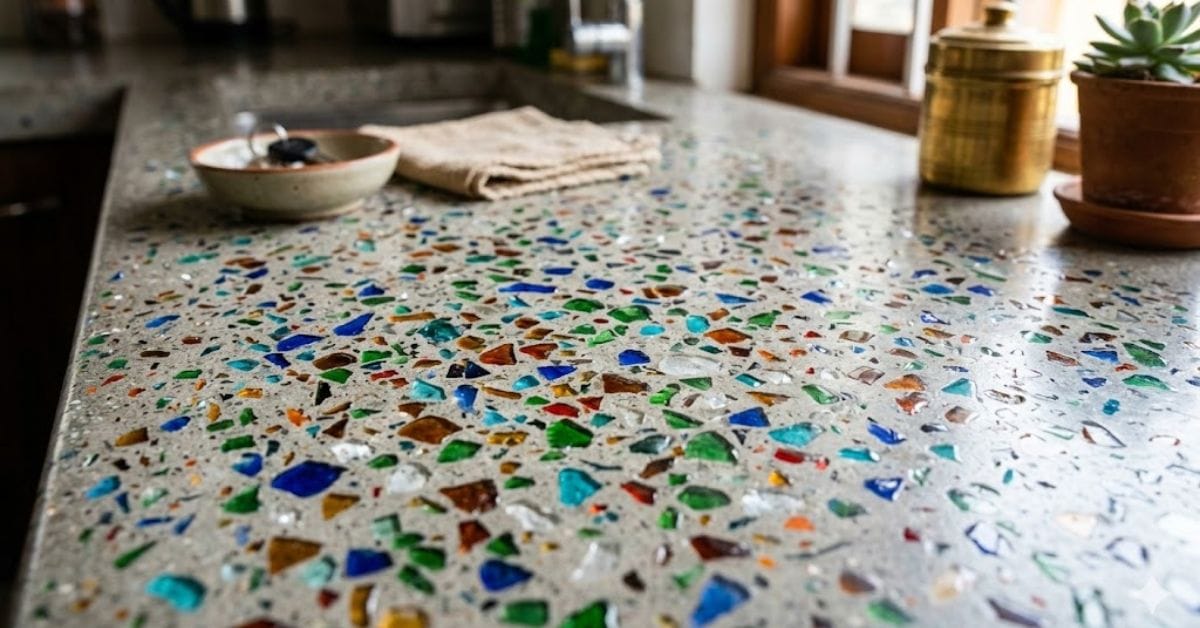
A kitchen renovation is usually the most expensive part of a home makeover. Most people think they have to spend $3,000 on a slab of marble. But the trend is “Trash-to-Table.” You can create a stunning, durable countertop using crushed recycled glass (old beer and soda bottles work great) and an eco-friendly concrete overlay. When you sand it down, the glass chips sparkle like jewels. It looks like high-end Italian terrazzo but costs a fraction of the price.
Benefits for the Homeowner: It’s heat-resistant, completely one-of-a-kind, and uses non-toxic sealants that keep your food preparation area safe from “forever chemicals.”
Upcycled terrazzo gives you a high-end designer look for a fraction of the cost of marble.
4. VOC-Free Statement Walls: The Lime Wash Revival
Standard acrylic paints off-gas Volatile Organic Compounds (VOCs) for years after they dry. It’s that lingering chemical scent. Smart homeowners are ditching the plastic-based paint for Lime Wash or Clay-based finishes. This isn’t just a “green” choice; it’s an aesthetic one. Lime wash gives that textured, soft, old-world European vibe that you see in luxury boutique hotels in Greece or Italy.
The Look: A soft, suede-like finish that changes with the light.
The Value: It’s naturally high in pH, meaning it’s mold-resistant and hypoallergenic. For a buyer with kids or allergies, this is a massive selling point that you won’t find in a standard “builder-grade” home.
Which home improvements add the most value?
While cosmetic changes are nice, the improvements that add the most “hard” value are those that impact the operational costs and longevity of the home. Insulation, high-efficiency lighting, and sustainable flooring consistently provide the best return on investment (ROI) because they directly lower the monthly bills for the next owner.
5. Graywater Recycling for Home Gardens
In water-stressed regions, having a lush green garden can feel like a guilty pleasure. But it doesn’t have to be. A simple DIY graywater kit diverts water from your bathroom sink or laundry machine directly to your garden. I installed a basic charcoal and sand filter system in my backyard to clean the soapy water before it hits the roses. It felt a bit “science project” at first, but it reduced my water waste by nearly 40%.
Search Intent: Globally, people are searching for “how to lower water bills permanently.” Installing this system turns your home into a self-sustaining oasis, which is a rare and valuable asset in today’s market.
6. Thermal Curtains: Natural Fibers vs. Plastic
The era of cheap, shiny polyester curtains is over. They trap heat in the summer and let it escape in the winter. Natural fibers like hemp and linen are taking over. Hemp is particularly incredible : it’s one of the most sustainable crops on earth and is naturally resistant to pests and rot. By sewing a thermal lining into DIY hemp curtains, you create a “blanket” for your windows.
I noticed an immediate difference in the “draftiness” of my living room once I switched. It feels cozier, and the fabric has a heavy, expensive drape that plastic curtains can never replicate.
7. The Attic “Seal-and-Save” Project
While insulation isn’t flashy, it is one of the most effective Eco-Home DIY Upgrades you can perform during a weekend.
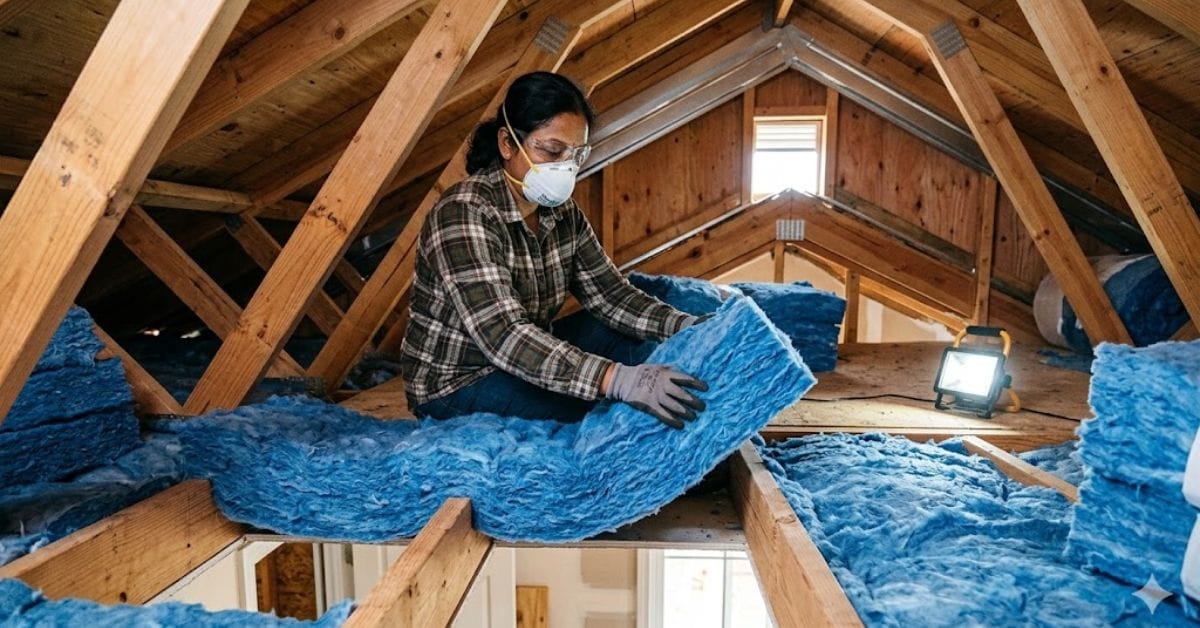
This isn’t the “sexiest” DIY project. You won’t get 1,000 likes on Instagram for a photo of your attic insulation. But it is the one project that pays off the most during a professional home inspection. Most homes lose 20-30% of their energy through air leaks in the attic. Instead of using fiberglass (which is itchy and full of chemicals), use eco-friendly sheep’s wool or recycled denim insulation. It’s safe to handle and much more effective.
The Payoff: This can jump your home’s energy rating (EPC in the UK, BEE in India) by an entire grade. High energy ratings are becoming a legal requirement for rentals and sales in many Tier-1 cities.
Denim insulation is non-toxic, easy to install, and significantly boosts your home’s energy rating.
8. Restored Hardwood: The “Linseed Oil” Secret
If you move into an old house and find hardwood floors under the carpet, do not : I repeat, DO NOT : rip them out to put in “luxury” vinyl or laminate. Plastic flooring is a depreciating asset. Real wood is a legacy. Sanding down old floors is a weekend of hard work, but finishing them with a natural linseed oil or beeswax finish is the ultimate eco-flex. It allows the wood to breathe and gives it a rich, matte glow that chemicals can’t touch.
Value Insight: Real wood lasts 100 years. Laminate lasts 10. Buyers are savvy enough to know the difference, and they will pay a premium for “authentic” materials.
9. Upcycled Smart Lighting: “Smart-Sustain-Chic”
Recommended DIY Kit: To easily automate your vintage lamps, I suggest using these Govee Smart Light Bulbs. With 16 million colors and Alexa/Google Assistant compatibility, they turn any recycled fixture into a high-end, energy-saving smart light.
We’ve all seen those ugly, plastic smart lamps sold at big-box retailers. They look cheap. Instead, find a vintage brass or ceramic lamp at a second-hand shop. Retrofit it with high-efficiency LED smart bulbs and a DIY motion sensor. The key is “Layered Lighting.” By using DIY dimmers and smart sensors, you ensure that lights are only on when needed, and at the lowest necessary brightness. This creates a luxury hotel atmosphere while slashing your lighting bill to almost zero.
Rainwater harvesting used to mean having a giant, ugly blue plastic barrel sitting in your yard. We are hiding them in plain sight. DIYers are now building “Rain Gardens” : depressions in the landscape that naturally collect runoff or disguising tanks behind stylish wooden slats or stone cladding. I’ve even seen people turn their rainwater tanks into outdoor benches. It turns a boring utility into a gorgeous landscape feature that buyers will love.
By integrating these Eco-Home DIY Upgrades, you turn a basic utility into a premium landscape feature.
The 7 Pillars of Sustainable Architecture: A DIY Roadmap
To truly master the eco-conscious makeover, it helps to understand the principles of green building that experts use. When you apply these to your Eco-Home DIY Upgrades, you are following the same standards as professional sustainable architects:
Energy Efficiency: Reducing power consumption (like our Solar Shading and Attic Sealing).
Water Efficiency: Conserving and recycling water (Graywater and Rainwater systems).
Indoor Environmental Quality: Non-toxic living (VOC-free paints and Living Walls).
Material Efficiency: Using recycled or upcycled materials (Terrazzo countertops).
Operation and Maintenance Optimization: Building things that last (Restored Hardwood).
Waste Reduction: Keeping materials out of landfills (Upcycled Lighting).
Siting and Structure Design: How the home interacts with the environment.
What Homebuyers Actually Care About
I’ve spent a lot of time talking to real estate agents in London, New York, and Bangalore. The narrative has shifted. Five years ago, buyers wanted a home cinema. Today, they want to know the “cost of ownership.” With global energy prices being as volatile as they are, a home that is insulated, self-shading, and water-efficient is seen as a “safe haven.” When you list your home and can prove that your Eco-Home DIY Upgrades reduced the monthly overhead by 20-25%, you aren’t just asking for a price : you are justifying a premium. You’re selling a lifestyle that is both luxurious and responsible.
I’m not a professional contractor. I’m just someone who got tired of living in a “standard” box and paying “standard” bills. Most of these projects don’t require a degree in engineering. They require a few clear weekends, some basic tools, and a shift in mindset. Start small. Maybe it’s the lime wash wall this weekend : it’s basically just fancy finger painting for adults. Maybe it’s the solar film next month. The point is, the world is changing, and the “disposable” way of living is dying out. Your home is your biggest asset. Why wouldn’t you want it to be healthy, efficient, and beautiful all at the same time? The future of home decor isn’t about what you can buy; it’s about what you can sustain.