
This post may contain affiliate links, If you choose to buy through these links, I may receive a small commission at no additional cost to you.
How to feel less overwhelmed at home wasn’t something I actively searched for.
Instead, it arrived quietly, without warning.
One day, I noticed I felt tired before doing anything at all.
The house was quiet, clean enough, and nothing seemed obviously wrong.
Yet, something felt off.
My chest felt heavy, small tasks felt more irritating than usual, and even sitting down didn’t bring the relief I expected.
This experience is common, especially for people who work from home or spend long hours indoors.
Over time, home can begin to feel like a place that asks too much, even when it looks perfectly fine on the surface.
Overwhelm at home is rarely caused by mess alone.
More often, it comes from invisible pressure that slowly builds up in everyday moments.
This isn’t about changing your lifestyle or fixing everything at once.
Instead, it’s about easing what’s weighing on you, gently and realistically.
Why Home Can Feel Heavy Without Looking Messy
Homes today carry more roles than ever before.
They function as workplaces, rest spaces, storage areas, and social zones, often all at the same time.
Because of this overlap, your brain doesn’t receive clear signals about when it’s allowed to slow down.
As a result, it stays alert for longer than it should.
That constant alertness doesn’t feel dramatic or obvious.
Instead, it shows up as quiet exhaustion that lingers throughout the day.
Once you understand this, something important shifts.
You stop blaming yourself and begin noticing how the space itself affects your energy and focus.
1. Start With One Spot That Affects You Every Day
Trying to improve the entire house usually increases overwhelm instead of reducing it.
For that reason, it helps to start small.
Choose one spot you interact with every single day.
It might be a desk, a kitchen counter, or a chair near a window.
Not because the area is messy, but because your eyes land there often.
Clear just enough to make that spot feel calmer.
Not perfect, just lighter.
I cleared one surface and stopped there.
There was no organizing system and no deep cleaning involved.
Even so, that single change reduced the mental noise more than I expected.
Keep your workspace neat and stress-free with this 5-tier desktop organizer that neatly stores files, papers, and everyday office essentials.
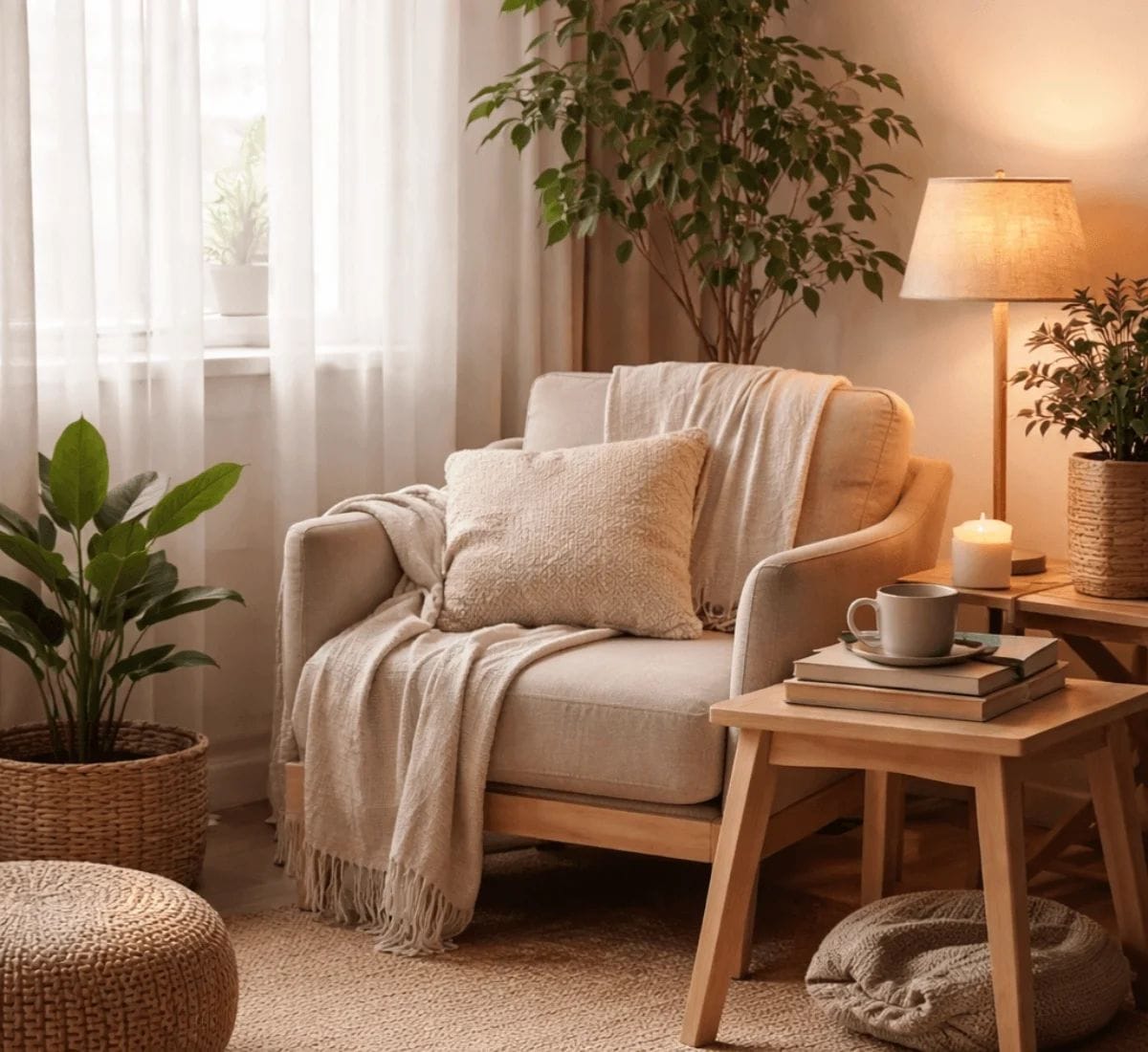
Once you have one calm spot, the rest of the house begins to feel less demanding.
2. Reduce Visual Decisions Before Fixing Anything Else
Your mind makes decisions constantly, even when you’re not aware of it.
Every visible object quietly asks for attention.
Over time, too many of these silent requests create mental clutter and fatigue.
That’s why reducing visual decisions often brings faster relief than reorganizing everything.
Research from the American Psychological Association shows that visual clutter can increase stress and reduce focus at home.
You don’t necessarily need fewer belongings overall.
What you need is fewer things in sight.
Move items off open surfaces when possible, group similar items together, and allow empty space to exist.
Empty space isn’t wasted; instead, it gives your mind room to breathe.
If clutter adds to stress, these low budget rustic decorating ideas for warm and inviting homes can help create a calmer atmosphere without overdoing it.
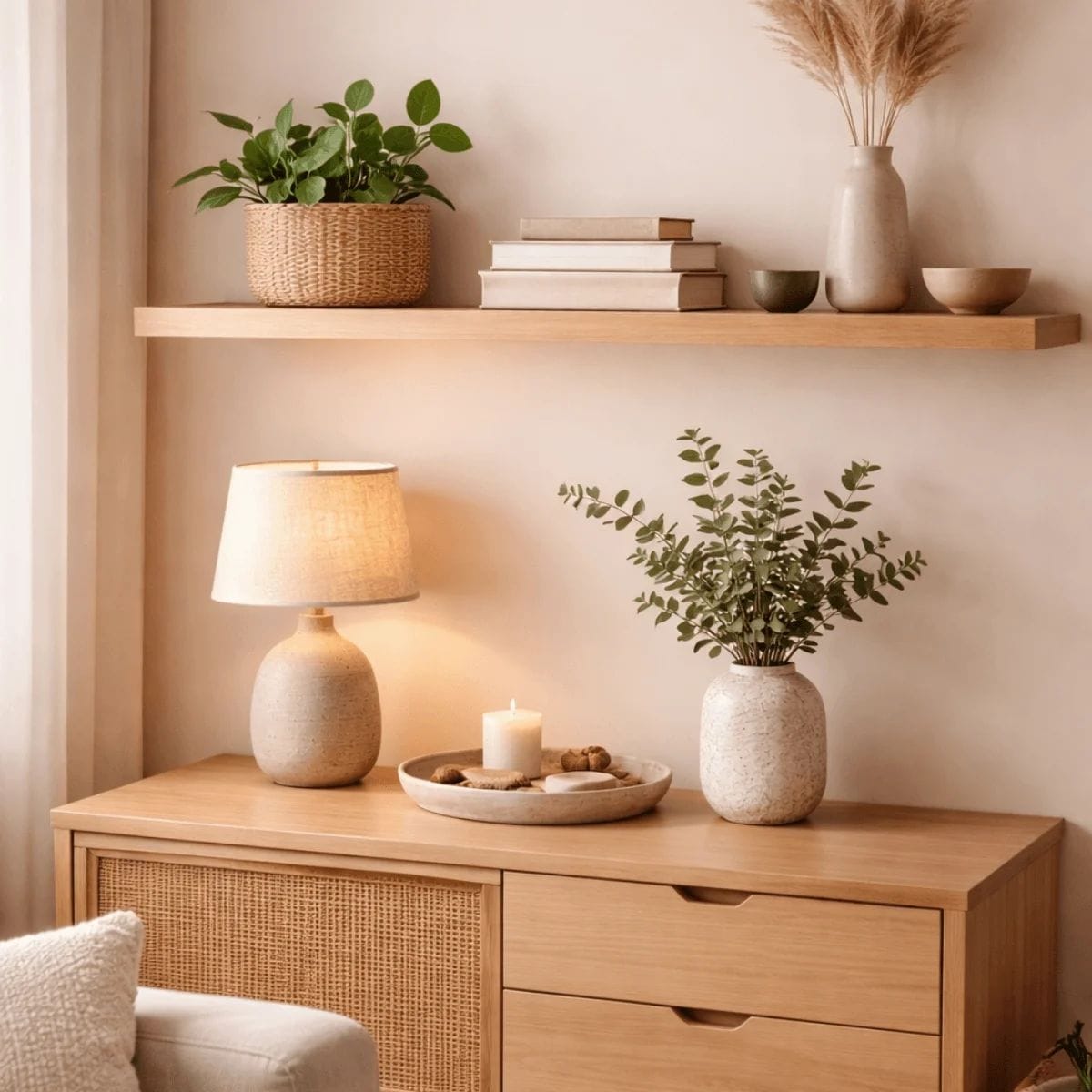
This small change alone can noticeably shift how a room feels.
When the room feels calmer, it becomes easier to feel less overwhelmed at home during the day.
3. Let Go of How Your Home “Should” Look
One hidden source of stress is expectation.
Homes are often filled with quiet “shoulds.”
It should be tidier, it should look better, and it should feel calmer by now.
However, those thoughts add pressure without solving anything.
In fact, they often make the space feel heavier.
A peaceful home isn’t a perfect one.
Instead, it’s a forgiving one.
When you stop comparing your space to images or old plans, tension drops naturally.
Your home doesn’t need to impress anyone; it simply needs to support you.
4. Adjust the Space to Match How You Live Now
Many homes are arranged for a version of life that no longer exists.
Work-from-home changed daily routines, but furniture and layouts stayed the same.
Because of this, a quiet mismatch creates friction throughout the day.
Ask yourself one honest question:
Does this room support what I actually do here today?
Not ideally.
Not someday.
Today.
Often, the solution is small, not dramatic.
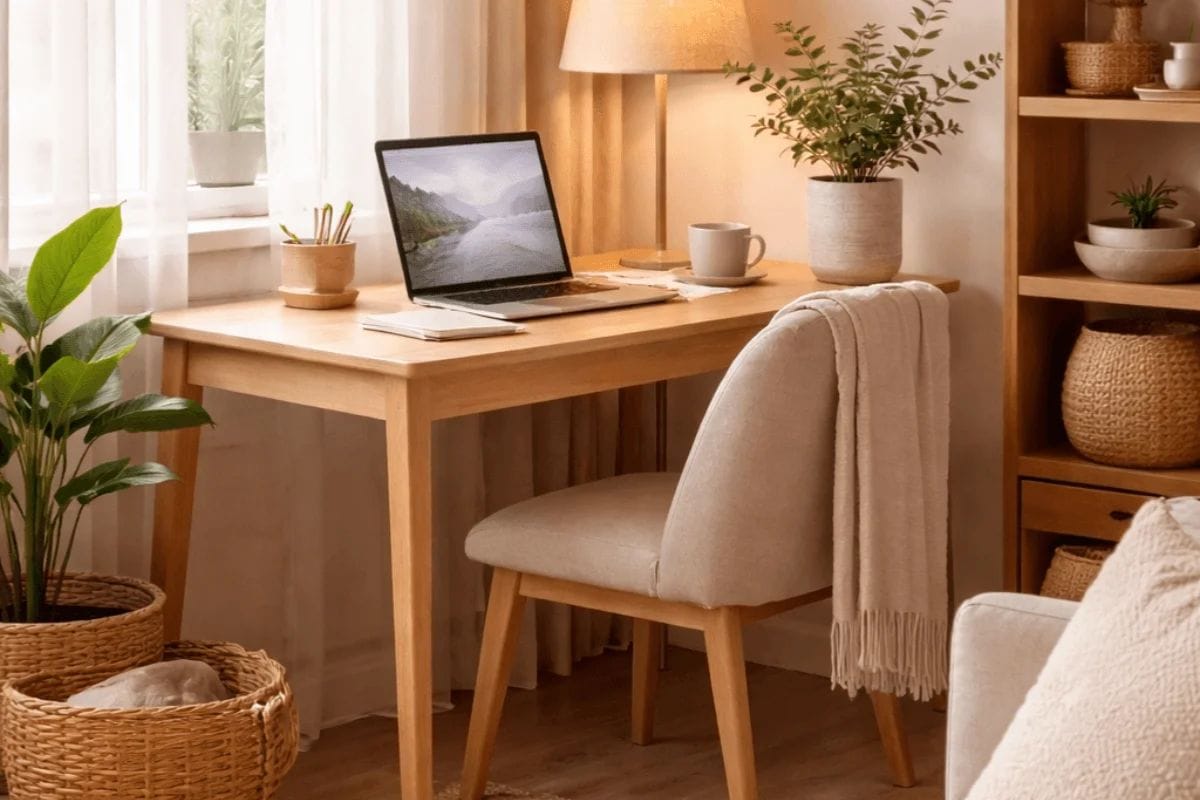
A desk moved closer to natural light, a chair removed that only collects clutter, or a lamp added to soften the evening atmosphere can make a real difference.
Create a calmer evening atmosphere with this adjustable LED desk lamp offering soft lighting, flexible positioning, and multiple brightness modes for comfortable reading or relaxation.
5. Create One Place Where Nothing Is Expected of You
Many homes don’t have a true rest zone.
The couch becomes a workspace, and the bed becomes a scrolling spot.
Because of this, the nervous system never fully switches off.
Choose one place where no tasks belong.
No laptop, no chores, and no planning.
It doesn’t need decoration or structure.
It simply needs permission.
6. Lower the Standard of “Done”
Unfinished tasks often create background stress that quietly follows you.
However, not everything needs full completion to stop weighing on your mind.
Some days, “good enough” truly is enough.
Laundry can wait, dishes don’t need to shine, and plans don’t need final decisions.
Progress brings relief, while perfection brings pressure.
This shift alone helps many people feel less overwhelmed at home.
7. Pay Attention to Background Noise
Overwhelm isn’t always visual.
Sound matters too.
Constant TV, frequent notifications, and appliances running without pause keep your brain in activity mode.
Because your brain reads noise as ongoing demand, turning something off can feel like setting a weight down.
You don’t need silence.
You just need fewer layers of sound.
8. Let Evenings End Softly
The way a day ends shapes how the home feels the next morning.
If evenings remain rushed, stress carries forward.
A softer ending helps your system reset.
There’s no need for a strict routine here.
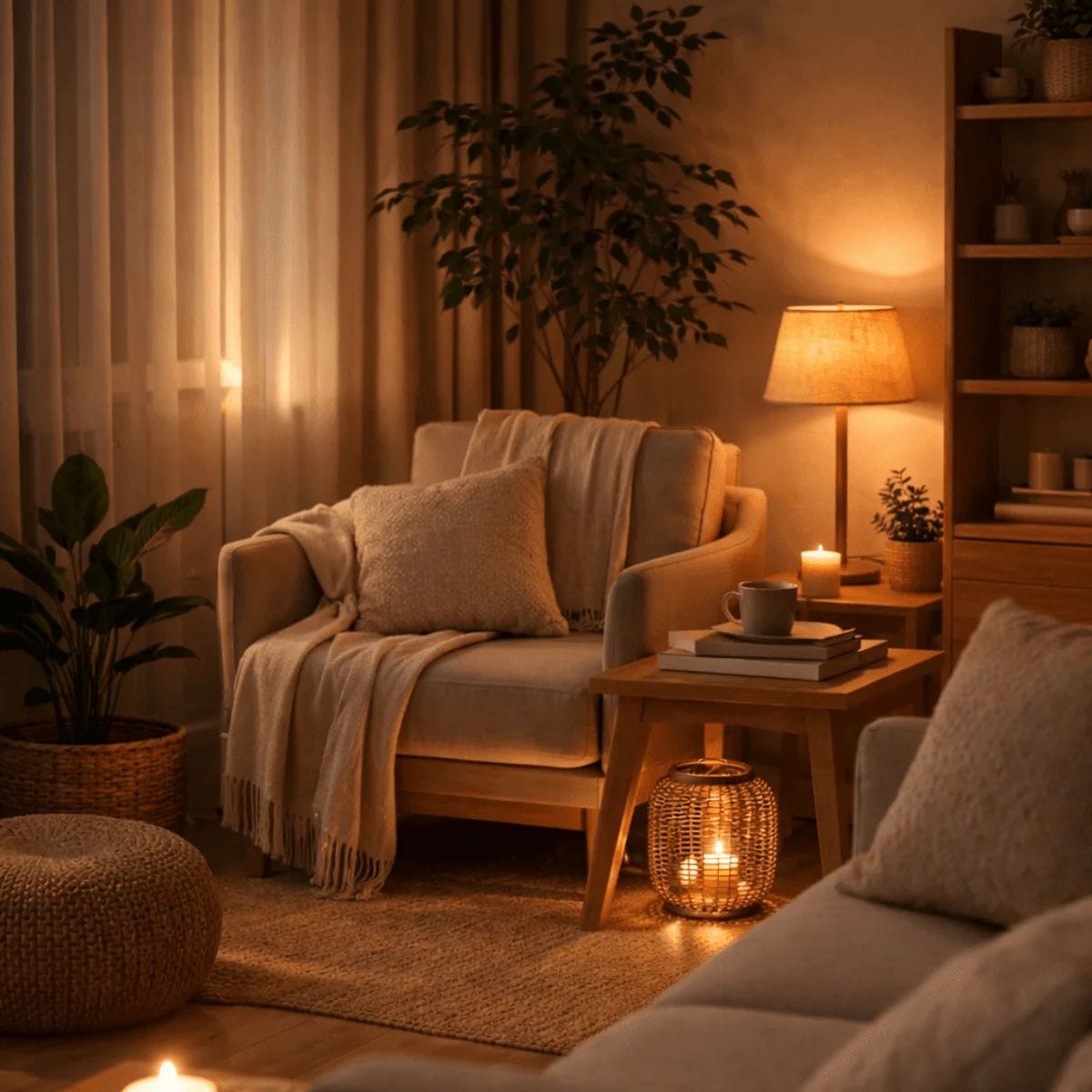
Lower the lights, close work tabs, and change into comfortable clothes a little earlier.
9. Stop Treating Your Home Like a Project
It’s easy to see a home as something that always needs improvement.
There’s always something to adjust, upgrade, or fix.
However, that mindset keeps pressure alive.
A home isn’t a project; it’s a place to live.
Some days, the most helpful choice is to stop adjusting and simply be there.
If you’re wondering how to feel less overwhelmed at home, start with one small change and let it build slowly.
When the Weight Starts to Lift
Feeling overwhelmed at home doesn’t mean you’re doing life wrong.
Most of the time, it simply means life changed faster than your space did.
That’s normal.
Homes shift slowly, while people don’t.
When your space begins supporting how you think, rest, and move — even in small ways — something changes.
The heaviness eases, the noise softens, and the house starts to feel like a place you can land.
Once that happens, you may notice something unexpected.
Simple routines also matter, and small sustainable lifestyle changes at home can quietly support a calmer daily rhythm.
You no longer feel the urge to escape home as often, because it finally feels lighter to stay.