
This post may contain affiliate links, If you choose to buy through these links, I may receive a small commission at no additional cost to you.
I was staring at my water bill last summer and realized something scary : we are literally pouring money down the drain just to keep a few tomato plants alive. Most of us were taught that gardening means digging, watering, and repeating. But the world is changing fast. Water isn’t just a utility; it’s a luxury.
That’s where Regenerative Gardening comes in. It’s not just “organic” gardening with a fancy name. It’s about turning your backyard into a sponge that actually creates more water and life than it consumes. Imagine a yard that stays green even when the local council announces a drought. It sounds like magic, but it’s just pure soil science. Let’s break down how you can build a ‘Water-Positive’ yard starting today.
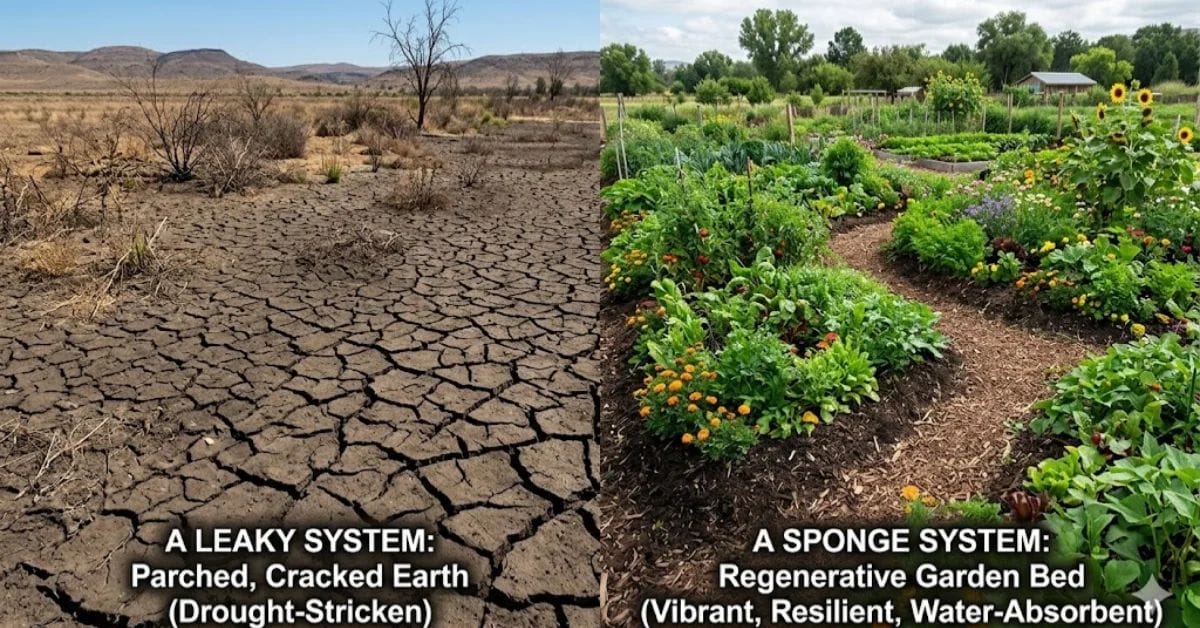
1. Why My Old Garden Was Failing (And Yours Might Be Too)
Most traditional gardens are “leaky systems.” You pour water on top, it evaporates in the heat, or it runs off the hard soil into the street. We’ve been “mining” our soil for years, taking out nutrients and putting back chemicals.
A Regenerative Gardening approach fixes the broken cycle. Instead of just “keeping plants alive,” we are rebuilding the soil’s biology. When your soil is healthy, it can hold up to 10 times its weight in water. That is the secret to a ‘Water-Positive’ yard. You aren’t just saving water; you are storing it underground like a bank account.
Pro Tip: Before you start your regenerative journey, it’s vital to understand the common pitfalls. Check out our guide on Why Most Beginner Gardens Fail – And How to Make Yours Work to ensure your first season is a success.
2. Is Your Soil a Sponge or a Brick?
If you want to survive the heatwaves, you need to stop digging. Every time you turn the soil with a spade, you release stored moisture and kill the tiny fungi (mycorrhizae) that help roots find water.
-
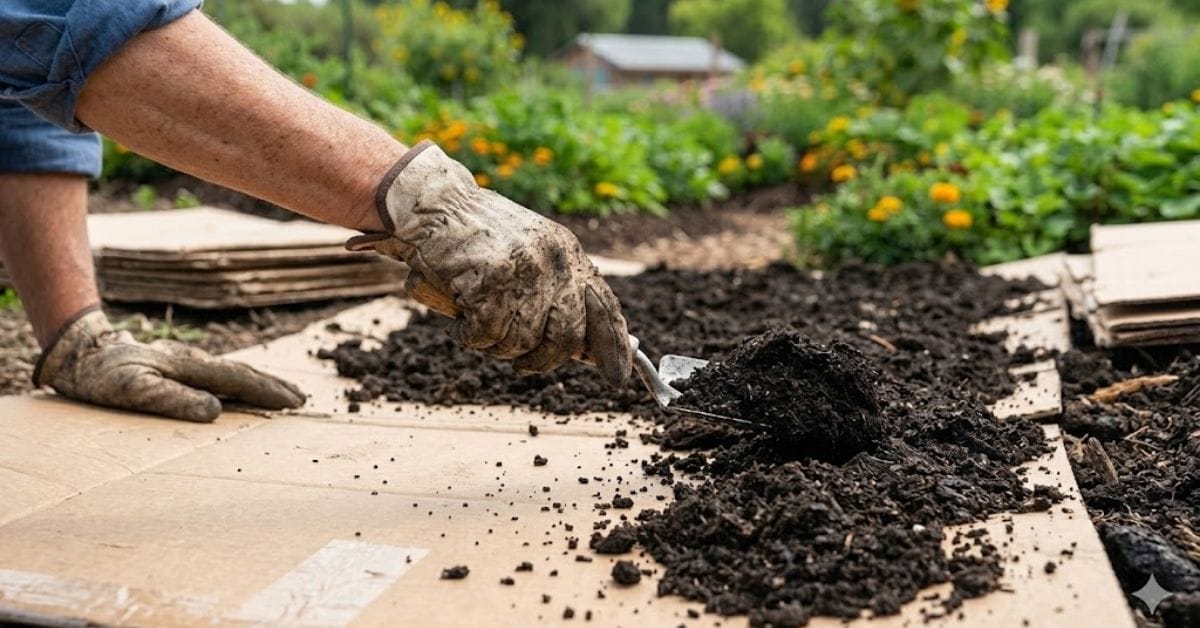
The Cardboard Trick: Lay down plain brown cardboard over your weeds.
-
The Mulch Layer: Add 4-6 inches of wood chips or straw on top.
-
The Result: This creates a “skin” for the earth. Underneath, the worms go to work, turning your hard-packed dirt into a soft, dark sponge.
3. How to Do a Regenerative Garden? (A Step-by-Step Reality Check)
Building your first regenerative garden bed doesn’t require expensive machinery; it simply requires working with nature’s existing cycles.
A lot of people think they need a tractor or a science degree, but honestly, it’s about doing less, not more. If you want to start a regenerative garden today, here is the honest roadmap:
-
Stop the Tilling: Put the rototiller away. When you flip soil, you’re essentially destroying the “internet of the earth” : the fungal networks that move water to your plants.
-
Armor the Soil: Never leave soil naked. If the sun can see your dirt, it’s dying. Use mulch, cover crops, or even fallen leaves.
-
Diversify Like Crazy: Don’t just grow rows of one thing. Mix flowers, herbs, and veggies together. This confuses pests and builds a stronger ecosystem.
-
Animal Integration (If you can): Even if it’s just inviting birds with a birdbath or keeping a few chickens, animals speed up the nutrient cycle.
-
Plant Perennials: Focus on things that come back every year. Their deep roots are the “anchor” of a regenerative system.
4. Is There Regenerative Gardening? (Debunking the Myth)
People often ask me, “Is this a real thing or just a buzzword?” Yes, it is very real. While “Organic” tells you what not to use (no chemicals), “Regenerative” tells you what you must do to improve the land.
According to Regeneration International, these practices not only save water but also help in capturing carbon from the atmosphere. It’s being adopted by massive farms across the US and India…
Read More: To see how these principles apply to high-yield production, read our detailed post on Climate Smart Gardening: High Yield with 50% Less Water.
5. What to Put on the Ground to Absorb Water?
We don’t want “runoff” : we want “soak-in.” If you have a spot in your yard where water just puddles or runs away, you need to change the surface.
-
Wood Chips (Arborist Mulch): This is the king of water absorption. It acts like a blanket that drinks up rain and releases it slowly over weeks.
Layering these chips is the fastest way to turn a dry patch into a high-performance regenerative garden bed.
-
Compost: High-quality compost can hold an incredible amount of moisture. It’s like adding millions of tiny sponges to your dirt.
-
Cover Crops: Plants like clover or vetch act as “living mulch.” Their roots create tiny tunnels that allow water to deep-dive into the aquifer.
-
Biochar: This is basically “super-charcoal.” Adding this to your soil is like giving it a permanent battery for water and nutrients that never wears out.
6. What are the Benefits of Watering Plants Properly?
It sounds simple : just give them water, right? Wrong. In a regenerative, water-positive yard, how you water is more important than how much.
-
Root Depth: Deep, infrequent watering encourages roots to grow down (where it’s cool) rather than staying near the surface (where they fry).
-
Disease Prevention: Watering the soil, not the leaves, keeps fungus and blight away.
-
Nutrient Transport: Water is the “bus” that carries food from the soil into the plant. Without the right moisture balance, your plants are literally starving even if the soil is rich.
-
Cooling Effect: A properly hydrated garden can drop the temperature of your backyard by 5-10 degrees through transpiration. It’s a natural AC for your home!
To truly automate your water-positive yard, installing a is the smartest move; its rain delay feature ensures you never waste a drop during a storm while keeping your plants hydrated on a perfect schedule. RAINPOINT Programmable Sprinkler Timer
7. Rainwater Harvesting: Beyond the Plastic Barrel
Everyone has a rain barrel these days, but that’s not enough. To be truly ‘Water-Positive’, you need to look at your entire landscape. How to capture every drop:
-
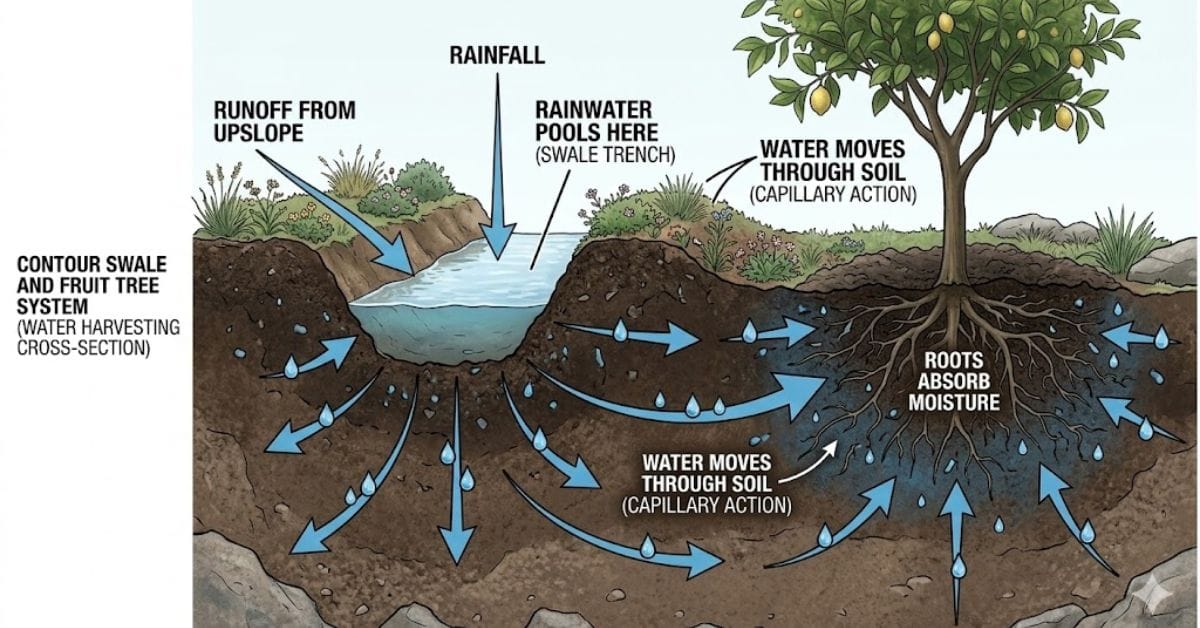
Build a Swale: These are simple shallow trenches dug on a skull curve. Instead of rain running off your property, it gets trapped in the trench and slowly soaks into the roots of your fruit trees.
-
Rain Gardens: Plant thirsty native flowers in the lowest spot of your yard. Let the runoff from your roof go there instead of the sewer.
-
Bury Your Wood (Hugelkultur): Burying old logs directly under your regenerative garden bed creates a massive underground sponge that stays damp for months.
8. Low-Water Crops That Actually Taste Good
Let’s be honest, nobody wants a garden full of dry cactus. You want food. the global trend is shifting toward “Perennial Vegetables” : plants you plant once, and they produce for years with very little water.
-
Asparagus: Once established, their roots go deep enough to find moisture even in a dry spell.
-
Tree Collards: These grow like a bush and don’t need the constant pampering that lettuce does.
-
Sweet Potatoes: Their vines cover the ground like a living mulch, keeping the soil cool.
-
Moringa (The Miracle Tree): Huge in India and now a global superstar. It grows in poor soil and needs almost zero extra water once it’s a few feet tall.
-
Native Herbs: Rosemary and Thyme are basically unkillable and smell amazing.
9. Greywater: Why Are You Flushing Your Best Fertilizer?
This is the “Commercial” side of the trend. In Tier-1 countries like the USA and Australia, Greywater Systems are becoming a massive industry.
Think about it: Your laundry water and shower water are perfectly fine for your fruit trees (if you use biodegradable soap). “Water-Positive” homes will have simple diverter pipes that send “used” water straight to the garden. It’s a bit of work to set up, but it cuts your outdoor water usage to nearly zero.
10.Smart Garden Tech: Merging Sensors with Ancient Regenerative Wisdom
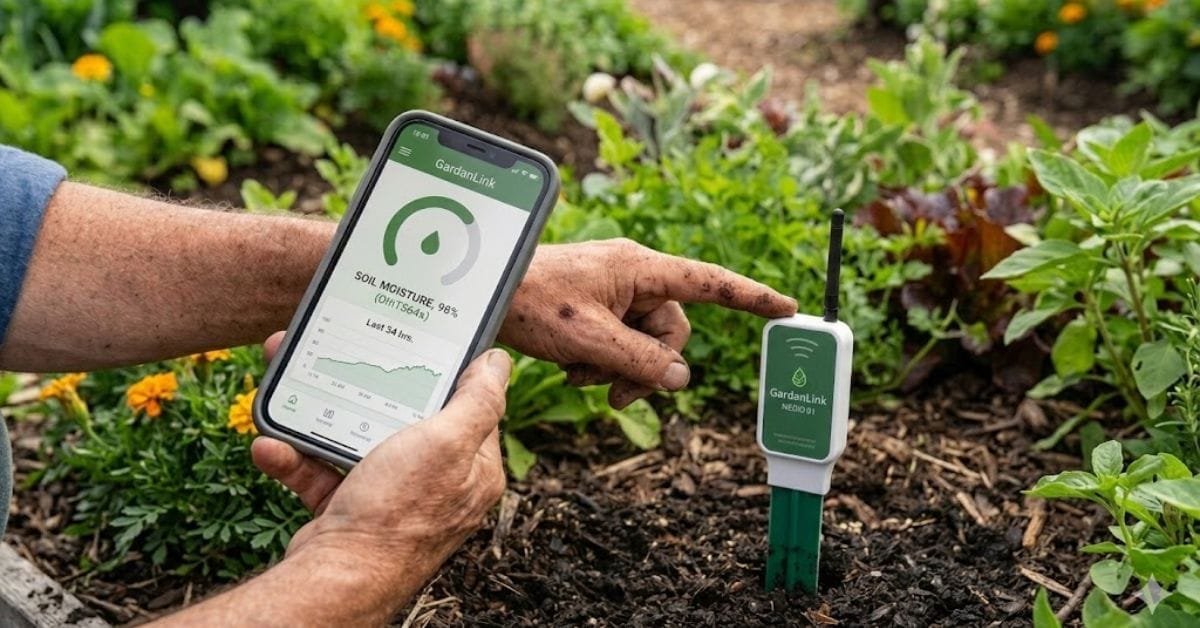
You don’t need to be a scientist to do Regenerative Gardening, but a little tech helps. Low-cost soil moisture sensors (connected to your phone) can tell you exactly when the soil is actually dry.
Stop “schedule watering” (doing it every morning just because). Only water when the sensor says the roots are thirsty. This one habit alone can save thousands of gallons a year.
If you want to garden with data rather than just guesswork, this 4-in-1 Soil Moisture Meter is a boon. It accurately measures not only soil moisture but also pH levels and sunlight intensity, which are crucial for plant growth.
11. Common Mistakes Beginners Make (The Truth)
I’ve killed more plants than I can count, and usually, it was because I was trying too hard.
-
Over-clearing: Stop pulling every leaf and twig. In a regenerative system, “messy” is healthy. Leaves are free mulch.
-
Using “Cheap” Dirt: Don’t buy the $2 bags of synthetic soil from big-box stores. It’s dead. Use local compost or make your own from kitchen scraps.
-
Planting too late: the spring is getting shorter. Get your “Water-Positive” infrastructure (the swales and mulch) ready in the winter so you’re ready for the first rain.
12. A Future Where Your Garden Feeds You (And the Planet)
Regenerative Gardening isn’t just a hobby anymore; it’s a survival skill. When you build a ‘Water-Positive’ yard, you are doing something bigger than just growing a few tomatoes. You are cooling your local micro-climate, providing a home for bees, and making sure your family has fresh, nutrient-dense food regardless of what the grocery store prices look like.

It starts with one layer of mulch. One rain barrel. One “no-dig” bed. your neighbors will be asking how your yard is so green while theirs is brown. You can just smile and tell them you’re working with nature, not against it.
Ultimately, every home should have a regenerative garden bed to conserve water and grow nutrient-dense food for the family.