
This post may contain affiliate links, If you choose to buy through these links, I may receive a small commission at no additional cost to you.
Small Space Gardening Ideas for Apartments and Urban Homes did not become interesting to me because I had extra space.
It happened because I didn’t have space at all.
Like many city apartments, my balcony was narrow, half of it already occupied by a washing stand, and the remaining portion looked too small to even try gardening.
For a long time, I believed plants needed a proper yard.
Then one day I placed a single mint pot near the railing just to see what would happen.
That small decision quietly changed the way I looked at my home.
Urban gardening does not begin with big plans.
Usually it starts with a quiet curiosity – I wonder if something can grow here.
Once the first plant survives, the rest slowly follows.
Small spaces rarely stop gardening; only the idea that space is not enough stops it.
These small space gardening ideas for apartments make growing food possible even in compact homes.
1. Looking at Space Differently
The first lesson small-space gardening teaches is simple: the floor is not the only place where plants can live.
Initially, I arranged every pot on the balcony floor.
Within a week, the place felt crowded, difficult to clean, and honestly a little irritating.
When I added a simple wall rack later, the same balcony suddenly looked organized and even slightly bigger.
Most apartments actually have more gardening space than we think – walls, railings, window edges, unused corners.
Once plants begin moving upward instead of spreading outward, the space starts cooperating.
Before buying anything, just stand in your balcony or near your window at different times of the day and notice where sunlight falls.
That small observation solves half of the beginner problems.
Plants fail less when we place them where light already exists instead of forcing them into random spots.
2. Starting With Easy Plants Builds Confidence
When people start gardening, many choose plants that look attractive in pictures but are difficult to grow in containers.
I made that mistake too.
Large vegetable varieties struggled in small pots, and I assumed I was “bad at gardening.”
Later I switched to herbs and leafy greens, and suddenly everything began growing easily.
Herbs like mint, basil, coriander, and parsley are surprisingly forgiving.
Even if watering is not perfectly timed, they usually recover quickly.
Leafy greens such as spinach and lettuce also suit apartments well because they grow fast.
Seeing results within a few weeks keeps motivation high.
Nothing encourages a beginner more than harvesting something small but real.
Once confidence builds, adding plants like cherry tomatoes or chilies becomes easier.
These varieties give good yield even in medium containers and make balcony gardening feel practical, not just decorative.
Many beginners start with small space gardening ideas for apartments because they require very little space.
If you want beginner-friendly crops, read our Easy Vegetables to Grow at Home for Beginners guide for simple starting ideas.
3. Containers Do Not Need to Be Expensive
One thing many beginners assume is that gardening requires buying new pots, stands, and accessories.
In reality, some of the most useful containers come from things already lying around the house.
Old paint buckets, plastic storage tubs, and even large cooking oil cans can become planters after adding drainage holes.
I still use a few containers that started their life as household storage boxes.
They work perfectly fine, and honestly, plants do not care how expensive their container is.
Uniform container sizes help more than fancy designs.
When pots are similar in size, watering becomes easier because soil moisture behaves similarly across plants.
Over time, small practical choices like this save a lot of effort.
4. Vertical Gardening Changes Everything
The biggest improvement in my small balcony happened when I stopped thinking horizontally and started thinking vertically.
A simple three-tier stand instantly created space for several additional plants without reducing walking area.
Vertical setups also make the garden look cleaner.
Instead of scattered pots everywhere, plants appear arranged, almost like a small green shelf.
If you are planning a balcony setup, you can explore practical vertical plant stands available here to maximize small-space gardening.
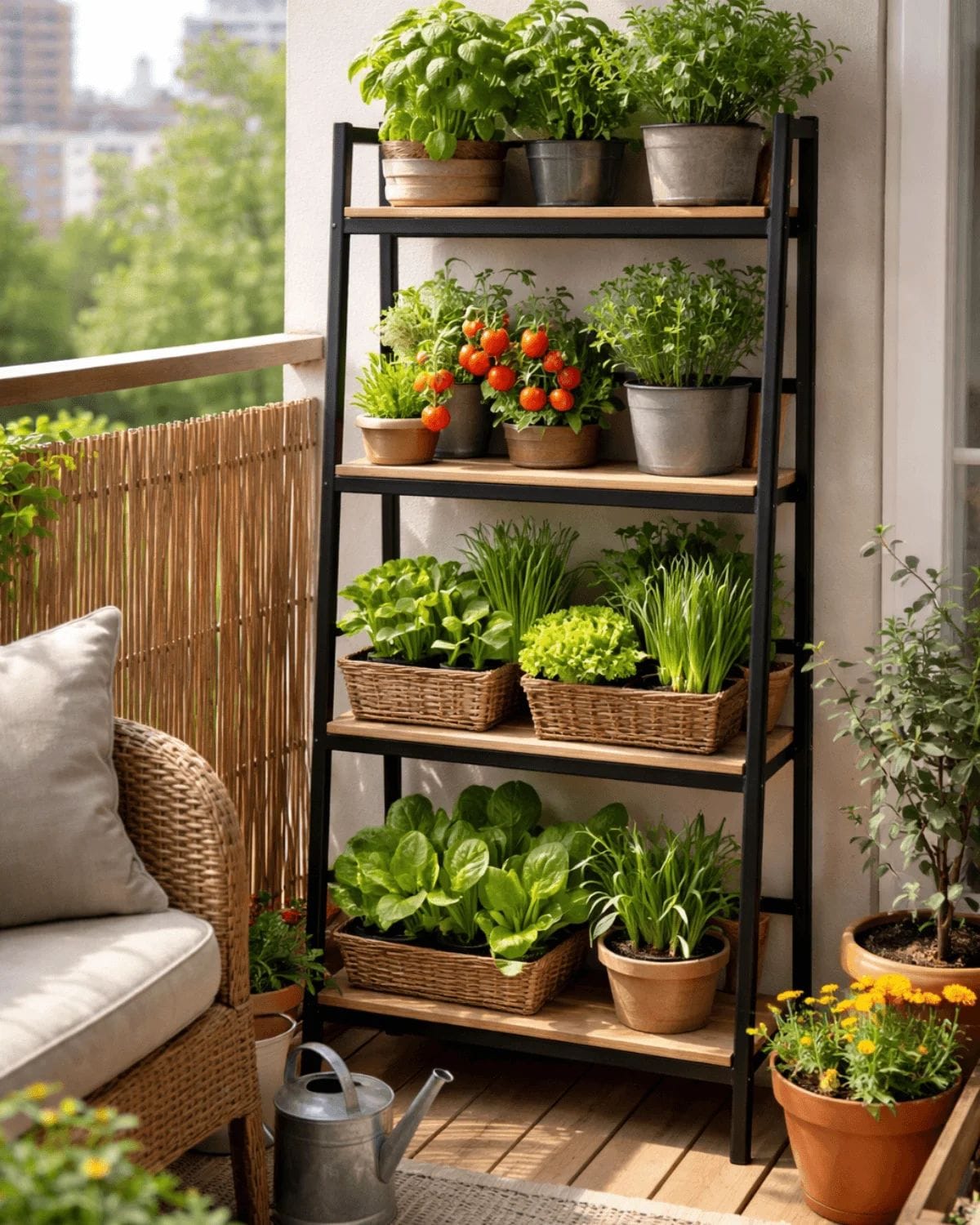
Hanging planters near rag the floor.ilings or windows also work well, especially for trailing plants.
They soften the look of concrete balconies and add depth to the space.
5. Window Gardening Works Surprisingly Well
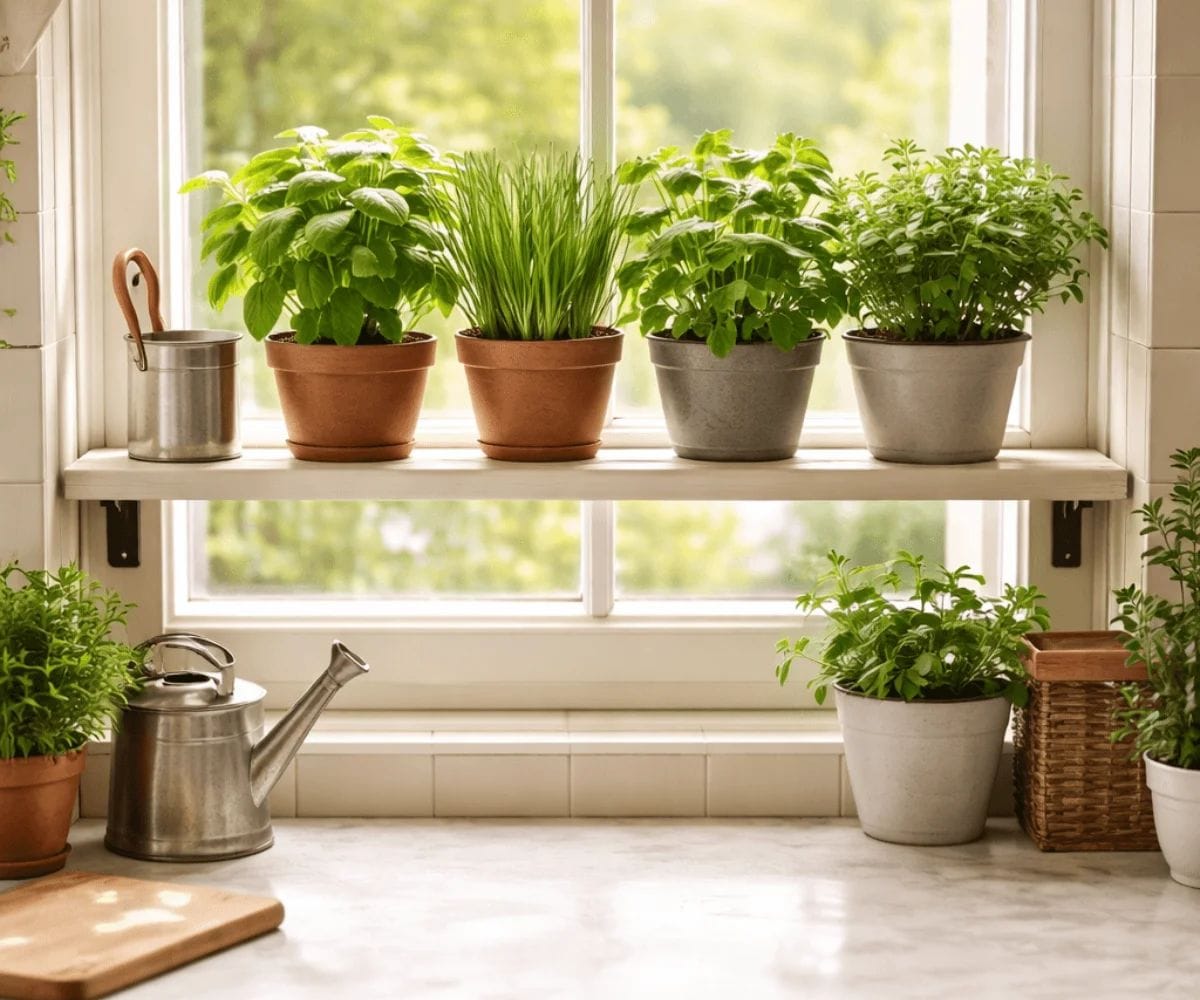
Many apartments do not have balconies, but windows often provide enough light for small edible gardens.
Kitchen windows are especially useful because herbs grown there are easy to pick while cooking.
At one stage I lived in a small studio apartment where the only gardening spot was a window ledge.
A simple shelf held coriander, green onions, and a basil plant.
The harvest was small, yet the freshness made everyday meals noticeably better.
6. Watering Habits Matter More Than Tools
In small containers, soil dries faster than ground gardens, so watering needs to be consistent.
But consistency does not mean heavy watering.
Overwatering is actually one of the most common beginner mistakes.
A simple habit works well: touch the soil surface before watering.
If it still feels slightly moist, waiting another day usually helps.
Plants prefer slightly dry soil over constantly soaked roots.
Adding a thin layer of dry leaves or coconut husk on top of the soil also slows water evaporation.
After I started doing this, watering frequency dropped noticeably during summer.
Small tricks like this make apartment gardening much easier to maintain.
You can also learn How to Turn Kitchen Scraps Into Useful Garden Fertilizer to naturally improve soil health in container gardens.
Busy schedules become easier to manage when using self-watering plant pots available here for small apartment gardens.
7. Avoiding the “Too Many Plants Too Fast” Problem
Many people begin enthusiastically and buy ten or fifteen plants at once.
Within a few weeks, maintenance becomes confusing – different watering needs, different sunlight demands, and suddenly gardening feels stressful instead of relaxing.
Starting with five to eight plants is usually better.
Once those stabilize, adding new varieties becomes simple.
Small-space gardening grows best step by step, not all at once.
Over time, small space gardening ideas for apartments help transform unused corners into productive green areas.
8. Recycled Gardening Feels Surprisingly Rewarding
Urban gardening naturally connects with recycling habits.
Many household items can become planters instead of being discarded.
Plastic bottles can grow herbs, wooden crates can become mini vegetable beds, and unused buckets can support leafy greens.
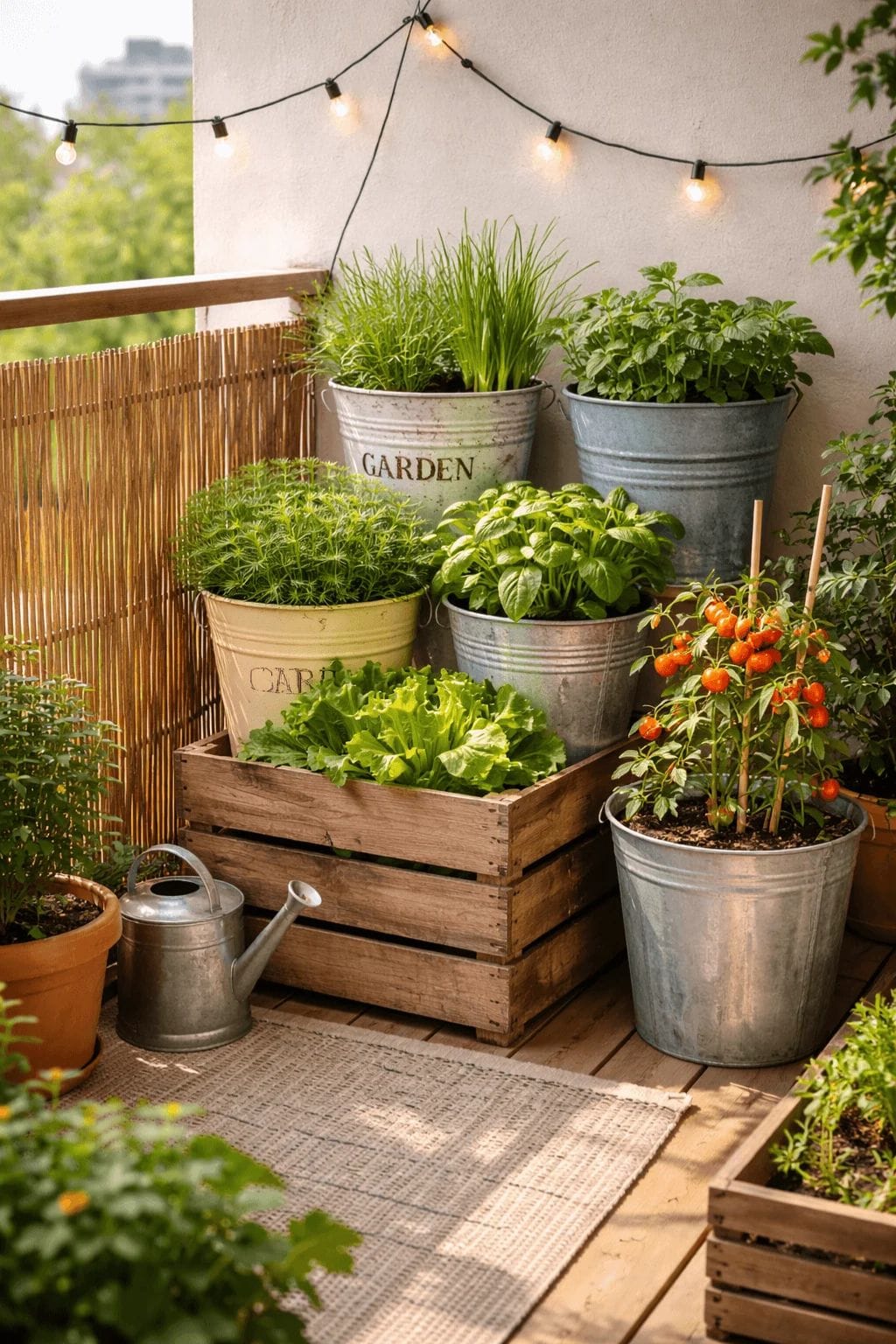
This approach not only saves money but also makes the garden feel more personal.
Each container carries a small story of reuse.
9. The Small Everyday Benefits People Don’t Expect
Most apartment gardeners do not grow enough food to replace grocery shopping completely.
The benefits appear in smaller ways.
Fresh coriander available anytime, a few chilies picked before cooking, or simply watering plants early in the morning creates a calm start to the day.
Over time, the green corner begins changing how the home feels.
Even a tiny balcony looks softer and less mechanical when leaves start filling the edges.
Guests often notice the plants before anything else.
According to global urban agriculture research such as the FAO report, urban gardening supports household food supply and environmental benefits.
10. How Small Gardens Quietly Expand
Something interesting happens after the first few months.
Once people see plants surviving in small spaces, they start spotting new possibilities – a railing that can hold a planter, a wall that can support a shelf, a corner that can host a small stand.
The space does not actually increase, but awareness of the space increases.
That is when apartment gardening slowly becomes a lifestyle habit rather than a one-time experiment.
The First Green Corner Often Starts Quietly
Most apartment gardens do not begin with big plans.
They begin with a small container placed near a window or balcony, simply to see whether something will grow there.
A few days later, new leaves appear, and that small corner starts drawing attention every morning.
Then another plant joins, then a small shelf, and slowly the space that once felt unused begins to change the mood of the home.
What surprises many people is not how plants grow – it is how quickly the mind starts noticing other empty corners that could also hold something green.
Sometimes the real question is not “Is my home big enough for a garden?”
Soon the question shifts to – where else can I add a little greenery?