
This post may contain affiliate links, If you choose to buy through these links, I may receive a small commission at no additional cost to you.
Why modern life feels busy even when nothing is wrong is a question many people rarely pause to ask.
On paper, everything looks fine.
The house is quiet.
There is food in the kitchen.
No urgent problems are waiting.
And yet, the feeling of being rushed, mentally crowded, or slightly restless doesn’t go away.
You sit down to relax, but your mind stays alert.
Even slow days feel full.
Not stressful exactly – just busy in an invisible way.
This feeling shows up across countries, cultures, and lifestyles.
It also has very little to do with productivity, success, or failure.
1. The Kind of Busyness You Can’t See
Modern life rarely feels busy because of one big task.
Instead, it feels busy because of many small, unfinished thoughts.
Your phone may be quiet, but your brain isn’t.
Your calendar looks light, yet your attention feels scattered.
This kind of busyness is subtle.
It lives quietly in the background.
A message you still need to reply to.
A task you postponed.
A decision you haven’t made yet.
None of these feel urgent on their own.
However, together they create constant mental noise.
That is why modern life feels busy even when nothing is wrong.
The load isn’t physical.
It’s cognitive.
It’s like having too many browser tabs open in your mind.
2. Too Many Tiny Decisions Drain Energy
Everyday life now requires constant choosing.
What to eat.
What to reply.
What to watch.
What to buy.
What to ignore.
Each decision seems harmless by itself.
But the brain treats every choice as work.
Even choosing not to decide still uses energy.
So by evening, many people feel tired without knowing why.
They didn’t do much, yet they feel done.
This quiet exhaustion often gets mistaken for laziness.
It isn’t.
It’s decision fatigue hiding inside normal routines.
Psychological research on decision fatigue explains how repeated small choices can quietly drain mental energy over time.

3. Constant Awareness Replaced Real Urgency
In the past, attention had limits.
Now, awareness rarely switches off.
You may not be working, but you’re still reachable.
You may not be busy, but you’re still available.
Notifications trained the brain to stay on standby.
Even silence feels temporary.
Because of this, rest often feels incomplete.
The mind keeps waiting for the next interruption.
This doesn’t mean technology is bad.
It simply means the brain hasn’t fully adapted yet.
In many homes, there is no clear “off” signal anymore.
Modern life feels busy because awareness became permanent, while rest became conditional.
4. Homes No Longer Signal Rest Clearly
Homes once created a clear boundary.
Outside meant demands.
Inside meant release.
Today, that line is blurred.
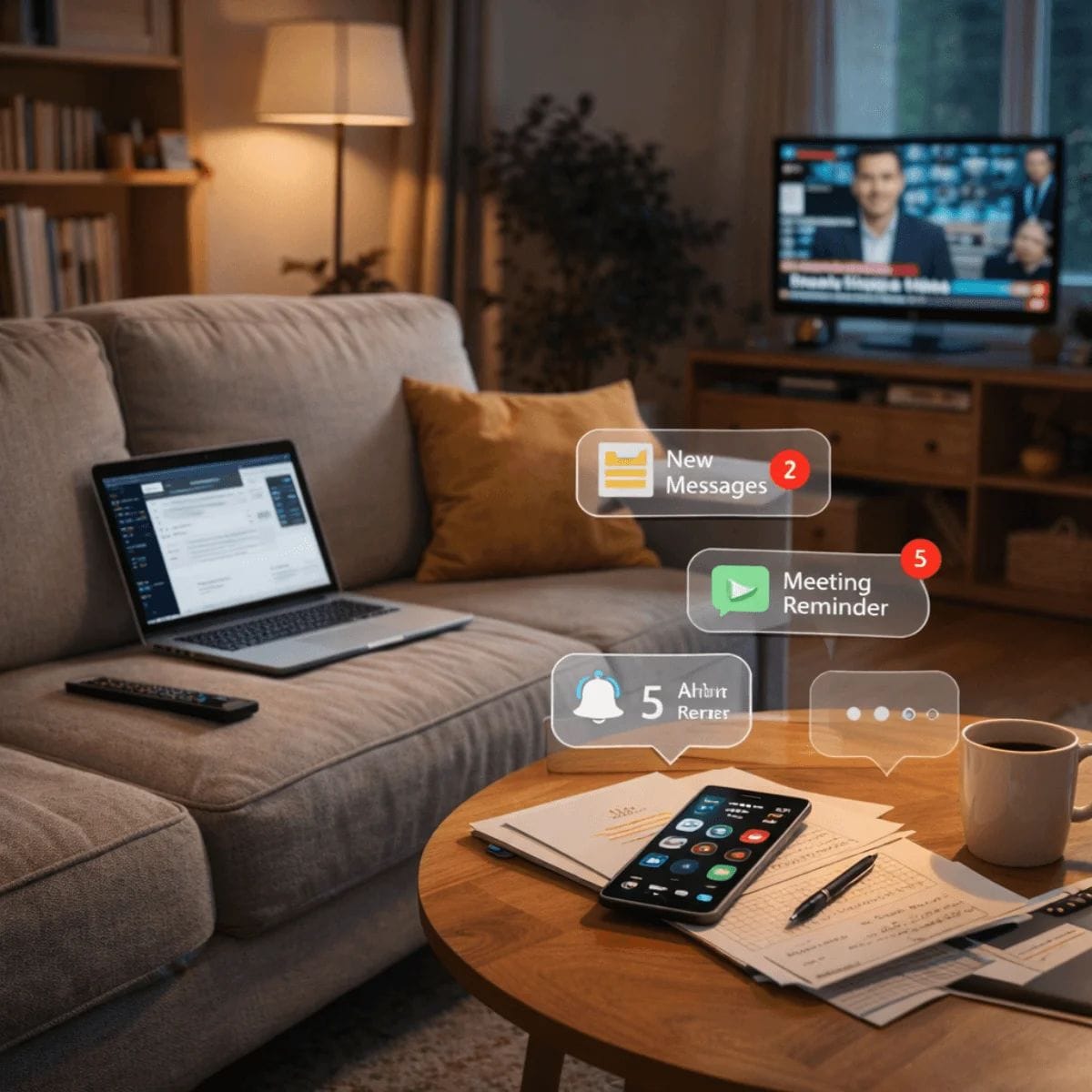
Work enters the living room.
News reaches the bedroom.
Expectations follow you everywhere.
Even when nothing is happening, the space still feels active.
Open tabs.
Visible clutter.
Screens that never fully sleep.
Wearing blue-light-blocking glasses during evening screen use can reduce digital eye strain and help the mind shift more easily into a relaxed state.
The environment itself asks for attention.
As a result, your body stays slightly switched on.
This is another reason why modern life feels busy even when nothing is wrong.
The home no longer automatically tells the body it’s safe to slow down.
If your home often feels heavy instead of calming, learning how to feel less overwhelmed at home can gently shift how your space supports you.
5. Productivity Culture Changed How Rest Feels
Rest used to be neutral.
Now, it feels earned.
Many people relax with a quiet sense of guilt.
It’s as if rest needs justification.
Even free time gets measured.
“Am I using this well?”
“Should I be doing something useful?”
Slowly, rest turns into another task.
Instead of calming the nervous system, it keeps it active.
Modern life feels busy because even pause moments get evaluated.
The body relaxes more slowly when the mind keeps score.
And if you grew up seeing busyness as “good,” this becomes even stronger.
6. Emotional Input Is Constant and Unfiltered
News, opinions, trends, and stories arrive without pause.
You may not engage deeply, but exposure still counts.
The brain processes tone, emotion, and urgency automatically.
Over time, this background emotional input builds quiet pressure.
Nothing feels clearly wrong.
Yet nothing feels fully settled either.
That low-level stimulation adds to the sense of busyness.
Not because life is heavy.
But because the mind is always slightly full.
Even ten minutes of scrolling can leave the brain noisier than before.
A compact white-noise sound machine can create a steady calming background, helping the mind relax and reduce invisible mental busyness.

7. Why Slowing Down Feels Uncomfortable at First
When life finally goes quiet, discomfort often appears.
Not because something is wrong.
But because the mind isn’t used to emptiness.
Silence brings unfinished thoughts to the surface.
Stillness returns awareness to the body.
At first, this can feel strange or unsettling.
So the gap gets filled quickly.
Music.
Scrolling.
Background noise.
Modern life feels busy partly because silence feels unfamiliar.
The brain mistakes stillness for lack.
But after a while, the nervous system learns something new.
Silence can also feel safe.
8. Busyness Became a Background Identity
For many people, being busy feels normal.
It signals relevance.
Engagement.
Connection.
Even when nothing demands attention, the mind keeps moving.
This doesn’t mean people enjoy stress.
It means busyness became familiar.
Letting go of it takes practice.
Not by doing less immediately.
But by noticing when nothing actually needs to be done.
That noticing is a skill, and it grows slowly.
9. Small Shifts That Reduce Invisible Busyness
No drastic lifestyle change is required.
In fact, gentle adjustments work better.
Here are a few that feel realistic for most people:
-
Let one notification category stay unread.
-
Leave small tasks for tomorrow without mentally rehearsing them.
-
Create one space at home that holds nothing digital.
Many of these ideas connect naturally with simple lifestyle changes at home that reduce mental pressure without adding new routines.
These aren’t productivity tricks.
They are signals to the nervous system.
Signals that nothing is wrong right now.
When your body feels safe, your thoughts begin to slow down naturally.

10. When Life Stops Feeling Busy Without Changing Much
Something interesting happens when mental load reduces.
Time feels wider.
Evenings feel longer.
Rest starts to feel real again.
Not because life became simpler.
But because awareness returns to the present moment.
Modern life feels busy even when nothing is wrong.
It stays that way until the mind receives permission to stop scanning.
That permission rarely comes from productivity.
It comes from safety, clarity, and gentle boundaries.
Sometimes, one small boundary is enough to start.
A Different Way to Look at Busy Days
If your days feel full without a clear reason, it isn’t a personal weakness.
It’s a response to a world that keeps asking for attention, even during quiet moments.
Nothing needs to be fixed immediately.
Nothing needs to be optimized.
Sometimes, simply recognizing that the pressure is environmental : not personal, lightens the load.
When the mind stops blaming itself, space slowly opens.
And in that space, even ordinary days can feel calmer.
Not because life changed.
Because your inner room finally got quieter.