
This post may contain affiliate links, If you choose to buy through these links, I may receive a small commission at no additional cost to you.
Why your home feels cluttered even when it’s clean is something many people experience, even if they never say it out loud.
The floors are swept, the dishes are done, and nothing looks out of place.
Still, the space feels heavy in a way that’s hard to explain.
Your eyes keep moving from one thing to another, your shoulders don’t fully relax, and your mind never settles the way you expect it to.
You sit down to rest, yet a quiet discomfort stays with you, as if something remains unfinished.
This isn’t laziness, and it isn’t because you need more storage, better furniture, or another makeover.
Most of the time, this feeling comes from small, invisible pressures built into modern homes.
These pressures don’t show up as mess or dirt.
They show up as mental weight.
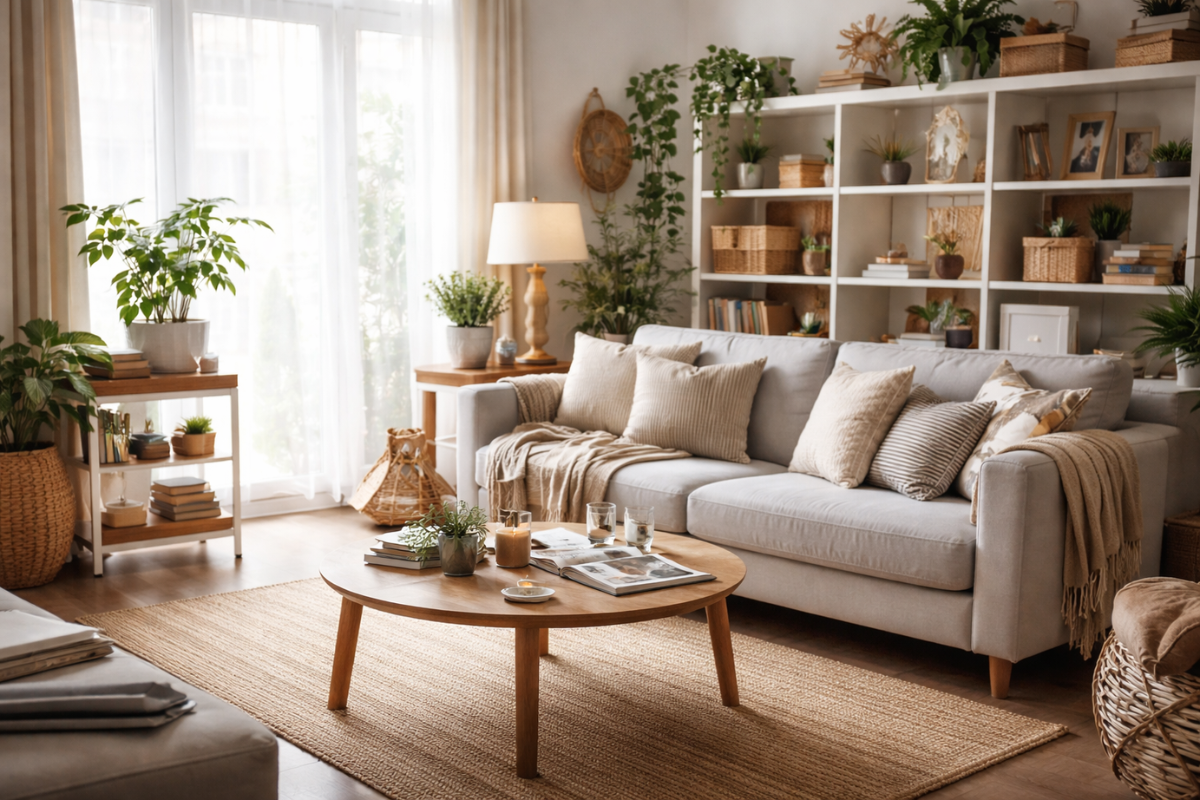
Many people don’t realize that why your home feels cluttered even when it’s clean has more to do with mental overload than physical mess.
The Difference Between Clean and Calm
Clean and calm are often confused, but they are not the same thing.
Clean simply means that surfaces are free of dirt and dust.
Calm means your brain is not being asked to process too much information at once.
Because of this difference, a home can be spotless and still feel cluttered when it keeps demanding attention in subtle ways.
The problem is not what you see, but how much your mind is being asked to handle.
Shelves filled with objects catch the eye repeatedly, while walls broken into too many visual sections create movement where rest is needed.
Furniture that fills space without supporting daily life adds quiet friction you may not consciously notice.
Even while resting, your eyes continue scanning the room.
Over time, that constant scanning creates mental noise.
And mental noise is what many people experience as clutter.
Research in psychology shows that constant visual stimulation increases cognitive load, which explains why a clean space can still feel overwhelming
Simple changes in layout and decor can reduce this mental noise, which is why minimal home decor ideas for a calm and clutter-free space often feel more peaceful even without deep cleaning.
This is exactly why your home feels cluttered even when it’s clean, even after you tidy everything.
Calm means your brain is not being asked to process too much information at once.
1. Too Many Visible Decisions
Every visible object asks a quiet question, even if you don’t notice it consciously.
Your brain keeps checking: should this be here, do I need this, and why did I keep it?
One object doesn’t matter much on its own, but dozens of them spread across a room slowly add up.
Open shelves are a common example of this problem.
They look beautiful in photos and design magazines because everything appears intentional and styled.
In real life, however, they keep the brain working in the background.
Books, jars, frames, and decor pieces each pull attention for a brief moment.
That moment may seem harmless, but when it repeats again and again, it creates fatigue.
As a result, even a clean room begins to feel cluttered because the mind never fully switches off.
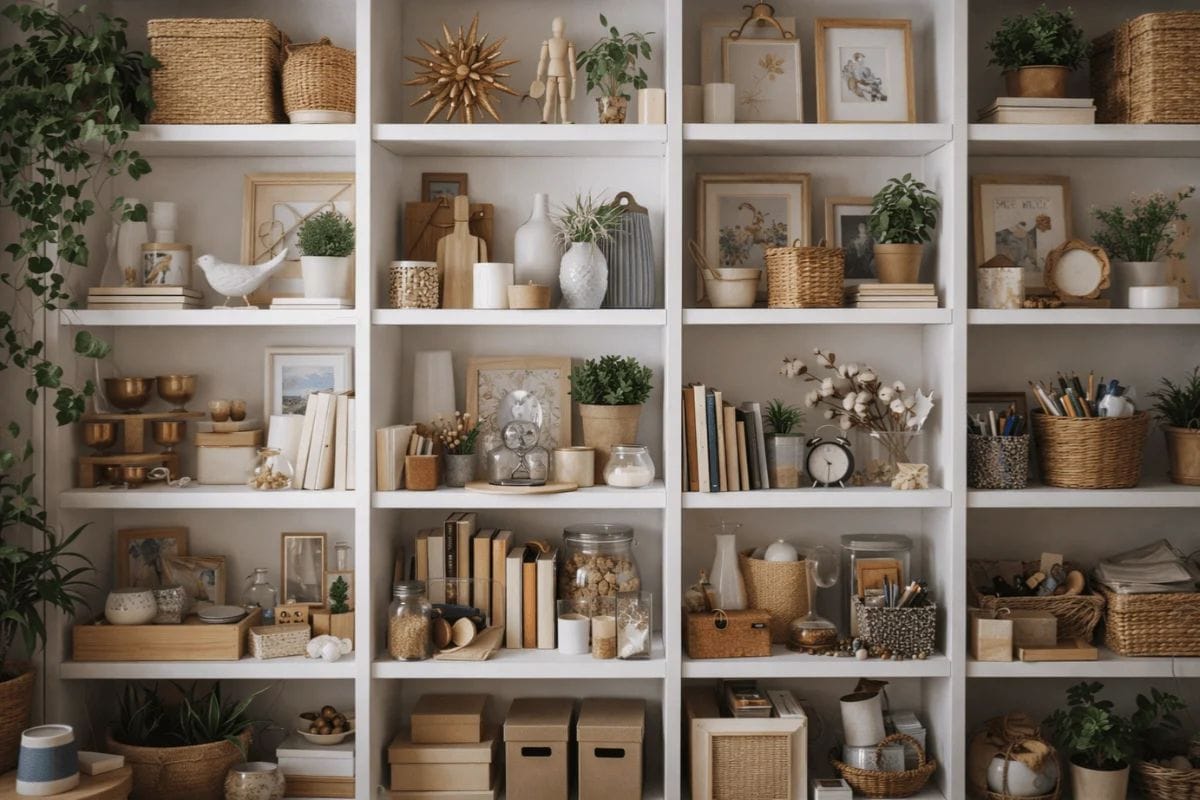
Creating focused zones with fewer visual decisions, like a perfect study nook at home, helps the brain settle and reduces that constant mental effort.
2. Flat Surfaces That Collect Everything
Flat surfaces naturally attract objects over time, especially in busy households.
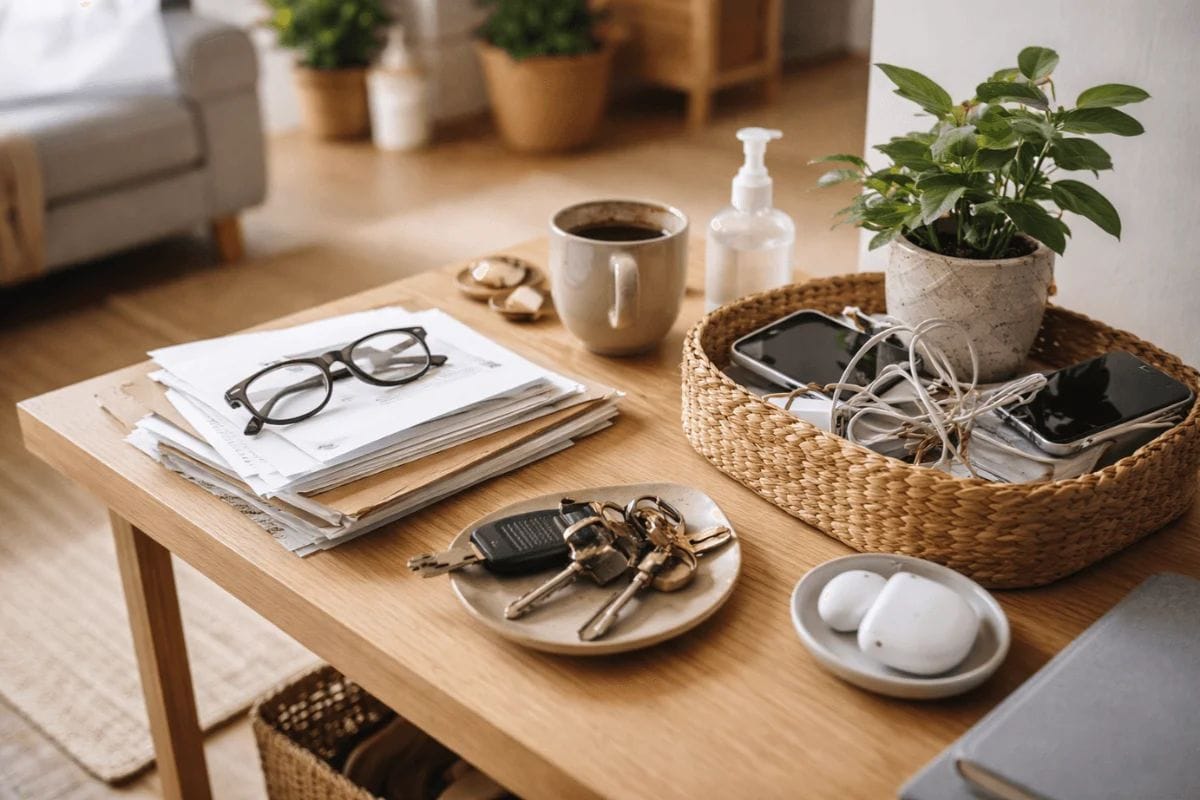
Tables, counters, and sideboards slowly become landing zones for daily life.
Keys are placed down “just for now,” mail waits to be opened later, and chargers stay plugged in longer than needed.
Individually, these things don’t feel like clutter.
However, together they create a sense of unfinished energy that the brain quietly tracks.
Your eyes read these piles as tasks that still need attention.
Even when you’re not consciously thinking about them, your brain registers them as reminders.
That’s why a room can feel cluttered even after cleaning.
Nothing is dirty, but nothing feels complete either.
A multi-tray paper organizer can keep documents and daily papers neatly grouped, helping flat surfaces stay visually clear and less mentally distracting.
3. Furniture That Doesn’t Match Daily Life
Sometimes the issue isn’t how much you own at all.
Instead, it’s how your space is arranged.
A chair no one actually sits on still takes up visual and physical space.
A table that blocks movement subtly changes how the room feels to move through.
Decor that looks good but serves no real purpose adds visual weight without adding value.
When furniture doesn’t support how you actually live, friction appears quietly.
You begin walking around things instead of through the space.
Over time, your body senses this discomfort before your mind does.
That quiet physical tension often shows up emotionally as clutter.
4. Visual Noise From Too Many Styles
Mixing styles isn’t the problem by itself.
The problem appears when too many visual stories exist at the same time.
A modern sofa tells one story, while a rustic table tells another.
Bright artwork next to neutral walls adds contrast, and metal beside wood beside plastic adds more layers.
Each piece may be fine on its own.
However, together they compete for attention instead of supporting one another.
The brain tries to connect everything into one story.
When it can’t, the space feels unsettled.
That unsettled feeling often shows up as “clutter,” even when everything is tidy and intentional.
Choosing fewer materials and warmer textures can reduce this visual noise, which is why low budget rustic decorating ideas for warm and inviting homes often feel calmer and more grounded.
5. Lack of Visual Rest Areas
Every home needs pauses built into it, just like a good conversation does.
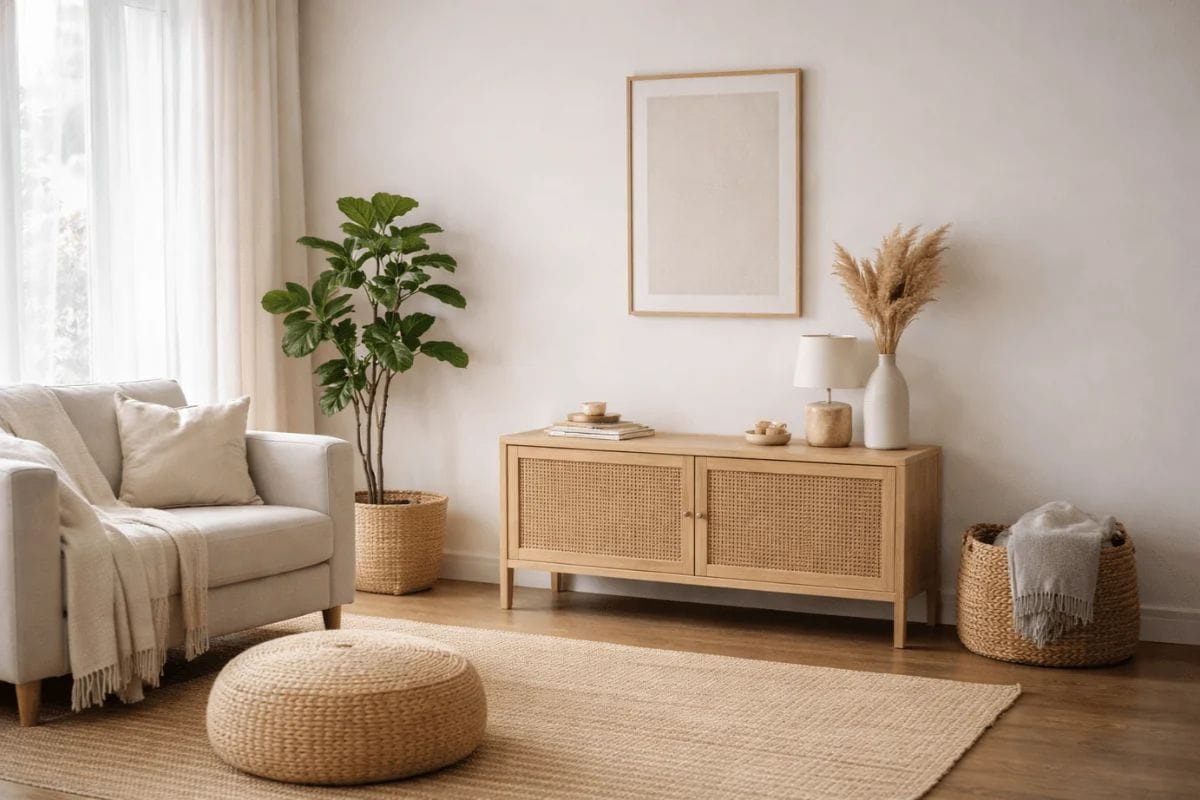
Empty wall space allows the eyes to stop moving, while clear corners reduce visual pressure.
Surfaces with nothing on them create balance rather than emptiness.
These areas are not wasted space.
They are breathing space for the mind.
Without visual rest areas, your eyes keep scanning the room.
Over time, that constant scanning leads to fatigue.
Calm homes always include places where nothing is happening.
Those quiet areas give your brain permission to slow down.
6. Lighting That Exposes Everything
Bright overhead lighting shows everything at once, which can overwhelm the senses.
It flattens the room visually, removes shadows, and makes nothing feel soft or layered.
As a result, your eyes take in too much information too quickly.
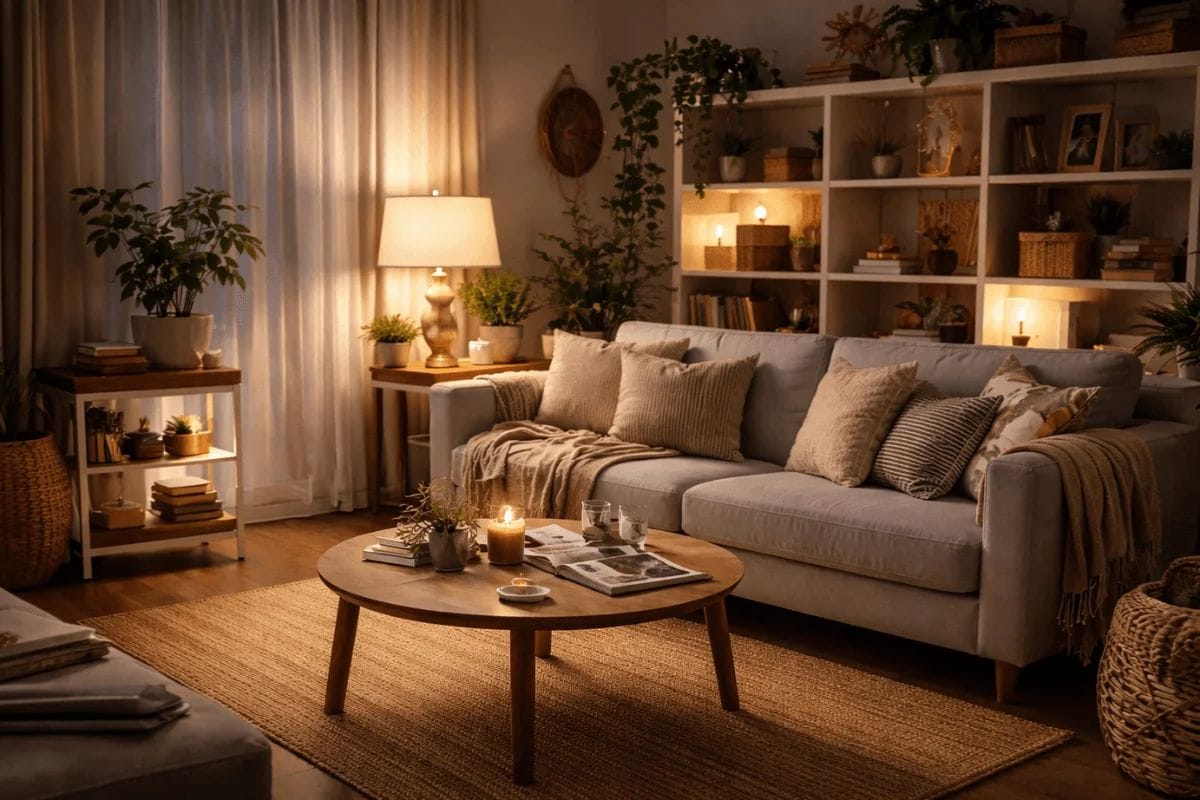
Layered lighting changes this experience significantly.
An adjustable eye-caring desk lamp with soft layered lighting can reduce harsh brightness and make work areas feel calmer and less visually overwhelming.
A floor lamp in one corner creates depth, while a table lamp near where you sit adds warmth.
Softer light allows parts of the room to fade gently into the background.
Because less is highlighted at once, more is allowed to rest.
That fading reduces the sense of clutter, even without removing a single item.
7. Emotional Clutter You Don’t Notice
Some clutter isn’t physical at all.
It’s emotional.
Gifts you don’t love but feel guilty removing often stay in place.
Decor chosen during stressful phases carries old energy into the present.
Items tied to earlier versions of yourself remain quietly visible.
Your home holds these memories, even when you don’t consciously think about them.
As a result, your body reacts, even if your mind doesn’t label the feeling clearly.
That’s why a space can feel heavy even when it looks neat.
Letting go isn’t about minimalism.
It’s about alignment.
Keeping what fits who you are now, not who you used to be.
8. Storage That Hides Chaos but Doesn’t Solve It
Closed cabinets can hide clutter from view, but hiding isn’t the same as reducing.
When storage is overfilled, your brain still senses it.
You feel it when opening drawers, when items fall out unexpectedly, or when you avoid putting things away.
Good storage feels light and open rather than packed and tight.
It leaves room to breathe.
Not everything needs to be filled just because space exists.
9. Why Clean Homes Still Feel “Loud”
Modern life already overloads us every day.
Notifications interrupt constantly, screens demand attention, and decisions pile up from morning to night.
When home mirrors that same intensity, it stops feeling restorative.
A calm home doesn’t try to impress anyone.
Instead, it supports daily life quietly.
It doesn’t display everything you own.
It shows you where to rest instead.
Small Shifts That Quiet a Space
You don’t need a full reset or major changes to feel a difference.
In fact, small shifts often matter more than big overhauls.
Removing one surface item from each room reduces visual demand.
Creating one empty corner on purpose gives the eyes a place to pause.
Grouping similar items instead of spreading them out adds order without effort.
Replacing one harsh light with a warm lamp softens the room instantly.
Letting one wall stay completely bare can be surprisingly calming.
Each choice lowers visual demand slightly.
Over time, the space begins to soften without effort.
Living With Less Visual Pressure
A home doesn’t need to be perfect to feel calm.
It simply needs to stop asking for attention all the time.
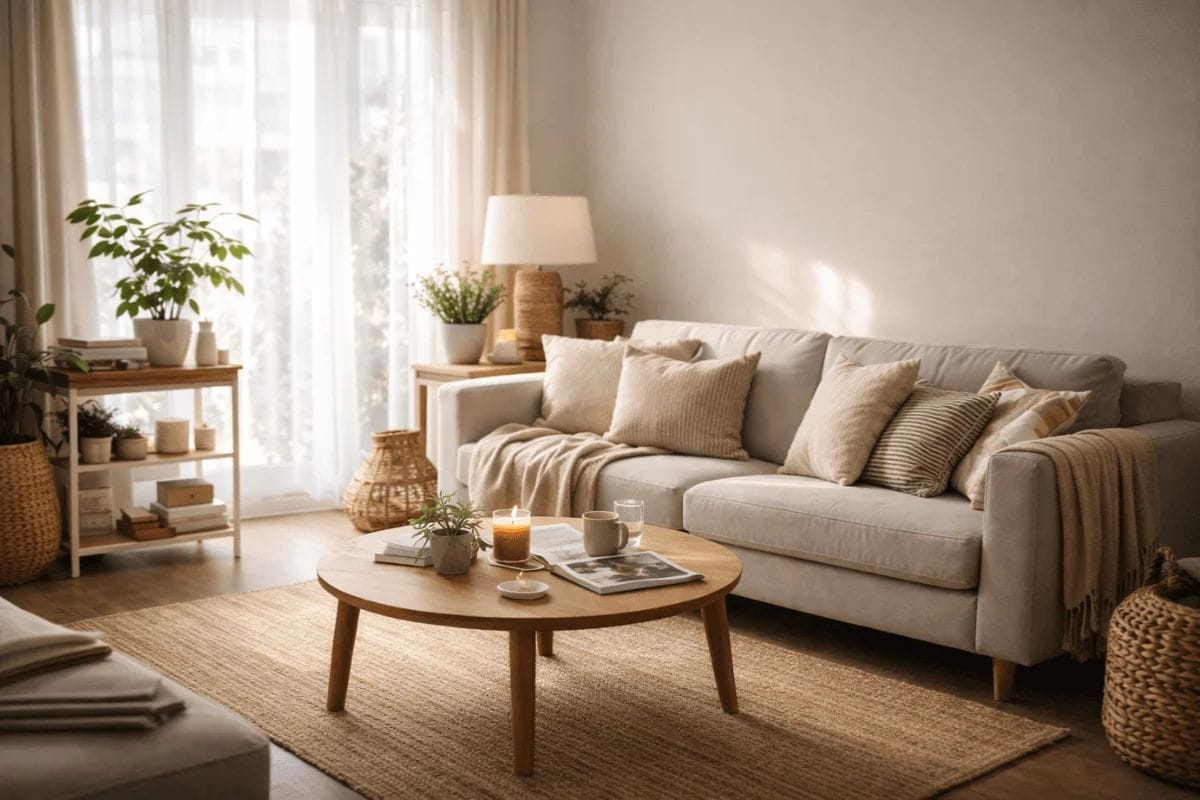
When your space allows your eyes to rest, your body follows naturally.
Breathing deepens, movement slows, and the urge to fix everything fades away.
That’s when clean finally starts to feel calm, and you understand why your home feels cluttered even when it’s clean.
And that’s often when you realize something important.
Clutter was never about mess.
It was about overload.
Once that overload fades, the home begins to support you quietly, without effort.