
This post may contain affiliate links, If you choose to buy through these links, I may receive a small commission at no additional cost to you.
Every single month, my bank account used to leak cash like a broken pipe. Specifically, it was $15 here for a streaming service I barely watched, $10 there for an app that promised to organize my life but only added to my anxiety, and another $20 for cloud storage filled with blurry photos of my backyard. Honestly, it was getting ridiculous.
Worse than losing money, however, was the constant noise. Every screen in my house was buzzing, blinking, and begging for attention. Our homes are supposed to be our sanctuaries, right? A quiet place to hide from the world. But somewhere between the endless smart notifications and monthly billing cycles, our living spaces started feeling like high-tech cages. It was exhausting.
That was until I finally snapped and decided to build The Unsubscribed Home.
By applying digital minimalism to my physical living space, I didn’t just save hundreds of dollars a month : I actually got my peace of mind back. It felt amazing. Therefore, if you are tired of waking up tired, staring of screens for hours, and wondering where your paycheck went, it is time to hit the reset button. In this guide, here is exactly how to strip away the digital noise and curate a calm life right from your own living room.
1. Why does modern life feel so exhausting at home?
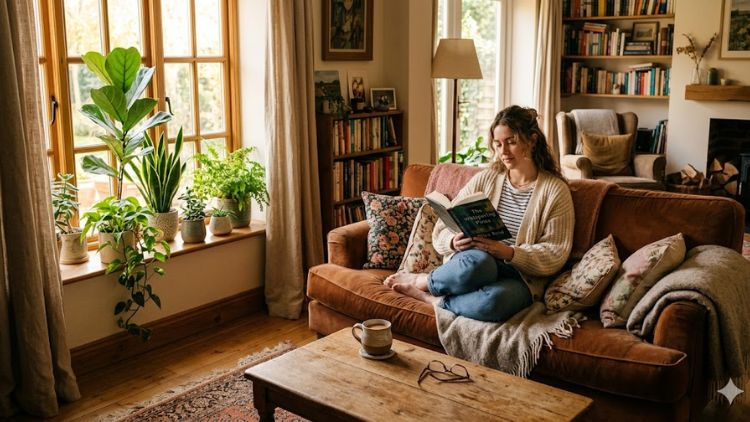
Have you ever sat on your couch after a long day, turned on the TV, picked up your phone, and realized you were scrolling through social media while a movie was playing in the background? As a matter of fact, you are not even watching the movie. You are just looking at two screens at once, and consequently, you are splitting your attention. Let’s be honest, you are certainly not alone in this. We all do it.
Our homes have become completely hyper-connected. In addition to this, we brought the stress of the outside world : work emails, terrifying global news, and endless targeted advertisements : right into our bedrooms. Psychologists call this cognitive overload. Whenever your brain is constantly processing notifications, it never enters a state of deep rest. Even when you think you are relaxing, your mind is working overtime.
However, transitioning into The Unsubscribed Home is not about throwing away your smartphone, deleting all your accounts, and moving into a wooden cabin in the deep woods. No one wants that. Instead, it is about intentionality. Ultimately, it is about deciding that your home should be a place of physical recovery, rather than a continuation of the digital rat race.
2. How much money can you actually save with digital minimalism?
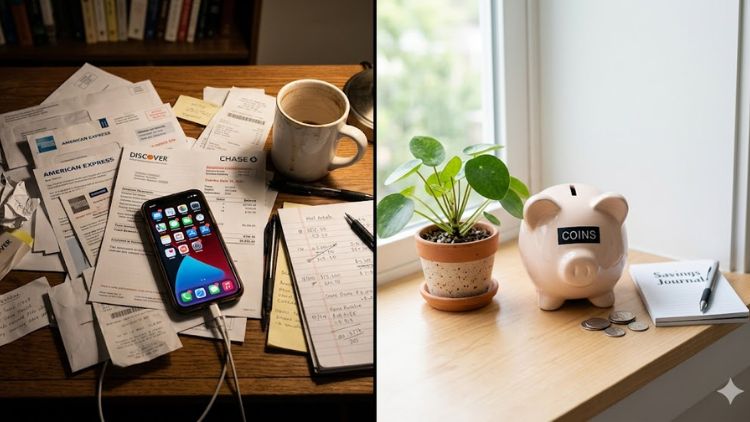
Let’s talk real numbers because the financial leak is terrifying when you actually look at it. Indeed, when I sat down with a piece of paper and looked at my bank statements line by line, I was shocked. Small subscriptions hide in the shadows of your credit card statements. For instance, you think it’s just ten bucks, but those ten bucks multiply rapidly. Before you even realize it, your hard-earned money simply vanishes.
Financial experts at Harvard Federal Credit Union analyze subscription creep as a modern financial drain where automated monthly debits quietly erode a household’s disposable income without their active awareness.
To understand this better, here is a quick look at what a typical modern household bleeds every single month without even realizing it:
| Unnecessary Digital Drain | Average Monthly Cost (Global Est.) | Estimated Annual Waste |
| Multiple Video Streaming Services (Ghost accounts) | $45 / ₹3,500 | $540 / ₹42,000 |
| Premium App Subscriptions (Fitness, Productivity) | $25 / ₹2,000 | $300 / ₹24,000 |
| Forgotten Gaming/Cloud Storage Plans | $20 / ₹1,500 | $240 / ₹18,000 |
| Impulse Shopping Prompted by Push Notifications | $150 / ₹12,000 | $1,800 / ₹1,44,000 |
| Total Potential Savings | $240+ / ₹19,000+ | $2,880+ / ₹2,28,000+ |
By canceling the things we didn’t use and completely removing shopping apps that triggered midnight impulse buys, we saved over $300 a month. That is real money. Consequently, setting up The Unsubscribed Home means that money can finally go into real assets, paying off debt, a real vacation, or a home renovation project that brings actual, physical joy to your daily life.
3. Simple steps to cut digital clutter in your living space
If you want to transition to a digital minimalist lifestyle, you have to change your physical environment first. This is because your environment dictates your everyday behavior. For example, if your phone chargers are right next to your pillow, you will look at your phone before sleep and the second you wake up. It is that simple. Therefore, you cannot rely on willpower alone; instead, you have to design your space to protect your mind.
To build a proper foundation for The Unsubscribed Home, follow these quick adjustments:
Create a Tech Charging Station: Move all phone and tablet chargers to one single spot in the hallway or kitchen counter. As a result, when you enter the house, your phone stays there and does not follow you to the couch.
The One-Screen Rule: Keep televisions and large screens completely out of the bedrooms. Since bedrooms should only be for sleep and relaxation, move any extra TVs to the living area.
Audit Your Hidden Expenses: Open your app store settings right now while reading this. Seriously, take a look. Then, look at your active subscriptions. If you haven’t used an app in the last 14 days, cancel it immediately. Although you can always re-subscribe later, odds are, you won’t even notice it’s gone.
Turn Off Non-Human Notifications: If a real human being didn’t send you a direct message, your phone has no right to buzz. Therefore, turn off news alerts, shopping promos, and mobile game updates.
Ultimately, learning how to manage The Unsubscribed Home prevents tech companies from draining your focus every single hour of the day.
4. Replacing screen time with physical home hobbies
Undeniably, the hardest part of digital minimalism is the sudden, heavy emptiness you feel during the first few days. It feels weird. When you sit down on your sofa without a phone buzzing in your hand, your brain immediately screams, “Now what?” It is an uncomfortable silence.
If you don’t fill that void with tangible, physical activities, you will fall right back into the scrolling trap within forty-eight hours. Instead, the real magic happens when you start doing things with your hands again, using your physical senses rather than just your thumb.
The Power of DIY and Gardening
Instead of watching someone else live their best life on an Instagram reel, build something small in your own home.
Start a Kitchen Herb Garden: Growing small plants like mint, basil, or coriander on your windowsill gives you a daily excuse to step away from technology. Furthermore, touching soil reduces stress hormones naturally while giving you fresh ingredients for dinner. To make your offline gardening hobby easier and stress-free, you can use the Back to the Roots Self-Watering Terracotta Olla Pot which provides up to one week of automatic, precision watering for your plants. Honestly, I found that learning how growing herbs at home made everyday cooking simpler and saved me trips to the grocery store, all while giving my mind a much-needed break from the screen.
Rearrange a Room Corner: Use what you already have to create a dedicated reading nook. Specifically, add a comfortable chair, a good lamp, a cozy blanket, and zero plugs nearby to make it a tech-free zone. Setting up a cozy reading nook with the PUERSI Cookbook Stand is an excellent way to enjoy physical books hands-free while keeping your living space completely aesthetic and clutter-free.
Physical Books Over Kindles: The feel of paper and the physical act of turning a leaf creates a tactile experience that screens can never replicate. Consequently, your eyes will thank you.

5. What are the mental health benefits of an unsubscribed life?
Within three weeks of cutting down our digital baggage, something massive shifted in our household. Gradually, the constant, low-grade background anxiety started to lift. It felt like an invisible burden had been lifted off our shoulders, leaving us with a deep sense of relief. We could finally breathe.
First, our sleep quality skyrocketed. Because we eliminated the blue light from late-night doomscrolling, our bodies naturally produced melatonin at the right time. As a result, we woke up feeling actually refreshed, instead of groggy and reaching for coffee immediately.
Second, conversations changed. Instead of sitting together in the living room while staring at separate screens in silence, we actually talked. Moreover, we noticed the little details around the house that needed fixing or decorating. Consequently, we became active participants in our own lives rather than passive consumers of other people’s edited content.
A Quick Reality Check: The internet isn’t going anywhere, and you don’t need to run away from civilization. But The Unsubscribed Home creates a necessary boundary line. When you step through your front door, you should be the one in control of your thoughts, not an algorithm designed to sell you things you don’t need.
6. The modern approach to a calm and stable lifestyle
We live in a world that praises hustle, constant connectivity, and knowing every single piece of breaking news the second it happens. But the real flex today is unavailability. Therefore, the real luxury is peace, quiet, and a home that feels safe, warm, and stable.
Granted, building The Unsubscribed Home is an ongoing process. You will occasionally slip up. For example, you might download an old app or binge-watch a show for an entire weekend. That is completely fine because we are humans, not robots. Thus, the goal here is not total perfection; it is simply awareness.
Pause for a moment right now and observe your immediate surroundings. Count the screens. Then, look at your bank account statements. Ask yourself if the digital noise you are paying for is actually making you happy. If the answer is no, then it is time to make a definitive change. Start unsubscribing, reclaim your space, and in doing so, build a life that feels incredibly calm.
7. The deep connection between clutter and anxiety
Did you know that physical clutter in your home triggers the exact same stress response as digital clutter in your phone? Specifically, when your eyes scan a room filled with random items, unread mail, and tangled cords, your brain registers that as a long list of unfinished tasks. Consequently, your cortisol levels spike. Sometimes, even if you clean regularly, things still feel incredibly heavy and messy. If you are struggling with this, you might want to understand why your home feels cluttered even when it’s clean to fix the root cause of that underlying visual noise.
By establishing The Unsubscribed Home, you start to realize that less truly is more. When you clear the digital clutter, you suddenly find the energy to clear the physical clutter too. As a result, you stop buying random home decor items just because they were trending on social media. Instead, you choose things that have meaning, purpose, and longevity.
8. How to handle the “FOMO” (Fear Of Missing Out)
When you first start unsubscribing from newsletters, group chats, and streaming platforms, a weird feeling will hit you. Specifically, you will feel like you are being left behind. You will wonder if your friends are talking about a meme you haven’t seen or a show you haven’t watched. It gets annoying at first.
While this is completely normal, tech platforms spend billions of dollars to make sure you feel this way. But here is the secret: 99% of what happens online does not matter to your actual life.
Therefore, if a piece of news is genuinely important, someone will tell you about it. Similarly, if a friend truly cares about you, they will text or call you directly instead of expecting you to double-tap their story. Shifting from FOMO to JOMO (Joy Of Missing Out) is indeed the turning point in creating a peaceful home lifestyle.
9. Designing a tech-free bedtime routine for the family
If you have kids or a partner, digital minimalism cannot be a solo mission. Instead Gentle reminders never work, it works best when the whole house gets involved. Particularly, the hours before sleep are the most critical time to enforce these boundaries.
Try setting up a simple timeline for your evening to wind down without inputs:
7:00 PM: Dinner time with absolutely zero phones at the table. No exceptions.
8:30 PM: All devices go to the main tech charging station for the night.
9:00 PM: Dim the main lights and use warm lamps. Then, engage in reading, board games, or casual conversation.
10:00 PM: Sleep in a room completely free of screens and blinking standby lights.
Consequently, this routine signals to your nervous system that the day is over and it is safe to rest. In the end, it restores the original purpose of the home: shelter and deep rejuvenation.
FAQ :
1. What is Cal Newport’s book “Digital Minimalism” about?
Answer: At its core, Cal Newport’s Digital Minimalism is a philosophy that helps you completely rethink your everyday relationship with technology. Instead of letting your smartphone and social media algorithms control your limited time and attention, the book teaches you how to use digital tools intentionally. It is about aggressively cutting out the digital noise so you can focus only on the apps and platforms that add genuine, measurable value to your life. Choosing this route is therefore the first step toward maintaining The Unsubscribed Home.
2. What is the synopsis of “Digital Minimalism: Choosing a Focused Life in a Noisy World”?
Answer: The book explains how big tech companies deliberately design social media platforms to steal our focus and keep us hooked for ad revenue. To fight back against this heavy “cognitive overload,” Newport offers a structured 30-day “digital declutter” process where you take a total break from all optional technologies. The synopsis boils down to three main rules:
Clutter is costly: Having too many apps and digital distractions completely drains your daily mental energy.
Optimization is crucial: Therefore, you must strictly decide when, where, and why you use any digital tool in your life.
Intentionality is satisfying: Real-world connection and deep, uninterrupted hobbies bring far more peace than mindless scrolling.
3. What is the 20-20-20 rule in minimalism?
Answer: Although originally a medical rule designed by doctors to prevent digital eye strain, minimalists use the 20-20-20 rule to break screen addiction and stay grounded in the physical world. The rule is simple:
For every 20 minutes of continuous screen time…
Take a short 20-second break…
And look at something that is at least 20 feet away from you (like a tree outside your window or a painting across the room).
As a result, this simple habit pulls your mind out of the digital matrix and forces you to pause, breathe, and connect with your immediate physical environment.
4. What are 7 things minimalists throw out daily to prevent clutter?
Answer: To stop physical and digital clutter from building up in their living spaces, minimalists make it a daily habit to clear out these 7 specific things:
Paper Receipts & Junk Mail: Tossing out random paper clutter from pockets, bags, and tables before it piles up into a mountain.
Digital Screenshots: Deleting temporary screenshots, accidental recordings, and blurry photos from the phone’s gallery every single night.
Unused Browser Tabs: Closing the dozens of open internet tabs on phones and laptops because they cause massive mental clutter.
Delivery Boxes & Packaging: Flattening and recycling cardboard boxes and plastic packaging the exact same day they arrive at the house.
Expired Fridge Items: Doing a quick daily check of the kitchen counter and fridge to toss out leftovers or expired food items.
Unread Promo Emails: Mass-deleting or unsubscribing from brand marketing emails that clutter up the email inbox daily.
Single-Use Plastics: Throwing out or recycling plastic grocery bags, broken pens, and random plastic tags that quietly sneak into the house. Maintaining this routine makes it consequently much easier to sustain the long-term benefits of The Unsubscribed Home.