
This post may contain affiliate links, If you choose to buy through these links, I may receive a small commission at no additional cost to you.
For a very long time, I used to look at those tiny, perfectly shaped trees in ceramic pots and think, Nope, not for me. It always seemed like a hobby exclusively meant for expert gardeners, calm monks, or individuals with endless spare time and a perfectly peaceful life. My hands aren’t always steady, my schedule is chaotic, and the idea of accidentally killing a fifty-year-old miniature tree kept me far away from the garden center’s specialty aisle.
But then I realized something life-changing: we have been looking at this all wrong.
Traditional green bonsai trees can feel cold and unforgiving. If you clip the wrong leaf, it looks naked for a year. But flowering bonsai trees? That is where the real magic hides. One week you are looking at a humble little indoor plant on your windowsill, and the next, it literally explodes into a cloud of vibrant pink, deep red, or snowy white petals. It feels less like rigid geometry and more like tending your own miniature fairy tale.
Want an effortless, zero-maintenance way to instantly add some vibrant floral color to your room? Check out these Easy Pipe Cleaner Flowers Anyone Can Make in Minutes while you wait for your new bonsai to bud! Finding the absolute best flowering bonsai trees for beginners can completely change how you view this beautiful hobby.
The biggest secret the experts do not want you to know is that some of the absolute most gorgeous flowering trees are actually tougher than common houseplants. They are resilient, they bounce back from clumsy pruning, and they love to bloom even if you are just figuring things out as you go. If you have been waiting for a sign to start, looking into the finest flowering bonsai trees for beginners is the perfect way to begin.
Which Bonsai Tree is Best for Beginners to Get Beautiful Flowers?
Let’s be totally real here. Nobody wants a high-maintenance plant that dies just because you looked at it wrong. You need something that actually wants to stay alive. Skip the crazy expensive tools for now—they’re just a waste of cash. Your only real goal? Snag a species that stays naturally small and won’t go into shock if you hit the snooze button on water day.
Trust me, when a plant has some built-in grit, everything changes. The whole hobby stops feeling like a scary college biology exam. It just turns into a super chill, easy routine to start your morning.
Related Reading: If you are looking for more actionable tips to lower your daily stress and create a peaceful environment, check out our guide on How to Feel Less Overwhelmed at Home.
6 Best Flowering Bonsai Trees for Beginners
Here are the six top-performing, most forgiving flowering miniature trees that will make your home look spectacular without breaking your spirit. Exploring these specific flowering bonsai trees for beginners ensures you enjoy stunning blooms without the traditional heavy workload.
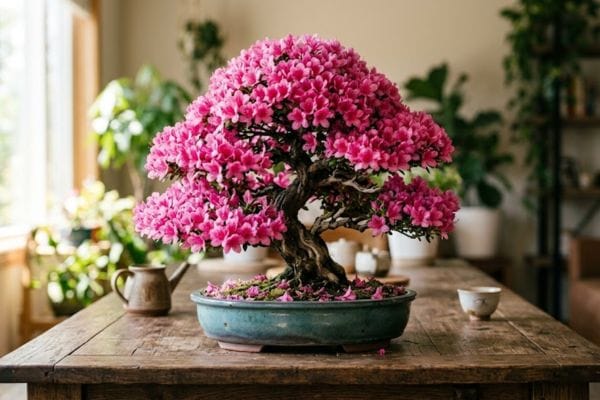
1. Satsuki Azalea (Rhododendron indicum)
There is a reason why you see these everywhere in classic Japanese garden showcases. When a Satsuki Azalea hits its blooming peak in late spring, the flowers are often so dense that you cannot even see the green leaves underneath. It looks like a solid cloud of neon pink, purple, or crisp white.
Why it works for beginners: Honestly, the wood feels like thick rubber. You can actually bend branches around quite a bit without that awful snap sound that completely ruins your mood. They just naturally love staying low and bushy anyway.
The Golden Rule: Keep their soil consistently moist like a wrung-out sponge, and make sure they get a bit of morning sun but shade during the hottest part of the afternoon.
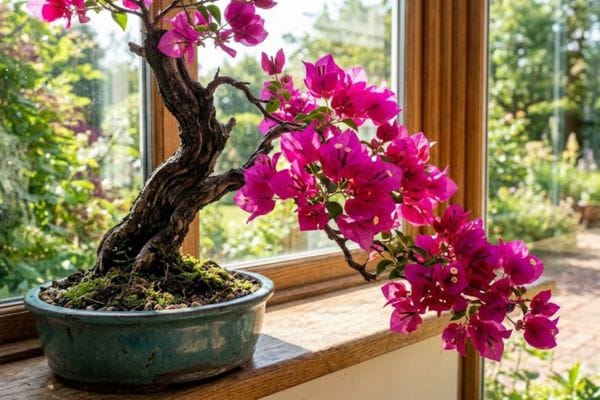
2. Bougainvillea
If you live in a warmer climate or have a brightly lit sunroom, Bougainvillea is your best friend. In the wild, these are massive, chaotic vines that climb up brick walls. When shrunk down into a ceramic pot, they maintain that fierce, wild energy but in a manageable size. Those bright magenta and orange “petals” are actually papery leaves called bracts, and they stay colorful for months at a time.
Why it works for beginners: To be totally honest, you can basically forget about this plant and it won’t care. Seriously. Leaving it alone and letting the soil dry completely out is actually what panics it into throwing out a massive explosion of bright color. It loves zero attention.
The Golden Rule: Give it as much direct sunlight as humanly possible and never let it sit in a pool of stagnant drainage water.
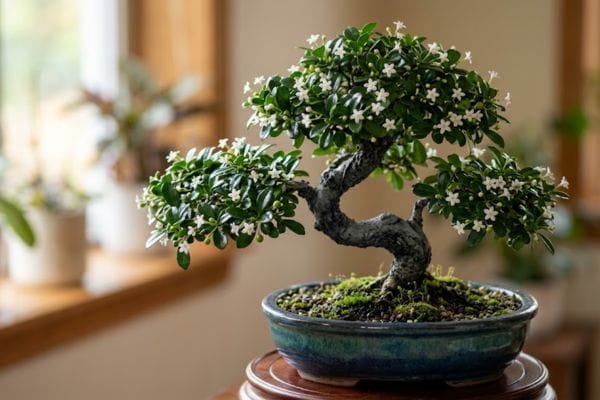
3. Fukien Tea (Carmona retusa)
For anyone who wants an indoor desk companion, the Fukien Tea tree is an absolute classic. It features tiny, dark green leaves with a glossy sheen that looks manicured even before you trim it. Throughout the year, it pops out delicate, star-shaped white flowers that look like tiny drops of snow against the dark foliage.
Why it works for beginners: It’s super happy with normal indoor room temps. Got a sunny kitchen windowsill or a decent bathroom layout? Perfect. It just blends right into a busy house without needing a fancy greenhouse.
The Golden Rule: They hate sudden drafts or being placed right next to a heating vent. Keep the air around them humid by placing the pot on a shallow tray filled with wet pebbles.
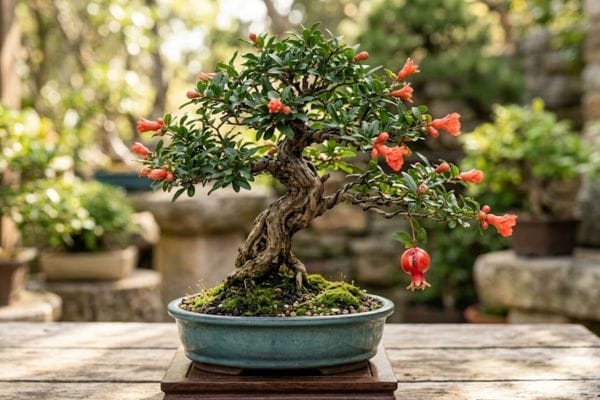
4. Dwarf Pomegranate (Punica granatum ‘Nano’)
This is arguably the most fun tree on the list because it gives you a double feature. First, it pushes out bright, coral-red tube flowers that look like little trumpets. Once those flowers fade, they transform into actual, miniature pomegranates that hang from the tiny branches like Christmas ornaments.
Why it works for beginners: The bark is the best part here. It gets rough, crinkly, and looks ancient within a year or two. It totally tricks your guests into thinking you’ve been styling it for twenty years. Plus, it handles heavy root chops like it’s nothing.
The Golden Rule: It needs a cold period in the winter to rest, so don’t keep it in a heavily heated room all year round.
5. Crabapple (Malus)
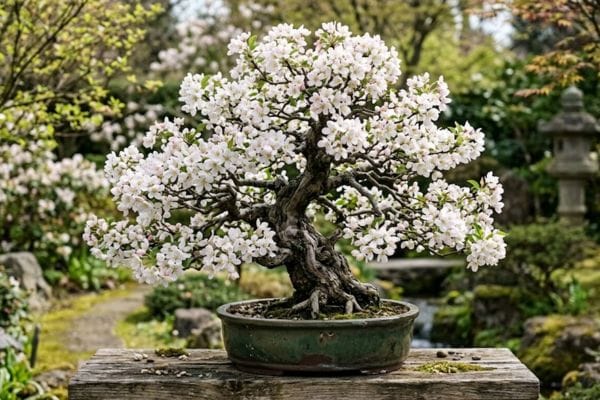
If you want that quintessential “miniature orchard” look, a Crabapple tree is the gold standard. In the early spring, before the leaves even fully unpack, the bare wooden branches cover themselves in soft white and blush-pink blossoms. It looks exactly like an old countryside apple tree, just scaled down to fit on your patio table.
Why it works for beginners: Since it lives outdoors naturally, it’s tough as nails. Cold snaps, sudden high winds, or terrible beginner pruning cuts : it just ignores them all and keeps growing. It’s built for rookie mistakes.
The Golden Rule: This is strictly an outdoor tree. It needs the natural change of seasons, fresh air, and winter chill to trigger its spring flower buds.
6. Brazilian Rain Tree (Chloroleucon tortum)
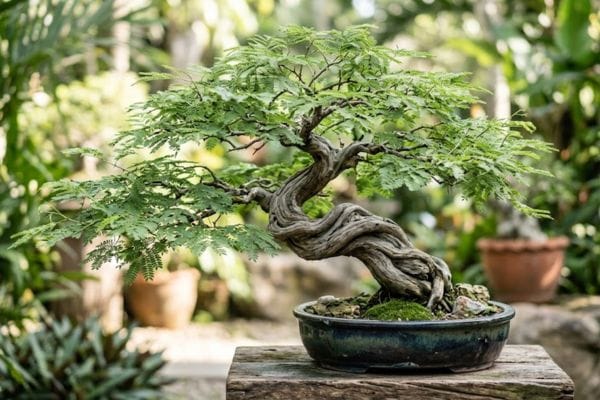
This tropical beauty is a true conversation starter. It features a unique, twisting trunk that naturally forms deep contours, paired with delicate, feathery green leaves. During the warm months, it sprouts fluffy, white cloud-like blossoms that carry a light, pleasant fragrance.
Why it works for beginners: This tree grows like an absolute weed. Cut the wrong branch? Completely messed up the whole look? Don’t stress out. It grows so incredibly fast that your mistakes will literally disappear in just a couple of weeks.
The Golden Rule: The leaves actually fold up and “go to sleep” at night or when it gets cloudy. Don’t panic when this happens : it is just reacting naturally to the light!
How Do I Care for an Indoor Flowering Bonsai?
Ensuring your indoor blooming tree thrives and stays healthy depends on just three fundamental factors. If you get these right, your plant will thrive for years.
Light is Food: Plain green trees might survive in dark corners, but making actual flowers takes a ton of energy. Put your pot right by your absolute brightest window. If your home is too dark, just get a cheap LED grow light. Run it for 12 hours, and you’re good.
The Finger Test for Water: Stop watering on a strict calendar schedule. Never just water “every Tuesday” because a chart said so. Poke your finger into the soil. Gritty and dry? Give it a deep soak. Still wet? Leave it alone.
Grower’s Secret: To prevent leaf yellowing and boost blossom production, it is highly recommended to supplement your watering routine with a high-quality nutrient mix like the General Hydroponics CALiMAGic Quart Calcium and Magnesium Supplement to give your tree the essential minerals it needs to thrive.
Humidity Trumps Everything: Indoor air is crazy dry from AC units and heaters. Misting them with a spray bottle helps for five minutes, but setting the pot on a simple tray filled with wet rocks is what actually stops leaves from dropping.
What is the Best Soil Mix for Beginner Bonsai Trees?
Seriously, do not buy that heavy, cheap potting dirt from the supermarket. Bonsai pots are tiny. Regular soil packs down way too tight, suffocates the roots, and rots your plant from the bottom up within a few months.
Go for a gritty, loose mix instead. A classic starter blend uses:
Akadama (baked clay): Holds just enough moisture without turning into heavy mud.
Pumice or Lava Rock: Leaves open air pockets so the roots can actually breathe.
Fine Pine Bark: Feeds the plant naturally as it breaks down over time.
This texture lets water pour straight through the bottom instantly. It forces the tree to grow a dense net of fine, healthy feeder roots instead of thick, lazy ones.
The Golden Rule: Keep their soil consistently moist like a wrung-out sponge, and make sure they get a bit of morning sun but shade during the hottest part of the afternoon. For a deeper dive into expert styling techniques, you can refer to the comprehensive Bonsai Empire Care Guide.
To give your new miniature tree a classic and beautiful home, make sure to pair it with an 8 Inch Ceramic Bonsai Planter Pot with Drainage Hole and Bamboo Saucer that ensures optimal root health and vibrant growth.
How to Prune a Flowering Bonsai Without Killing It
Pruning makes most beginners panic, but it’s super simple once you get the logic. Don’t think of it as surgery : it’s just a basic haircut.
[Spring Bloom] ---> [Let New Shoots Grow] ---> [Trim Back to 2 Leaves in Autumn]
Enjoy the Show First: Never cut branches when you see flower buds forming. You’ll just chop off your future color display. Let the blooms do their thing and fade naturally before you touch your scissors.
The “Two-Leaf” Rule: Let new green shoots grow out until they have five or six leaves. Then snip them back, leaving just two leaves close to the main branch. This forces the branch to split, making the canopy look thick and full.
Remove the Suckers: Check the bottom of the trunk right near the dirt. See tiny, aggressive shoots popping straight up from the roots? Snip them off fast. They steal all the power from the main tree up top.
Starting your first miniature garden doesn’t require a master’s degree or a lifetime of discipline. It just takes a little curiosity, a bright windowsill, and the willingness to learn. By choosing the right flowering bonsai trees for beginners, you remove all the guesswork and stress. Embracing these flowering bonsai trees for beginners is the perfect way to watch a tiny piece of nature do what it does best: grow.
FAQ :
What is the best flowering bonsai tree?
Honestly, it completely depends on your home layout. But most growers agree the Satsuki Azalea easily takes the crown. When spring arrives, it explodes into a blanket of pink or white flowers so thick you literally can’t see any green leaves underneath. For warmer areas, Bougainvillea is also a killer choice because those massive magenta blooms look incredible and handle heavy heat like a champ.
Which bonsai tree is best for beginners?
If you want just plain indoor green, people usually suggest a Juniper or Fukien Tea. But for big, beautiful flowers? Go with Bougainvillea or a Brazilian Rain Tree. They grow super fast, don’t care if you make bad pruning cuts, and skip the whole complicated winter dormancy process that usually trips up rookies.
What is the 1 2 3 rule for bonsai trees?
It’s just a simple visual trick growers use to make a tiny tree look perfectly balanced and real:
Branch 1: Think of this as the foundation. It’s the lowest, thickest branch that shoots out to the left or right, roughly one-third of the way up.
Branch 2: This branch emerges from the opposite side and slightly higher up to maintain a perfectly balanced, natural look.
Branch 3: The “back branch.” This is the secret weapon : it grows out the rear of the trunk to give the tree actual depth so it doesn’t look flat against a wall.
Can a schefflera be a bonsai?
Yes, absolutely. The Dwarf Umbrella Tree (Schefflera) serves as an outstanding choices for anyone just starting their bonsai journey. It survives in low indoor light, grows wild aerial roots over rocks, and handles beginner mistakes like nothing else. It won’t give you massive bright flowers, but its cool umbrella canopy is super rewarding to style.