This post may contain affiliate links, If you choose to buy through these links, I may receive a small commission at no additional cost to you.
Let’s be honest for a second. You spend thousands of dollars trying to make your house look amazing. You find the exact paint color you want, trim the front lawn until it looks like a golf course, and plant beautiful flowers. But then, you take a step back and see it : that huge, loud, rusted metal box sitting right against your wall.
Your outdoor AC unit keeps you cool all summer, sure, but it is an absolute eyesore. It completely kills your home’s curb appeal the second someone looks from the street. The good news? You don’t just have to sit there and accept it.
I’ve spent time talking with top exterior designers who deal with this annoying issue all the time. Instead of the same old boring five ideas you see on every single blog online, we’ve put together 6 genius ways to hide your outdoor AC unit so it completely vanishes into your yard. We have everything from quick weekend DIY projects to long-term landscaping upgrades that will honestly make your neighbors pretty jealous.
These ideas range from quick weekend DIY projects to permanent landscaping upgrades that will honestly make your neighbors pretty jealous. After all, creating a clutter-free exterior is just as important as setting up an unsubscribed home using digital minimalism for a calm, stress-free life inside.
Why You Need to Hide Your Outdoor AC Compressor
Before you run out and grab tools, let’s talk about why you should even bother. Having a messy utility area out in the open can actually drop your property value when you try to sell your home. When people look at a yard, they want to see a clean, relaxing outdoor oasis, not heavy mechanical equipment. By building a smart, simple cover, you instantly turn an ugly distraction into a cool design feature.
How close can you build a fence to an AC unit?
This is easily the biggest question most homeowners ask, and honestly, messing this up can completely break your air conditioner.
Your AC unit needs room to “breathe” to do its job. It pulls in fresh air from the sides and blasts hot air straight out of the top. If you block that airflow with a tight wall, the entire system overheats, your power bill goes through the roof, and the compressor might just burn out years too early.
The Golden Rule of AC Ventilation: You always want to leave at least 12 to 24 inches of wide-open space on all sides of the unit. On top of that, make sure there is at least 4 to 5 feet of completely open space directly above it so the hot air can escape without bouncing back down. According to official Department of Energy efficiency guidelines, restricting this airflow forces your system to work harder and dramatically shortens your compressor’s lifespan.
Never, ever build a totally solid, airtight wooden box around your compressor. Air has to move freely through whatever barrier you decide to set up.
6 Genius Ways to Hide Your Outdoor AC Unit
Here are the six designer-approved tricks to cover up your unit while keeping it running perfectly.
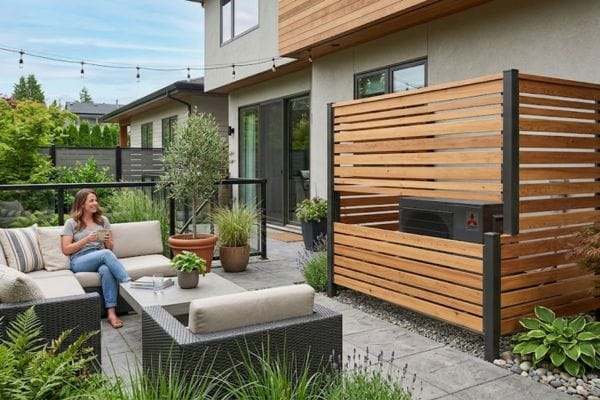
1. Install Pre-made Privacy Screens or Slatted Wood Panels
If you want something that looks great, happens fast, and actually works, slatted wood panels are your absolute best option. Designers love wood slats because they look sleek and modern, but more importantly, they let air move right through.
The Material: Go with teak, cedar, or pressure-treated wood. They handle rain, sun, and annoying bugs way better than cheap wood.
Why it works: The tiny gaps between the wooden boards let air flow naturally, which keeps your HVAC technician happy while blocking the view from the road.
Pro Tip: Just buy pre-made outdoor privacy screens at a local hardware store if you want to get this done in less than an hour this weekend.
Slatted wood panels offer a sleek, modern look while keeping the necessary airflow around your AC compressor.
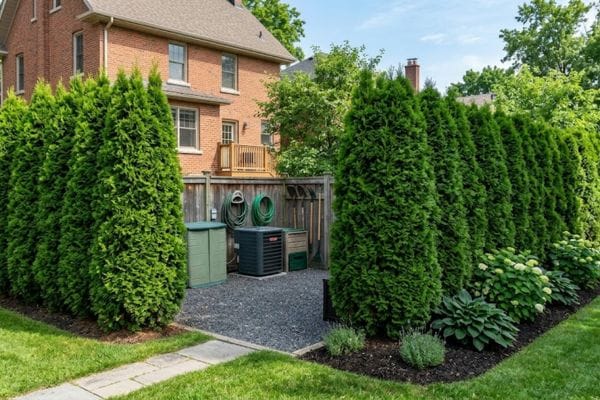
2. Plant a Natural Living Screen Using Dense Greenery
If you don’t like the look of wooden fences and want a soft, natural backyard feel, plants are the way to go. Instead of building a structure, you just let nature do the heavy lifting for you.
Best Plants to Use: Landscape experts always point to Arborvitae trees. They grow nice and tall, stay pretty narrow, keep their green color all winter long, and don’t require you to do any hard maintenance.
Other Options: Tall ornamental grasses or thick shrubs like boxwoods can do the trick too.
Spacing Matter: Just plant them far enough away so they don’t grow right into the coils. You have to keep that 2-foot clearance zone totally free from loose branches.If you love using clever plant setups to improve your outdoor spaces, you can also check out our guide on thebest mosquito repellent plants for patio areas to protect your yard this summer.
Evergreen trees like Arborvitae provide year-round green coverage and blend seamlessly into your backyard landscaping.
3. Build a Dedicated Utility Fence with an Access Gate
Sometimes a tiny screen doesn’t cut it, especially if you have a big yard and want to hide your ugly trash cans right next to the AC unit. A small, neat fence looks like you actually planned your yard layout.
The Access Rule: You must add a working hinge gate or a panel you can easily lift out of the way.
Why technicians love this: Look, eventually, something will go wrong with your AC. If a repair guy shows up and finds a permanent fence blocking his tools, he’s going to tell you to tear it down. A basic latch gate fixes this issue before it happens.
Budget Option: If you are trying to save cash, grab standard chain-link fence panels and slide plastic privacy slats through them to clean up the look.
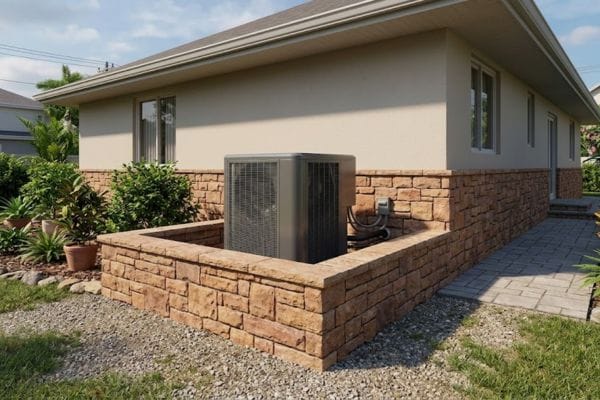
4. Construct a Low-Profile Masonry or Stone Retaining Wall
For a high-end, permanent style that matches your home’s actual foundation, nothing beats a stone or brick retaining wall. It adds real structure and value to your whole landscape design.
The Two-Side Rule: Since your house wall already hides one side of the AC unit, you only need to build the brick wall on two sides. Leave the back side completely open (hidden from the street, of course) so air can move and you can get in for repairs.
Materials: Use stackable stone blocks, regular red bricks, or modern breeze blocks (those concrete blocks with holes in them) which naturally let air blow right through the patterns.
A brick or stone retaining wall looks high-end and permanent, just ensure you leave one side open for maintenance access.
5. Use Elevated Raised Planter Boxes and Potted Flowers
Why stop at just hiding the AC when you can turn that exact spot into a beautiful garden? Raised planters bring your flowers right up to eye level, which completely takes attention away from the metal machine below.
How to set it up: Build or buy a couple of deep wooden planter boxes and stand them right in front of the unit.
What to plant: Fill them up with bright, colorful flowers or long vines that trail down the sides of the boxes.
The Benefit: It makes the cover look completely intentional. People visiting your house won’t think “Oh, they are trying to hide something.” They’ll just see a great plant display.
Raised planters turn an ugly utility spot into a beautiful garden feature, entirely pulling attention away from the compressor.
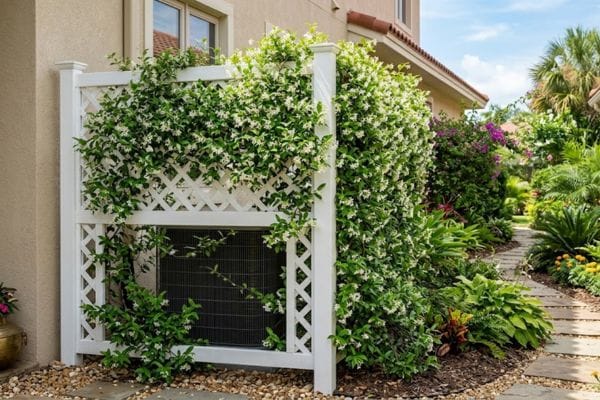
6. Create a Lush Trellis Wall with Climbing Vines
This last method is a major favorite for traditional cottage-style homes or anyone who loves a classic, romantic garden look. A basic wooden or metal trellis gives you the perfect frame for climbing plants.
The Setup: Anchor a sturdy trellis deep into the dirt about two feet away from the compressor fan. If you want something incredibly durable and spacious, installing a heavy-duty Cucumber Trellis for Raised Bed U-Shape Garden Trellis for Climbing Plants gives your heavy vines plenty of room to grow while keeping them securely supported.
The Plants: Train fast-growing climbers like star jasmine, English ivy, or clematis to crawl up the grid.
Bonus Benefit: A lot of these climbing plants smell amazing. When your AC kicks on, the moving air helps blow the fresh scent of jasmine right across your porch or patio.
Training sweet-smelling climbing vines onto a garden trellis is a romantic way to make your utility area look and smell wonderful.
What is the cheapest way to hide an outdoor AC unit?
Look, if you don’t want to spend hundreds of dollars on heavy stone walls or custom wood building, the cheapest way out is using freestanding vinyl lattice panels with simple plastic ground stakes. You can grab these at any local hardware store for super cheap. They weigh almost nothing, handle bad weather perfectly, never need a coat of paint, and you can put them together in about twenty minutes tops.
Checklist: Before You Hide Your Air Conditioner
Before you rush out to buy a bunch of wood or start digging up your lawn, go through this quick checklist so you don’t accidentally break local laws or ruin your expensive system:
Check HOA Rules: If you live in a neighborhood with a strict Homeowners Association, look at their handbook first. Some HOAs have annoying rules about how high a screen can be or what materials you can use.
Measure the Clearance: Double-check your setup to make sure there is at least 12-24 inches of clear breathing room around the whole machine.
Test the Access Door: Make sure a fully grown adult holding a heavy toolbox can easily get inside the gate to fix things when the AC breaks.
Avoid Overhead Blockage: Never put a solid, flat roof directly over the top of the compressor fan. If you want to protect the top from falling leaves and debris without blocking airflow, use a breathable mesh guard like the MODERN WAVE Central Air Conditioner Cover for Outside Units to keep your system safe and clean.
Turning a Utility Area into a Beautiful Landscape Feature
At the end of the day, hiding your outdoor AC unit doesn’t have to be a giant, stressful chore. Whether you like the clean look of modern wood slats, the natural vibe of evergreen trees, or the bright colors of a raised flower bed, you are doing something great. You’re reclaiming your outdoor living space. Just pick a style that matches your house, keep that important ventilation space wide open, and enjoy your beautiful, distraction-free yard!
FAQ :
Q: How to hide your outdoor AC unit?
A: You can hide your outdoor AC unit using slatted wooden screens, decorative metal panels, or lattice trellises. You can also use “living screens” by planting narrow evergreen trees like arborvitae, or build a low-profile retaining wall. Just remember to always keep one side open for airflow and technician access.
Q: What is the 3 minute rule for air conditioners?
A: The 3-minute rule is a safety measure for your AC compressor. It suggests that if your air conditioner turns off, you should wait at least 3 minutes before turning it back on. This allows the refrigerant pressure in the system to balance out, which prevents the compressor from straining or failing to start.
Q: Can AC worsen allergies?
A: Yes, if not maintained properly. If your AC filters are dirty or clogged with dust, mold, and pollen, the unit will blow those allergens back into your home. Regularly changing your air filters and keeping the indoor unit clean is the best way to prevent AC-related allergy flare-ups.
Q: Is AC harmful for bronchitis?
A: Air conditioning itself isn’t harmful, but poor air quality can be. If the AC unit is dusty or moldy, it can irritate the airways, which is bad for someone with bronchitis. Additionally, extremely cold or very dry air from an AC can sometimes trigger coughing. Keep your filters clean and ensure the air isn’t overly dry to stay comfortable.