
This post may contain affiliate links, If you choose to buy through these links, I may receive a small commission at no additional cost to you.
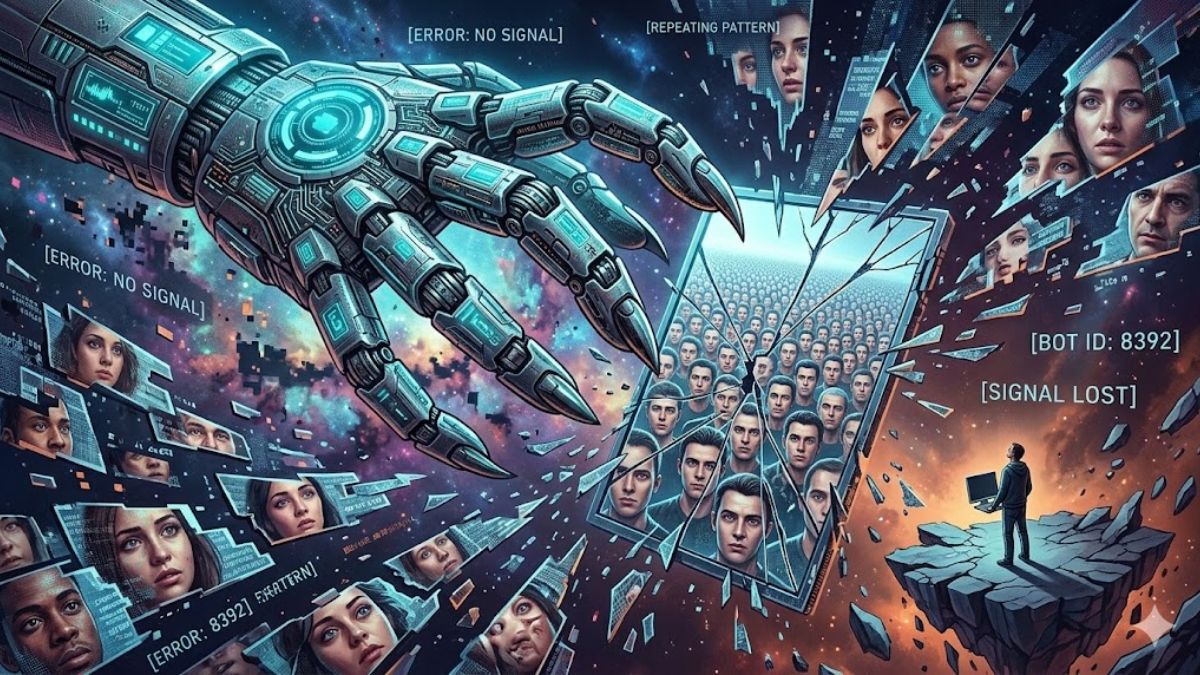
Have you ever left a comment on a viral post, got a few replies, and felt a strange sense of… nothingness? It feels like you are shouting into a void that somehow shouts back in a scripted language.
I’ve been feeling this for a while. For instance, last week, I spent three hours scrolling through a heated debate on X (formerly Twitter) about a global crisis. Although there were thousands of comments and millions of views, the patterns became eerie as I dug deeper. The same phrases, the same timing, and the same lack of soul were everywhere.
Consequently, it hit me: Is the internet dead? Are we actually talking to anyone anymore, or are we just trapped in a massive, AI-generated echo chamber? The “Dead Internet Theory” used to be a dark corner of Reddit for conspiracy theorists. However, today, it’s not just a theory : it’s our reality. Most online interactions are bots, and if you aren’t seeing it yet, you aren’t looking close enough. This leads us to the haunting question: Is the internet dead?”
1. What is the Dead Internet Theory and Why is it Trending?
The core idea is simple but terrifying. Specifically, the theory suggests that the “human” internet we knew : the one filled with blogs, personal forums, and genuine cat videos : died around 2016 or 2017. Since then, the majority of web traffic, content, and social media engagement has been taken over by AI and automated scripts.
Identifying bots used to be a much simpler task in the past. They usually had names like “User123456” and posted links to shady websites. Today, however, they have profile pictures generated by AI that look more human than your neighbor. Furthermore, they mimic slang, they argue, and they even pretend to have political opinions. Essentially, they are designed to keep you scrolling, clicking, and most importantly : angry.
2. Is the internet dead because 70% of online traffic is no longer human?
Companies like Imperva’s annual Bad Bot Report and various cybersecurity firms have been sounding the alarm for years. But why has there been such a sudden explosion?
The Content Farm Crisis: First, AI can now write 10,000 articles in the time it takes me to drink a coffee. These “slop” sites are specifically designed to capture Google Search traffic, which unfortunately pushes real human stories to page 10.
Social Validation as a Product: Second, influencers and brands often buy “engagement.” When you see a post with 50k likes, a huge chunk of that is frequently a server farm in a distant country, rather than 50k people who actually liked the content.
The AI Loop: Finally, AI is now being trained on data generated by other AI. Because of this, we are living in a digital “inbreeding” cycle where the internet is becoming a copy of a copy, losing human nuance every single day.
3. How AI Bots are Controlling Your Opinions
This is where it gets dark. It’s not just about fake likes; it’s about manufactured consent. For example, if you go into a comment section and see 100 people agreeing on a specific topic, your brain naturally thinks, “This must be the right way to think.” But consider the possibility: what if ninety-five of those interactions are nothing more than ghost profiles?
Governments and corporations often use bot armies to shift public perception. Consequently, they can kill a movement, promote a product, or ruin a reputation in hours. You might think you’re participating in a “global conversation,” but in reality, you might just be the only human in the room, being manipulated by code.
This constant manipulation isn’t just about opinions; it’s deep-rooted. Check out these 10 Ways Hyper-Connectivity Is Changing Human Personality to see how the internet is rewriting our brains.
4. Can You Still Spot a Bot?
It’s getting harder, but humans still have a “vibe” that AI can’t quite replicate. Here is how I’ve started spotting them:
The Repetitive Loop: Bots often repeat the same point in slightly different words. If you ask them a deeply personal, nuanced question that requires empathy, they usually pivot back to their “script.”
Insane Posting Frequency: If an account is posting 50 times a day, every day, for years : that’s a bot. Unlike humans, bots don’t need to sleep, eat, or have existential crises.
The Lack of “Now”: Try asking about something that happened five minutes ago in a very specific local context. Since AI models often have a slight lag, they usually give a very generic way of discussing breaking news.
If the digital world feels too fake, it’s time to step back and try a Digital Detox at Home: Practical Ways to Reduce Screen Overload to reconnect with reality.
5. The Rise of “Small Web” and Why People are Leaving Big Tech
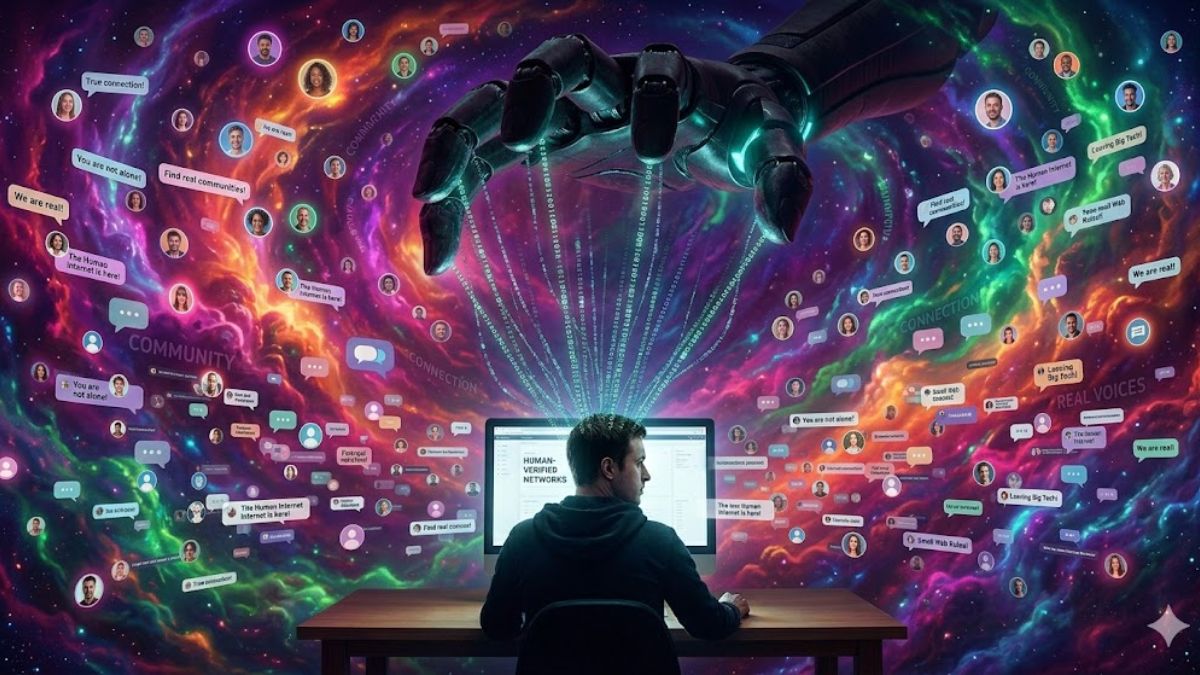
Because the big platforms are becoming “Dead Zones,” people are running back to the basics. As a result, we are seeing a massive trend toward:
Private Communities: Discord, Telegram, and private Slack channels where you know the person on the other side is real.
Paid Newsletters: People are increasingly willing to pay for content because “free” content is now synonymous with “AI-generated garbage.”
Physical Meetups: This is the ultimate “bot-check.” After all, you can’t fake a handshake or a shared meal in a digital world.
In an era where AI-generated deception is on the rise, staying informed through a guide like Scam-Proof For Seniors: How to Recognize, Avoid, and Stop Modern Scams is essential to protecting yourself and your loved ones from sophisticated digital frauds.
6. The Economic Impact: Why This is a High-Stakes Game
The “Loneliness Economy” is thriving because of this phenomenon. We feel lonelier because our digital “friends” aren’t real, so we spend more money on apps and gadgets to fill the void.
Meanwhile, advertisers are also panicking. If 70% of clicks are from bots, brands are wasting billions of dollars showing ads to software. This is exactly why “human-verified” platforms will be the most valuable assets of the future.
To safeguard your identity in a world of automated threats, it is highly recommended to use a Yubico YubiKey 5C NFC Security Key for professional-grade multi-factor authentication that bots simply cannot bypass.
7. Is There Any Hope for a Human Internet?
I don’t think the internet is “dead” in the sense that it’s gone. It’s just buried. To find the human heart of the web today, you have to dig deeper. Therefore, you have to stop following the “Trending” tab and start looking for the weird, the messy, and the unpolished.
In conclusion, the future of the lifestyle we want depends on our ability to distinguish between a soul and a string of code. If we keep feeding the bots with our attention, the “Dead Internet” won’t just be a theory : it will be our permanent home.
FAQ :
1. Is 51% of the internet bots?
Actually, recent data suggests it’s even higher. While some reports once hovered around 50%, the explosion of Generative AI has pushed that number closer to 70% in many niches. It’s not just “bad” bots trying to hack you; it’s also “good” bots indexing pages and commercial scripts that never sleep.
2. Are 75% of Twitter (X) bots?
This is the million-dollar question that almost broke the internet recently. While the official numbers are claimed to be much lower, independent researchers often find that in “trending” topics, the bot activity can easily cross 70-80%. It’s a digital battlefield where real voices are often drowned out by automated noise.
3. Why do websites hate bots?
It’s mostly about money and resources. First, bots eat up server bandwidth, which costs money. Second, they “scrape” original content to repost it on other sites, which hurts SEO. Plus, if advertisers find out that bots are clicking on ads, they stop paying.
4. Why does the internet think I am a bot?
It’s frustrating, right? If you’ve had to click on “traffic lights” ten times, it’s usually because you’re using a VPN or clicking through pages too fast. Ironically, as bots get more “human-like,” the systems meant to catch them are getting more aggressive, often catching real humans in the crossfire.