This post may contain affiliate links, If you choose to buy through these links, I may receive a small commission at no additional cost to you.
I’ve seen too many people buy a beautiful Fiddle Leaf Fig or a tray of expensive heirloom tomato starts, only to watch them turn yellow and crispy within a week. It’s heartbreaking. We usually guess : maybe it needs more water? Is it a silent fungal attack or just the wrong kind of soil? By the time we figure it out, the plant is in the compost bin.
And honestly, we shouldn’t be guessing anymore. Technology has finally caught up with the backyard garden. If you can have a watch that tells you your heart rate, why can’t you have a tool that tells you exactly what your lemon tree is “feeling”? This is where 7 AI Garden Assistants to Monitor Your Plants’ Health in Real-Time come into play. These aren’t just fancy apps; they are like having a professional botanist living in your pocket, watching your garden 24/7 while you sleep.
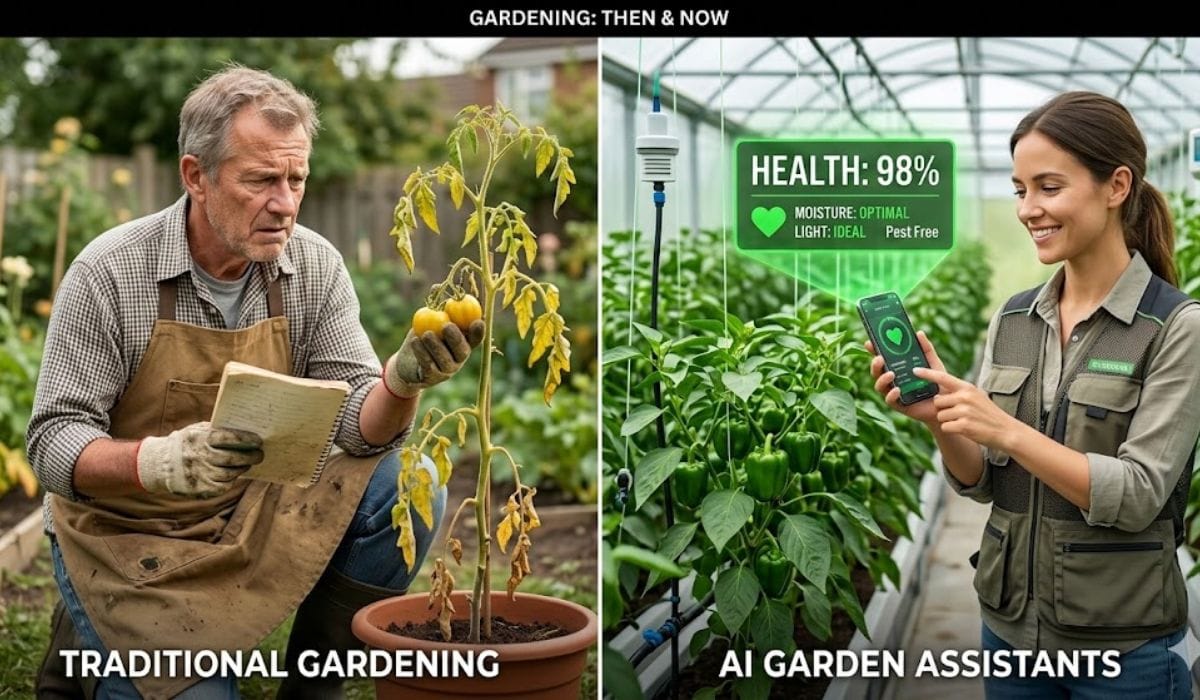
Moving from guesswork to data-driven gardening with the help of modern AI.
Can AI Really Tell If My Plant Is Dying?
I hear this concern from fellow gardeners all the time. People think AI is just for writing emails or making weird art. But in the garden, AI is a lifesaver. It uses “Computer Vision” (looking at leaves through your camera) and “Deep Learning” to compare your plant’s symptoms against millions of data points.
These digital systems often cross-reference data with world-class botanical databases, such as the Missouri Botanical Garden’s Plant Finder, to ensure that the advice you get is scientifically accurate.
Whether you are dealing with a heatwave in Delhi or a damp spring in London, these AI Garden Assistants don’t just identify the plant : they predict problems before they happen. They look at the tiny brown spots you haven’t noticed yet and warn you about spider mites or nitrogen deficiency.
1. Plantix: The “Mobile Doctor” for Global Crops
If you are gardening in India or any agricultural hub, you probably already know Plantix, but their AI update is insane. It’s specifically designed for people who actually want to grow food.
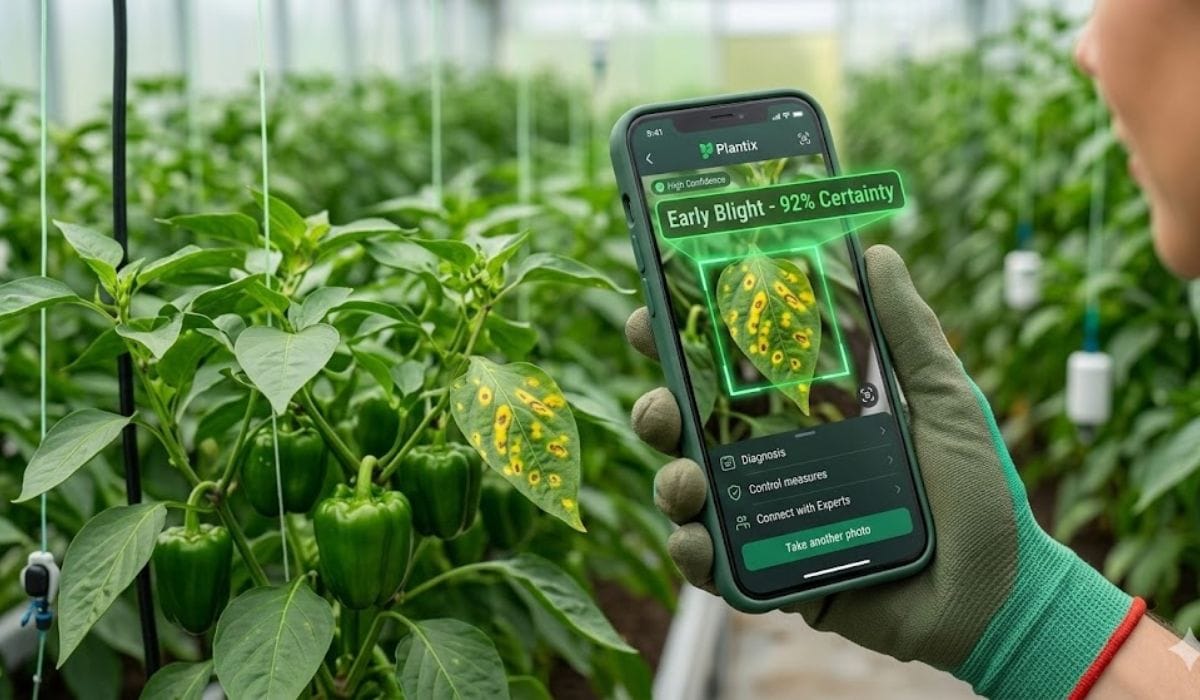
Real-Time Diagnosis: You snap a photo, and the AI analyzes the damage pattern. It’s like a skin doctor but for vegetables.
The “Community” Factor: It connects you with local weather alerts and pest outbreaks in your specific zip code.
Best for: Tomatoes, Rice, Wheat, and any backyard veggie patch that looks “sick.”
Real-time diagnosis apps like Plantix can identify pests and diseases before they spread to your entire garden.
2. NatureID: The All-in-One Health Tracker
This is the one I recommend for my friends in the US and UK who have a mix of indoor monsteras and outdoor hydrangeas.The user interface is exceptionally sleek and intuitive.
The Health Meter: It gives your plant a “Health Score” from 0 to 100. If it drops below 70, the AI sends a notification to your phone.
Light Meter Feature: It uses your phone’s sensors to tell you if that “bright indirect light” spot in your living room is actually a dark corner.
Why it’s trending: It’s simple. No complex jargon, just clear “Do this now” instructions.
3. Agrio: Precision Agriculture for the Home Backyard
Agrio is a bit more “hardcore.” It uses satellite imagery and AI to monitor larger gardens. If you have a big backyard or a small hobby farm, this is your best bet.
Hyper-Local Weather: It doesn’t just give the city weather; it predicts the micro-climate of your specific garden.
Pest Modeling: The AI predicts when certain insects will hatch based on the temperature, so you can spray organic repellent before they arrive.
4. PictureThis: The Speed King of Identification
Sometimes you just need an answer now. PictureThis has the fastest AI engine I’ve ever tested. In less than a second, it identifies the plant and its health status.
The “Care Reminders”: It’s not just about monitoring; it’s about the follow-through. It builds a calendar for you.
Global Database: With over 17,000 species, it doesn’t matter if you’re in a tropical rainforest or a desert; it knows what you’re looking at.
5. LetPot AI: The Hardware-Software Hybrid
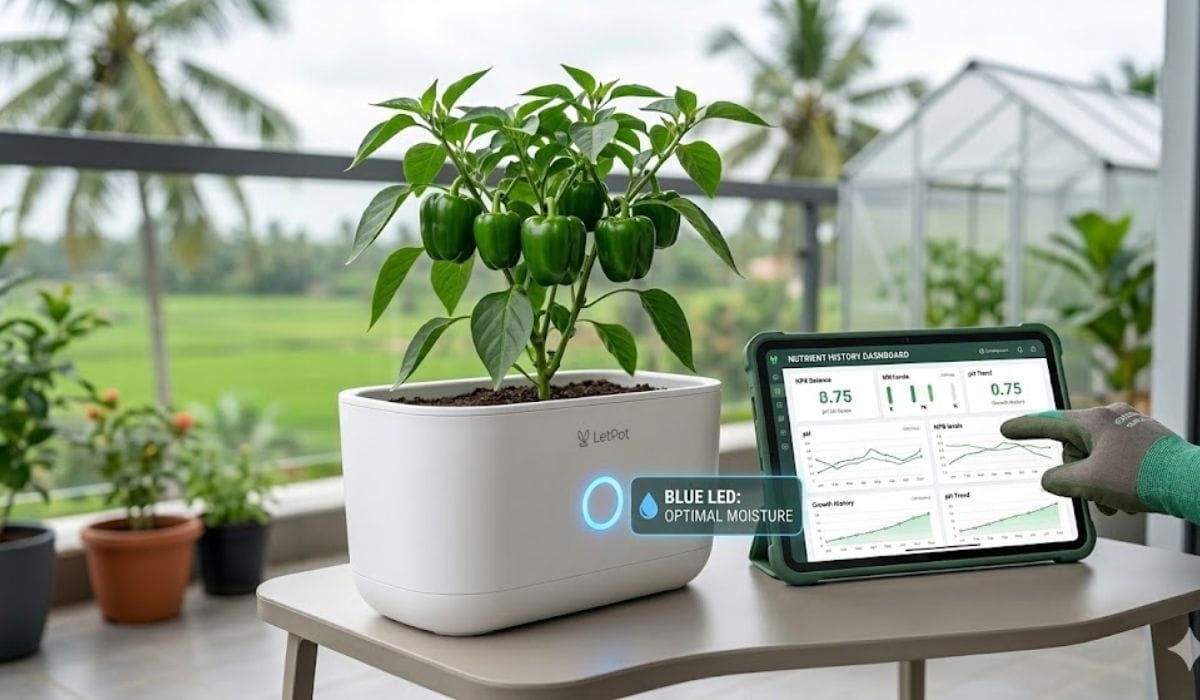
This is where gardening gets really “sci-fi.” LetPot isn’t just an app; it’s a smart pot system that uses AI to automate everything.
Self-Watering AI: The pot “talks” to the app. It knows when the soil tension is too high and releases exactly 50ml of water.
Real-Time Nutrient Tracking: It tells you when the soil is “depleted,” so you don’t over-fertilize and burn the roots.
Hardware-software hybrids take the manual labor out of gardening by automating watering based on AI data.
6. Blossom: The Interior Designer’s Favorite
For the urban gardener living in a high-rise apartment in New York or Bangalore, Blossom is the aesthetic choice. But don’t let the pretty interface fool you : the AI is powerful.
Plant Collections: You can group your plants by room. The AI then calculates the humidity needs for that specific area.
AI Chatbot: You can literally text the assistant: “Why is my succulent squishy?” and get a real-time answer based on your recent watering history.
Upgrade Your Plant Aesthetics: For those who want their garden to look as good as it feels, these Iridescent Glass Self-Watering Globes are a perfect choice. They add a rainbow-glass glow to your pots while providing a continuous, automatic water supply the ideal low-tech companion to your high-tech AI apps.
7. Bio-Sensor Integration (The DIY AI Move)
The seventh “assistant” isn’t a single app but the trend of using IoT sensors (like Xiaomi or Tuya) linked to AI dashboards like Home Assistant.
Data Overload (In a good way): You get graphs of soil conductivity, temperature, and lux.
Automation: You can set it up so that if the AI detects a “High Heat” alert, it automatically triggers your smart misting system.
Pro Tip for DIY Gardeners: If you want to start tracking your garden’s data manually before automating it, the 4-in-1 Digital Soil Moisture Meter is an essential tool. It provides real-time readings for moisture, pH, temperature, and sunlight intensity on a backlit LCD, acting as the perfect physical bridge between your plants and your AI apps.
There isn’t a single “best” because it depends on your goal. If you are growing vegetables and fruit, Plantix is the gold standard for disease diagnosis. For indoor tropical plants and aesthetics, NatureID or PictureThis are the most user-friendly. If you want hardware that does the work for you, LetPot is the leader in the smart-pot category.
What are the core AI technologies driving modern plant health monitoring?
Most of these assistants use Computer Vision (a type of AI that understands images) and Machine Learning algorithms. In more advanced setups like Agrio, Satellite Remote Sensing and Multispectral Imaging are used to detect stress in plants long before the human eye can see any yellowing.
How can AI help with gardening?
AI acts as a bridge between scientific data and the home gardener.AI transforms your gardening experience by:
Predictive Maintenance: Warning you to water before the plant wilts.
Accurate Diagnosis: Identifying exactly which pest is attacking so you don’t use the wrong pesticide.
Optimizing Resources: Saving water and fertilizer by applying them only when the AI sensors detect a need.
Is Plant AI completely free?
Many apps like Plantix offer robust free versions for basic diagnosis. However, “Premium” features : like 24/7 real-time monitoring, unlimited scans, or direct chats with botanists : usually require a subscription. In 2026, many hardware sensors also come with a small cloud-storage fee to keep your garden’s historical data.
How People are Searching for AI Garden Assistants Today
If you’re wondering why this is a hot topic, just look at what people are typing into Google lately. The shift is moving away from “how to garden” toward “how to automate my garden.”
“Top-rated free AI tools for identifying plant diseases”
“Next-gen intelligent soil monitoring systems for 2026”
“Can AI save my dying lemon tree?”
“Real-time plant health monitors Tier-1 reviews”
People are tired of losing money on dead plants. They want a “safety net,” and that is exactly what these AI Garden Assistants provide.
Will AI Replace the “Green Thumb”?
I’ve had people tell me that using AI is “cheating.” They say gardening should be about intuition. I’ve arrived at a slightly different conclusion. I think gardening should be about success. There is nothing “natural” about a plant dying because you didn’t know a specific bug arrived in your neighborhood overnight. Using 7 AI Garden Assistants to Monitor Your Plants’ Health in Real-Time doesn’t take the soul out of gardening. It just takes the frustration out. You still get to prune, you still get to harvest, and you still get to enjoy the green. You just do it with the confidence that you aren’t going to wake up to a yard full of brown leaves.
The Real Cost of Ignoring Technology
Please give it some thought. You spend $100 on plants, $50 on soil, and hours of your weekend digging. Why risk all of that just because you’re too stubborn to use a free app or a $20 sensor? The climate in 2026 is unpredictable. We are seeing a rise in extreme heat events alongside the spread of pests into previously unaffected regions. AI is simply the tool we need to keep up.
What You Should Do Next with AI Garden Assistants
Don’t go out and buy all seven. Start simple.
Download a free diagnostic app like Plantix or NatureID today.
Take a “Health Scan” of every plant you own : even the ones that look healthy.
Check the AI’s recommendation for your specific region.
It’s actually quite different from what we think. That “healthy” plant might actually be thirsty, or that “dead” one might just need a little boost of magnesium.