This post may contain affiliate links, If you choose to buy through these links, I may receive a small commission at no additional cost to you.
If you’ve ever walked past a garden and spotted something that looks like a cross between a medieval weapon and a piece of futuristic art, you’ve probably met Sea Holly. Most people think gardening is all about soft petals and sweet scents, but Sea Holly (or Eryngium) brings a “rockstar” vibe that is hard to ignore.
I still clearly remember the moment I first laid eyes on one. Its electric blue, metallic sheen looked so fake I actually had to touch it to believe it was alive. In a world where we are all dealing with unpredictable weather blistering heatwaves or sudden droughts : this plant isn’t just a pretty face. It’s a survivor. If you’re tired of plants that faint the moment the sun gets hot, you’re going to love this prickly blue rebel. In this guide, I will show you how to grow Sea Holly so it thrives in your backyard.
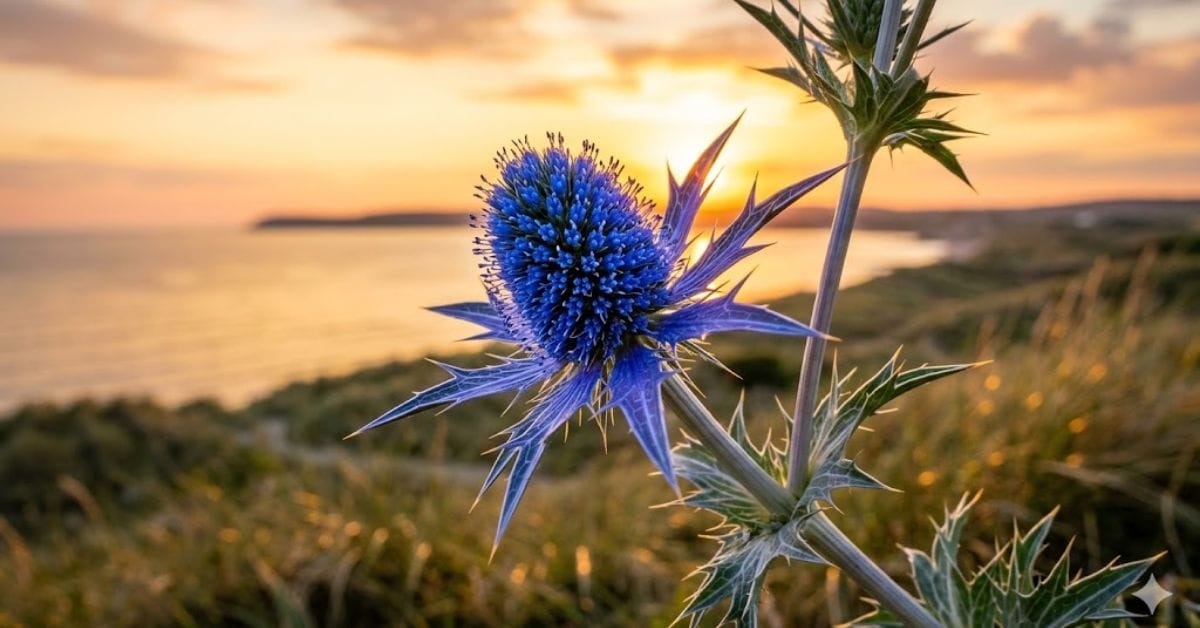
The stunning metallic blue of a Sea Holly bloom captured in the late afternoon sun.
1. What Exactly is This “Blue Alien” Plant?
Before we get our hands dirty, let’s look at the “Identity Card” of this plant. Most people call it Sea Holly, but in different parts of the world, you might hear it called Blue Sea Holly or even Star Thistle.
Believe it or not, this plant is a bit of a trickster. Despite the name, it has nothing to do with the holly you see on Christmas cards. It actually belongs to the Apiaceae family. Does that sound familiar? It should! It’s the same family that gives us carrots, celery, and parsley. So, in a way, you’re growing a very “fancy, metal-looking carrot” in your flower bed.
Sea Holly: Quick Profile at a Glance
Feature
The Essential Facts
Popular Names
Sea Holly, Blue Sea Holly, Star Thistle
Scientific Identity
Eryngium planum (Apiaceae Family)
Growth Habit
Herbaceous Perennial (Returns every year)
Adult Size
Stands 2–3 ft tall; Spreads 1–2 ft wide
Sun Requirements
Absolute Full Sun (8+ hours daily)
The Perfect Dirt
Sandy, gritty, and very well-drained
Soil Adaptability
Flexible (Acidic, Neutral, or Alkaline)
Peak Performance
Mid-Summer through Late Fall
Signature Colors
Metallic Blue, Electric Purple, and Silver
Weather Resistance
USDA Zones 5–9 (Heat & Cold Resistant)
Origins
Tough landscapes of Europe and Asia
2. Why Is Everyone Talking About Eryngium Right Now?
Modern gardening trends are shifting rapidly. People are moving away from “thirsty” lawns and looking for “Climate-Resistant” beauties. Whether you are in a coastal town or a sunny inland spot, Sea Holly fits everywhere because it’s built for tough conditions.
1. The “Zero-Thirst” Factor
Once its deep taproot settles into the earth, it finds water where other plants give up. It’s the ultimate “plant it and forget it” flower for busy people. If you live in an area with scorching summers, you might want to pair it with other survivors. Check out our list of 12 Drought-Tolerant Plants That Thrive in Extreme Heat to build a truly bulletproof landscape.
2. Salt and Sand Lovers
While most plants die from salt spray or “poor” sandy soil, Sea Holly thrives. In fact, if the soil is too good—too rich or too much compost : the plant actually suffers. It loves the struggle! This makes it a top choice for coastal DIY projects.
3. The Pollinator Magnet
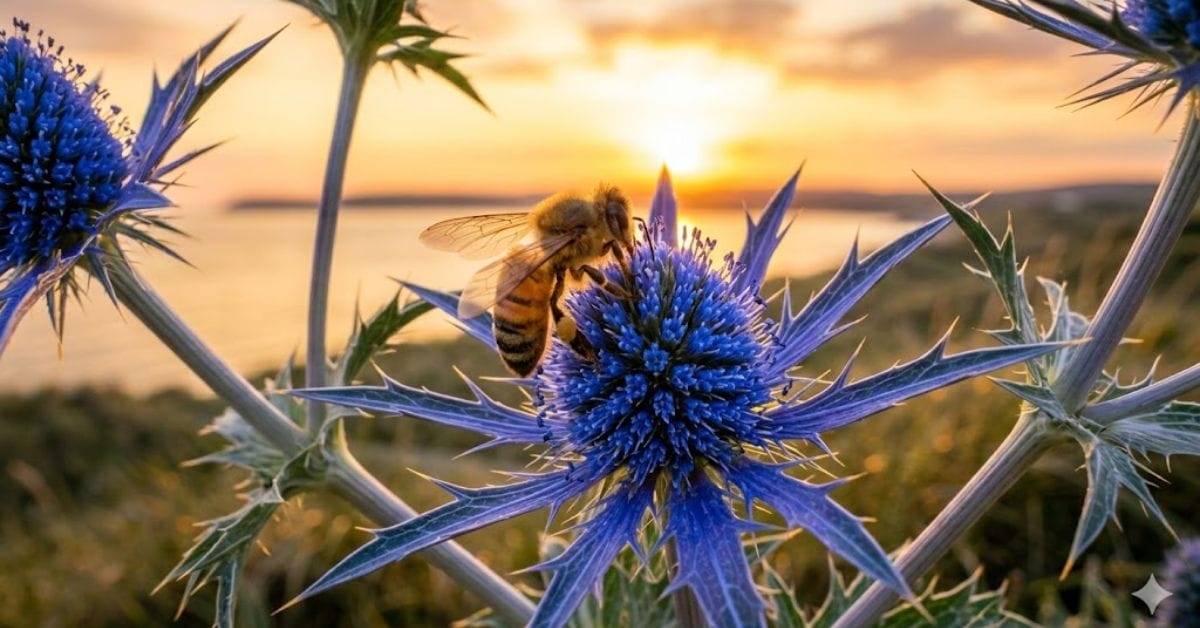
It’s like a neon “Open” sign for bees and butterflies. Because of its unique structure, it provides nectar that other common flowers simply can’t match. If you want a garden full of life and buzzing energy, this is your best bet. Learn more about choosing species that support your local ecosystem in our guide to 10 Essential Keystone Plants to Build a High-Value Wildlife Sanctuary in Your Own Backyard.
Sea Holly acts as a natural magnet for pollinators like bees and butterflies.
3. The “No-Nonsense” Guide on How to Grow Sea Holly
I’ve seen many gardeners fail with this plant because they treat it “too well.” Here is the raw truth: Sea Holly hates luxury. If you treat it like a delicate rose, it will die.
Stop Feeding It!How to Grow Sea Holly
The biggest mistake people make when learning how to grow Sea Holly? Fertilizer. If you give it rich, expensive soil or nitrogen-heavy compost, the plant gets “lazy.” The stems will become weak and flop over like they’re tired. It actually prefers sandy, well-drained soil. If you have a spot in your yard where the dirt feels “dead” or dry, that’s exactly where Sea Holly wants to live.
Sun is the Secret Sauce
To get that famous “metallic blue” or “purple” glow, it needs Full Sun. I’m talking at least 8 hours of direct sunlight. If you put it in the shade, it will lose its color and turn a dull greyish-green. Think of the blue color as its own version of a suntan : no sun, no tan.
The “One-Chance” Rule (Taproots)
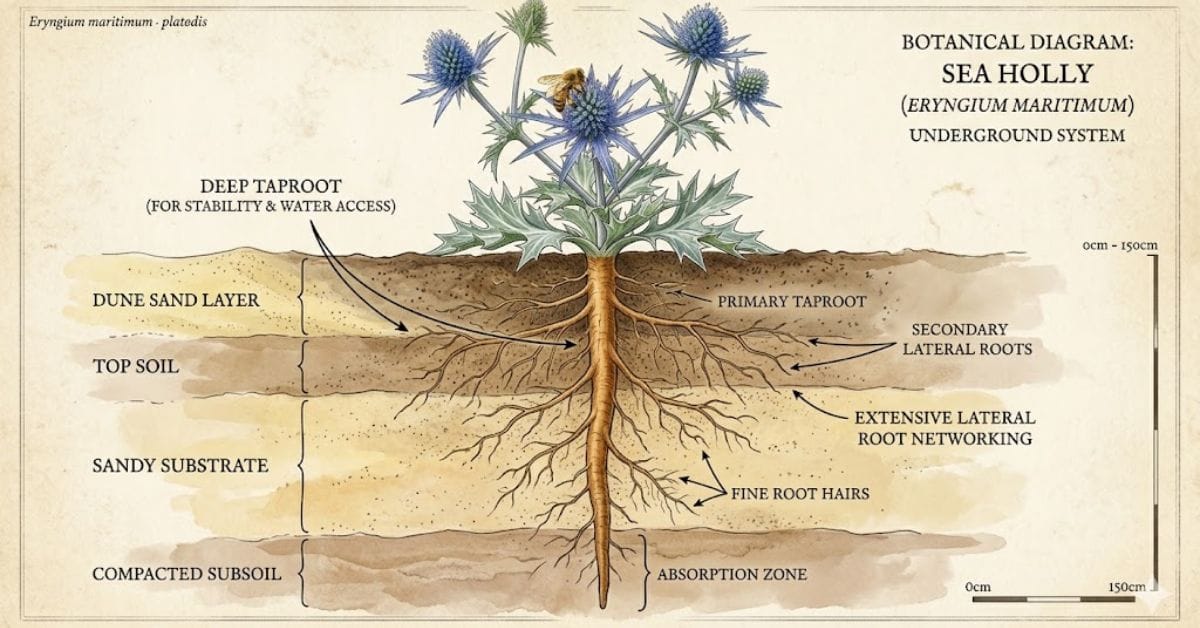
This is the most critical part. Sea Holly grows a long, carrot-like taproot. This is great for surviving droughts, but terrible for moving. Once it’s in the ground, just let it be. If you try to dig it up and move it later, you’ll likely snap the root, and the plant will perish. Pick your spot carefully the first time!
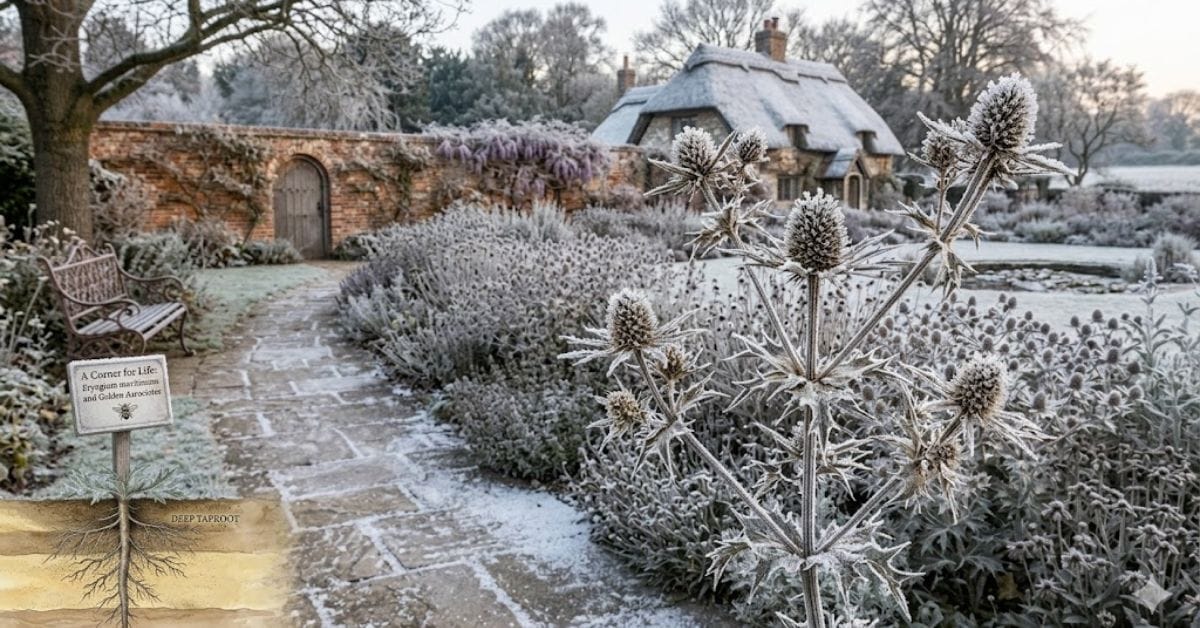
The deep taproot of the Sea Holly is the secret to its drought resistance but makes it difficult to transplant.
4. Solving the Mysteries: What Gardeners Always Ask Me
When I talk to other enthusiasts about how to grow Sea Holly, a few things always come up.. Let’s look at the actual challenges you might face in your DIY garden journey.
“Why is my Sea Holly not turning blue?”
Usually, it’s because it’s “too comfortable.” If it’s in partial shade or getting too much water, it won’t produce those intense pigments. It needs the sun and a bit of “stress” to show its true colors. Also, check your soil : if it’s too rich in nitrogen, the blue will fade into a boring green.
“Should you be worried about those spikes around kids or pets?”
They are sharp, yes. But that’s actually a blessing. Deer, rabbits, and even stray dogs usually give Sea Holly a wide berth. It’s a built-in security system for your flower bed. If you have small children, just plant them a foot or two back from the edge of the garden path.
“Will it actually thrive in a balcony container?”
You can, but you need a very deep pot : at least 15 inches deep to accommodate that long taproot. Use a 50/50 mix of regular potting soil and coarse sand or succulent mix. Just don’t expect it to live for 20 years like it would in the open ground.
5. Designing a “Show-Stopper” Garden: What Looks Best?
If you want your neighbors to stop and stare, you need to think about color contrast. Blue is a rare color in nature, so it pops best when contrasted with its opposites.
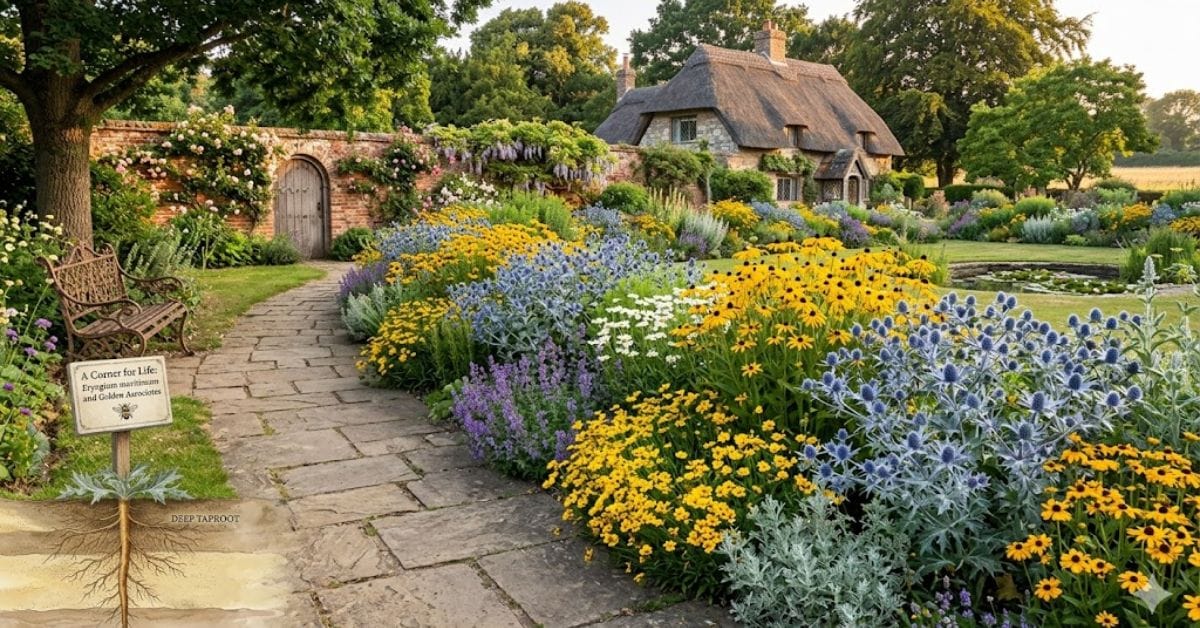
The “Sunset” Look: Plant Sea Holly next to bright yellow Rudbeckia or orange Zinnias. The blue against the orange creates a visual “vibration” that is stunning.
The “Silver Forest”: Pair it with Lamb’s Ear or Russian Sage. The different shades of silver and blue create a very sophisticated, modern look that works in any climate.
The “Texture Game”: Put it next to soft, wispy ornamental grasses. The contrast between the “hard” spikes of the Holly and the “soft” waving grass is what professional landscapers use to win awards.
Creating a “Show-Stopper” garden by pairing the blue tones of Sea Holly with bright yellows.
6. Choosing Your Champion: Top Varieties to Explore
Not all Sea Hollies are the same. Depending on your space, you might want a giant or a dwarf.
‘Big Blue’: The classic choice. Massive flowers with an incredibly bright, iridescent blue. It’s the one everyone wants.
‘Jade Frost’: My personal favorite for small spaces. It has variegated leaves green with creamy white edges that look good even when the plant isn’t blooming.
‘Blue Glitter’: If you want hundreds of smaller blooms rather than a few big ones, this is the variety for you.
‘Silver Ghost’: This one is almost purely silver. In the evening, it reflects moonlight and looks like it’s glowing in the dark.
7. The Secret to Propagating a “Difficult” Plant
Since you can’t easily move them, how do you get more?
From Seed: Plant them in late summer or fall. They need a “chill” period (winter) to sprout in the spring. This is nature’s way of making sure they don’t grow too early and freeze.
Root Cuttings: In early spring, you can take a small snip of a root from a mature plant and pot it up. It’s a bit of a gamble, but when it works, you get a free clone!
8. Maintenance: The “Less is More” Philosophy
One of the best things about Sea Holly is how little it asks of you.
Bloom Time: It starts showing off in midsummer and keeps going well into fall.
Winter Interest: Many people leave the dead flower heads on the plant all winter. They turn a beautiful bronze-silver and look incredible when covered in frost.
Pruning: In early spring, just before the new growth starts, cut the old stems down to the ground. That’s your entire year’s work done.
Sea Holly remains beautiful even in winter, providing texture and food for birds.
9. Beyond the Backyard: The Florists’ Secret
Did you know Sea Holly is one of the most expensive “filler” flowers in high-end wedding bouquets? Because they are so sturdy and have that metallic color, florists love them. If you grow them at home, you can cut the stems and dry them. They won’t lose their color! Just hang them upside down in a dark room for two weeks. You’ll have “permanent” blue flowers for your indoor vases.
We spend so much time trying to keep “fussy” plants alive. We water them, we spray them, and we worry when the sun gets too hot. Why put ourselves through all that stress?
Imagine a garden that looks better the hotter it gets. Imagine a plant that laughs at poor soil and ignores the bugs. Sea Holly isn’t just a plant; it’s a statement. It says you’re a gardener who values strength, unique beauty, and sustainability.
Whether you’re in a humid coastal area or a dry inland zone, there is a variety of Eryngium waiting to turn your “problem spot” into a masterpiece. The only real question left is: why haven’t you planted one yet?
Don’t wait for the next heatwave to wish you had a tougher garden. Start looking for ‘Big Blue’ or ‘Jade Frost’ at your local nursery this weekend. Once you see that first neon-blue bloom catch the morning sun, you’ll never look at “regular” flowers the same way again.
Imagine a plant that laughs at poor soil and ignores the bugs. Now that you know how to grow Sea Holly, are you brave enough to go blue?