
This post may contain affiliate links, If you choose to buy through these links, I may receive a small commission at no additional cost to you.
You wake up at 2:00 AM with a weird, burning itch on your arms. You turn on your phone light, pull back your sheets, and see them: tiny, flat, reddish-brown bugs running away from the light, hiding right into the folds of your mattress.
Total panic mode starts. Your skin is crawling, your heart is racing, and you feel violated in your own home. It is a nightmare that millions of people across New York, London, Delhi, and Sydney face every single day.
Bed bugs don’t care if your house is clean or dirty. They hitchhike inside your luggage from luxury hotels, movie theaters, or public transport. Once they settle in your bed, furniture, or carpets, getting rid of them feels like a never-ending mental and physical war.
Experiencing this nightmare can be incredibly stressful. If the anxiety of dealing with pests is getting to you, discover our practical tips on how to feel less overwhelmed at home to protect your peace of mind.
If you jump online to find a quick fix, you will immediately see thousands of people talking about a cheap, natural white powder called diatomaceous earth (DE). Internet forums claim it completely wipes out bugs overnight. But does DE kill bedbugs in real life, or are you just spreading useless dust while these tiny monsters lay hundreds more eggs? Let’s talk about what really happens when you try it.
The Science Behind Diatomaceous Earth: How It Fights Bed Bugs
Let’s look at how it works in plain, simple English.Diatomaceous earth is not a chemical poison made in a laboratory. It is entirely natural. Millions of years ago, oceans and lakes were full of tiny, microscopic aquatic organisms called diatoms. When these single-celled algae died, their hard, silica-rich skeletons settled at the bottom, creating massive underground deposits.
Pest control companies mine this chalky rock and grind it down into a super fine, white powder. To us, it feels soft like baby powder or cornstarch. But to an insect with a hard shell, it is a completely different story. Many desperate homeowners looking for an affordable remedy constantly ask online: does DE kill bedbugs effectively by itself? To understand that, you have to look at how it attacks them physically.
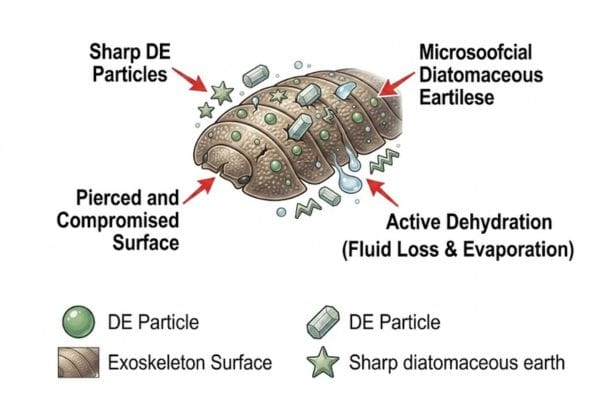
DE kills bugs physically, not chemically. Every single speck of this dust has microscopic, razor-sharp edges. When a bed bug walks across the powder, these sharp edges slice right through the thin, waxy outer layer of its body.
That outer waxy coating is what keeps the bug hydrated. Once it gets scratched up by the DE, the porous silica dust quickly sucks all the moisture right out of the bug’s body. The insect slowly dries out and dies from severe dehydration. Because this is a pure mechanical action, bed bugs can never develop an immunity to it, unlike chemical sprays.
The Timeline: How Fast Does Diatomaceous Earth Kill Bed Bugs?
Here is the absolute, honest truth that most internet bloggers won’t tell you: DE is incredibly slow. If you expect to throw powder around and find an army of dead bugs the next morning, you will be highly disappointed. When testing a DIY approach and evaluating does DE kill bedbugs fast enough, you have to prepare for a waiting game.
The Waiting Game: Once a bed bug physically contacts the dust, it takes anywhere from 48 hours to 10 full days to dry out completely and die.
Active Movement Required: The bug must actively crawl through the dust for it to do any damage. If they are hiding deep inside your wall outlets or baseboards and never cross your powder lines, they will stay perfectly healthy.
Zero Effect on Eggs: This is the biggest catch. Diatomaceous earth does absolutely nothing to bed bug eggs. Those eggs will still hatch into hungry baby nymphs a week later.
When you are deeply frustrated and tracking your progress week after week, asking yourself does DE kill bedbugs at all, remember that it is a war of attrition, not an instant victory.
Is Food Grade Diatomaceous Earth Safe for Humans and Pets?
This is a massive concern for everyone. You are literally putting this stuff right where you lay your head to sleep every night. If you search for this online, you will find a lot of confusing advice, so let’s set the record straight.
Stores mainly stock two varieties of DE :
| DE Type | Main Use | Safety Status |
| Filter / Pool Grade | Used in swimming pool filtration systems. Highly treated with heat. | DANGEROUS. Contains high crystalline silica. Never use indoors. |
| Food Grade | Used in agriculture and grain storage. Natural and untreated. | SAFE for skin contact, but still a lung irritant if breathed in. |
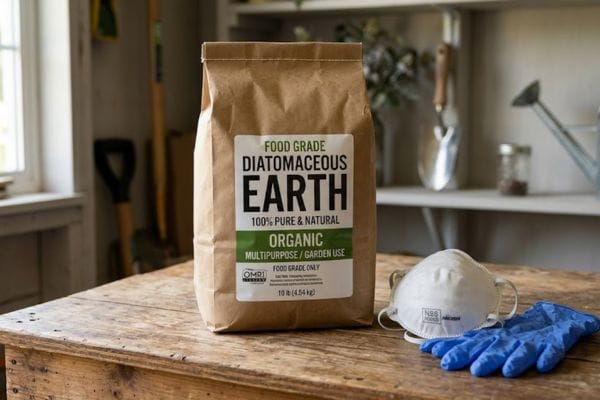
You must ONLY buy Food Grade DE for your home. It is completely non-toxic if it accidentally gets on your skin or if your dog licks a tiny bit off the floor.
However, “safe” doesn’t mean you can breathe it in like fresh air. Because the powder is so incredibly fine, it floats into the air effortlessly. If you inhale it, those microscopic sharp edges will irritate your nasal passages, throat, and lungs, causing bad coughing fits. If you have asthma, it can trigger a severe attack. Always wear a protective mask (like an N95) whenever you are applying it, and make sure your pets and kids stay out of the room until the dust has fully settled down.
How to Apply Diatomaceous Earth for Bed Bugs Step-by-Step
Most people fail with DE because they use way too much of it. They buy a massive bag and pour thick, heavy white lines all around their bed posts like they are trying to stop a flood.
Here is an insider secret from professional exterminators: Bed bugs are not stupid. If they see a giant, thick mountain of white powder blocking their path, they will simply turn around and find another route up your walls or blankets to bite you. If you want to make sure your setup answers the question “does DE kill bedbugs?” Yes, you must be intelligent and discreet.

Step 1: Deep Clean the Area First
Do not just puff powder onto a messy room. Strip all your bedding, sheets, and pillowcases. Clutter and deep dust give bed bugs the perfect places to hide, making treatments less effective. If you want to clear out hidden spaces first, check out our guide on why your home feels cluttered even when it’s clean to optimize your space before applying DE. Put everything directly into plastic trash bags…
Step 2: Get a Powder Duster
Never use a spoon, cup, or your bare hands to throw the powder.This will lead to the formation of sizable masses. Buy a cheap, handheld bulb duster or use a pre-packaged option like the HARRIS Diatomaceous Earth Food Grade, Half Pound with Easy Application Puffer Tip, which allows you to puff out a very fine, almost invisible cloud of dust that lands evenly.
Put on your protective gear (Safety First): Put on an N95 mask and protective gloves before opening the bag. Turn off all ceiling fans and close windows so the draft doesn’t blow the powder everywhere.
Target hidden crevices (Be Precise): Puff a microscopic, thin layer directly into the mattress seams, bed frame joints, empty screw holes, behind baseboards, and inside the cracks of your bedroom furniture.
Open up electrical faceplates (Check Hidden Highways): Unscrew your light switch and electrical outlet covers. Puff a tiny bit of dust inside the walls. Bed bugs love using these internal wall spaces to travel safely between different rooms.
Let the dust settle (Wait It Out): Leave the room alone for a few hours until the air is 100% clear. Wipe down any excess powder that landed out in the open where you walk.
How Long Do You Leave Diatomaceous Earth Down?
To actually break the life cycle of these pests, you need to leave the dry powder down undisturbed for at least 7 to 10 days. This gives the adult bugs enough time to leave their hiding spots at night to search for food, forcing them to walk through your invisible dust traps.
After a week or two, take a heavy-duty vacuum cleaner and clean up all the old powder and dead bugs.
Important Equipment Warning: Super fine DE dust can easily bypass regular vacuum bags and destroy standard household vacuum motors. Use a heavy shop-vac with a high-quality drywall filter, or a vacuum equipped with a verified HEPA filter system.
Because DE doesn’t kill unborn eggs, you will have a fresh batch of baby bugs hatching out right after your first cleanup. To stop them, you must reapply another paper-thin layer of DE immediately after vacuuming. Repeat this exact cycle every single week for 3 to 4 consecutive weeks until you stop seeing any new red bite marks on your skin.
Why DE Alone Won’t Solve a Big Bed Bug Infestation
Can you completely eliminate a massive, deep-rooted bed bug problem using nothing but a bag of diatomaceous earth? If we are being completely honest, no, you probably cannot.
While DE is highly effective as a long-term barrier, relying on it as your only weapon is like trying to put out a massive house fire with a single garden hose. If you are struggling with a severe infestation, asking “does DE kill bedbugs all by itself?” You will inevitably confront a harsh truth: its effectiveness is maximized when utilized as one component of a comprehensive pest management plan. integrated pest management strategy. If you want to guarantee success without spending thousands on pros, combine your DE treatments with these three simple tools,
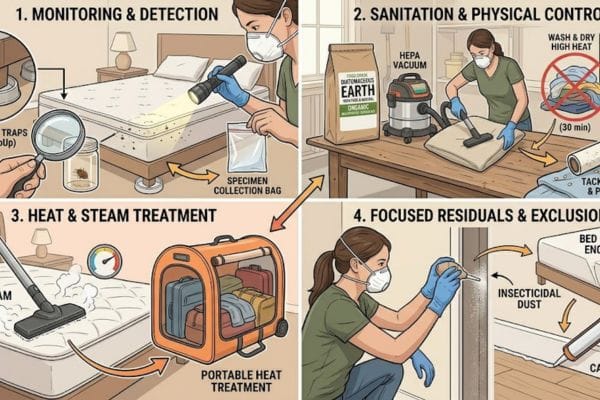
If you want to guarantee success without spending thousands on pros, combine your DE treatments with these three simple tools:
High-Quality Mattress Encasements: Buy fully certified, bed bug-proof zip covers for both your mattress and box spring. This seals any remaining bugs inside permanently so they cannot bite you, and eventually, they will starve to death. It also stops new bugs from hiding in the deep seams.
Bed Bug Interceptor Cups: Place small plastic interceptor cups under every single leg of your bed frame. Lightly dust the inside of these cups with DE. Since bed bugs cannot fly or jump, they have to climb up the legs to reach you, trapping themselves in the powder-coated moat.
Targeted Steam Cleaning: A good household steam cleaner shoots out deep heat that destroys bugs and melts their eggs on contact. Steam your carpets and furniture thoroughly, let them dry out 100% completely, and then apply your DE powder on top. For DE to be effective, it requires a perfectly dry environment; once moistened, it transforms into an ineffective, muddy substance.
Surprising Extra Uses for Food Grade DE Around the House
Once you buy a bag of this powder to fix your bedroom, you will likely have a lot left over. The good news is that this natural dust is incredibly versatile for dealing with other common household nuisances:
Ant Hills: Got an annoying trail of ants coming into your kitchen or a massive mound on your lawn? Sprinkle a light coating of DE around their entry doors or directly over the ant hills outside to dry them out fast.
Cockroach Control: Lightly dust the dark spaces behind your kitchen refrigerator, under the sink pipes, and back corners of your garage. It keeps roaches and silverfish away naturally without spraying toxic chemicals near your food prep spaces.
Garden Pest Shield: If slugs, snails, or beetles are eating your backyard tomato plants or flowers, sprinkle a protective ring of DE on the soil directly around the base of the plants. It stops them from climbing up the stems.
Spider Deterrent: Lightly puff the powder into the dark corners of your windowsills, doorways, and closets to stop spiders from setting up permanent webs.
The Ultimate Verdict: Is It Worth Trying?
If you are dealing with a nightmare bed bug infestation and your budget is tight, buying a bag of Food Grade Diatomaceous Earth is absolutely worth it. It is incredibly affordable, never expires if kept dry, and provides a permanent physical barrier that bugs can never become immune to.
If you remain realistic about the question—does DE kill bedbugs overnight? No, it takes time. But if you want a complete answer to does DE kill bedbugs in the long run, the answer is a big yes. With consistency, you can easily win the war for your home and finally get a worry-free, peaceful night of sleep again Use a fine applicator, apply it paper-thin so you don’t scare the bugs away, and combine it with heat washing and mattress covers. To monitor your ongoing success and ensure complete 360° protection, we highly recommend installing the Bed Bug Interceptors, 8 Pack Bed Bug Traps, Insect Detector for Bed, Sofa & All Furniture under your bed posts to catch any remaining pests and guarantee your family a peaceful sleep.
FAQ :
Q1. Does 100% diatomaceous earth kill bed bugs?
Yes, 100% Food Grade Diatomaceous Earth kills bed bugs effectively. However, it must be completely pure with no added chemicals. It works through a physical mechanism—the microscopic sharp edges scratch the bed bug’s outer shell, absorbing its moisture and causing death by dehydration. Keep in mind that while it is 100% effective upon physical contact, it is a slow process that takes anywhere from 48 hours to 10 days to kill an individual bug, and it does not destroy bed bug eggs.
Q2. Is it safe to sleep in a room with diatomaceous earth?
Yes, it is generally safe to sleep in the room, but only if you have applied a paper-thin, microscopic layer and the dust has completely settled. You must strictly use Food Grade DE, which is non-toxic to humans and pets. However, because the powder is extremely fine, airborne dust can heavily irritate your lungs, throat, and eyes. Never apply large clumps, always wear an N95 mask during application, and wait a few hours for the air to clear entirely before sleeping in the room. If you suffer from asthma or severe allergies, it is best to sleep elsewhere until the treatment is over.
Q3. How to permanently kill bed bugs at home?
To permanently eliminate bed bugs, you must use an Integrated Pest Management (IPM) approach rather than relying on a single remedy. Follow this checklist:
High-Heat Washing: Wash all bedding and clothes in hot water and dry them on high heat for at least 35 minutes.
Deep Steaming: Use a heavy-duty steamer on mattress seams, carpets, and furniture cracks to melt live bugs and eggs on contact.
Apply Food Grade DE: Puff a very fine layer into crevices, baseboards, and bed frames to catch escaping bugs.
Encase Mattresses: Seal your mattress and box springs in certified, bed bug-proof zippered covers for at least a full year to starve out any trapped bugs.
Repeat Weekly: Reapply treatments every week for 3 to 4 consecutive weeks to disrupt their hatching cycle completely.
Q4. What will 100% kill bed bugs?
Extreme heat is the only weapon that is 100% guaranteed to kill bed bugs and their eggs instantly on contact. Bed bugs cannot survive temperatures above 122°F (50°C). This is why professional thermal remediation (heating a whole house to 130°F+ for several hours), heavy-duty commercial steam cleaning, and high-heat commercial laundry dryers are the most foolproof ways to completely wipe out an infestation.