
This post may contain affiliate links, If you choose to buy through these links, I may receive a small commission at no additional cost to you.
When bugs appear, the immediate reaction for most people is to buy a bottle of chemical insect spray. But let’s face it nobody wants to spray harsh, smelly poisons all over the food they grow for their family. If you need immediate backup alongside your herbs, a certified organic option like the Bonide Captain Jack’s 12 oz Neem Max Ready-to-Use Spray for Houseplants Indoors works perfectly to knock down heavy infestations without wiping out beneficial insects.
That’s why so many home growers across the US, UK, and India use an old organic trick instead. It’s called companion planting. You just mix your vegetables with fast-growing, strong-smelling herbs to build a natural scent shield that actually works.
What is companion planting for pest control and does it really work?
Look at how things grow in a wild forest or a random open meadow. You never see perfectly clean rows of just one single crop. Nature loves mixed plant communities where different species grow tangled up together and protect each other. A traditional companion planting setup is just taking that exact wild design and putting it right into your raised beds or patio container pots.
Most garden insects have terrible eyesight, so they find food by tracking plant smells through the air. When you interplant highly aromatic herbs throughout your vegetable rows, you create a thick cloud of natural essential oils. This heavy herbal scent masks your vegetables, leaving flying pests totally disoriented so they fly right past your yard.
According to research from Penn State Extension on herbs as plant partners, aromatic herbs visually confuse pests and mask the volatile chemical smells of your main crops, which significantly limits their ability to land and lay eggs. Choosing the right pairs for companion planting even attracts good bugs like ladybugs and lacewings that hunt down bad pests for you.
Which herbs naturally keep bugs out of your vegetable patch?
The best defenders grow fast, handle a bit of neglect, and pack a serious punch in the aroma department. Practicing organic companion planting with these 10 best choices will help get your soil into great shape right now.
1. Basil
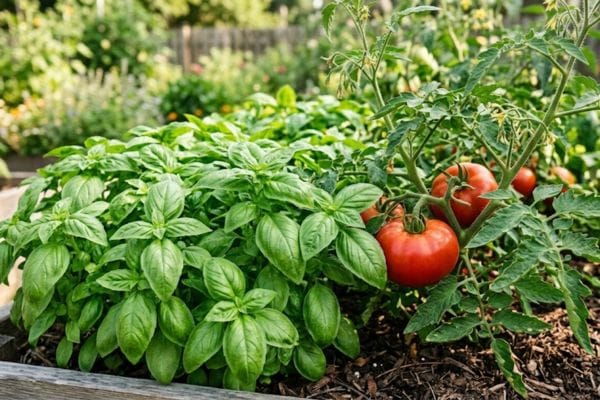
Basil is a massive helper when protecting a vegetable patch. The sweet smell of fresh basil leaves is highly offensive to thrips, tomato hornworms, and standard green aphids. Plant a few basil slips right next to your tomato cages to act as a live-in bodyguard. Growing them in the same dirt also improves the final flavor of your tomatoes at harvest time.
2. Mint
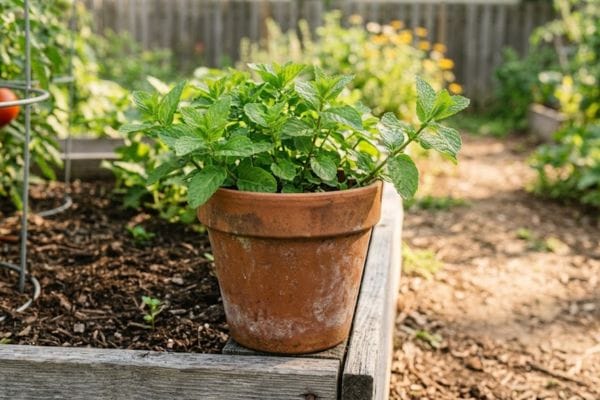
Mint is great for scaring away ants, flea beetles, aphids, and mice. But a quick warning: mint is incredibly aggressive. It grows like crazy and will choke out your garden bed in months. To save your sanity, always plant mint inside separate pots or containers. Place these pots around the outer edges of your vegetable patch to form a defensive line.
3. Rosemary
Rosemary has tough, woody stems and needle-like leaves, making it a rugged plant that loves baking in the hot sun. The strong, pine-like oil inside rosemary leaves does a fantastic job of clearing out bean beetles, cabbage moths, and annoying evening mosquitoes. Tuck rosemary next to your green beans, carrots, or peppers to keep their leaves green and hole-free.
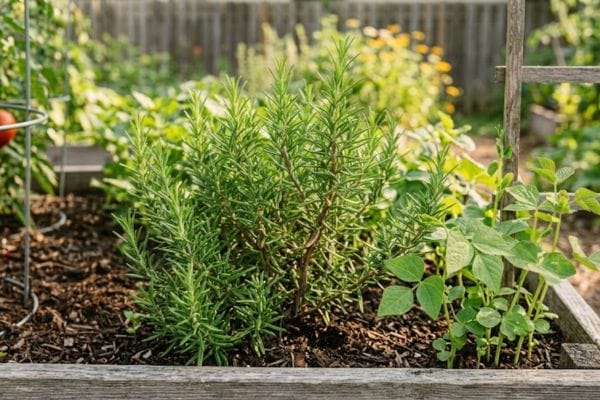
Rugged rosemary loves the hot sun and easily clears out common bean beetles.
4. Marigolds
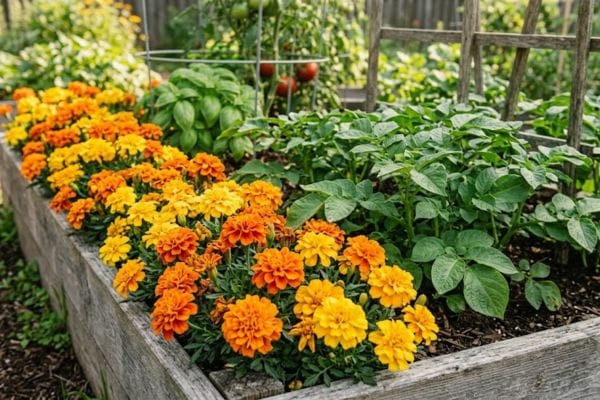
Experienced vegetable gardeners treat marigolds exactly like a staple herb because of their wild, pungent scent. Marigolds give off a sharp, distinct odor from both their petals and roots. This underground scent drives away microscopic root-knot nematodes attacking from below, while the top parts keep whiteflies and squash bugs far away from your vines. They are a must-have border plant for any grower.
5. Thyme
If you grow broccoli, cabbage, or kale, you know the nightmare of dealing with tiny green cabbage moth worms. They blend in so well you don’t notice them until your leaves look like lace. Thyme is your best friend here. It stays low, forms a thick mat, and releases a herbal scent that messes with the moths’ tracking radar so they won’t land to lay eggs.
| Herb Name | Primary Pests It Repels | Best Vegetable Companions |
| Basil | Aphids, Thrips, Hornworms | Tomatoes, Peppers, Eggplants |
| Mint | Ants, Flea Beetles, Rodents | Cabbage, Carrots (Keep mint in pots!) |
| Rosemary | Bean Beetles, Cabbage Moths | Beans, Carrots, Peppers |
| Marigolds | Nematodes, Whiteflies, Squash Bugs | Tomatoes, Potatoes, Cucumbers |
| Thyme | Cabbage Worms, Corn Earworms | Broccoli, Kale, Brussels Sprouts |
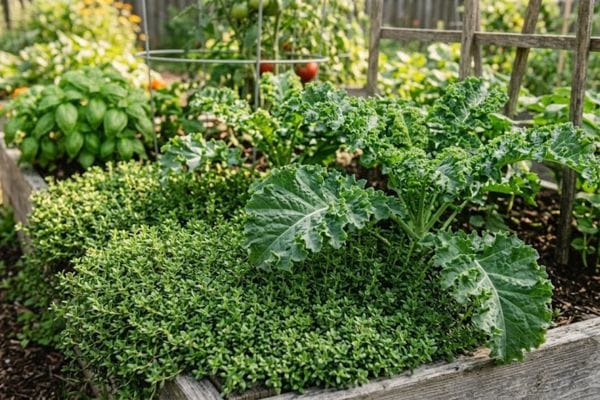
6. Oregano
Oregano is practically bulletproof and handles weather shifts like a champ. It’s a hardy perennial herb that spreads easily across the dirt without needing you to baby it at all. It forms a dense, fuzzy green blanket of heavily aromatic leaves that turns away a massive list of general garden pests, especially the incredibly annoying cucumber beetles and squash bugs that ruin your melon and zucchini vines.
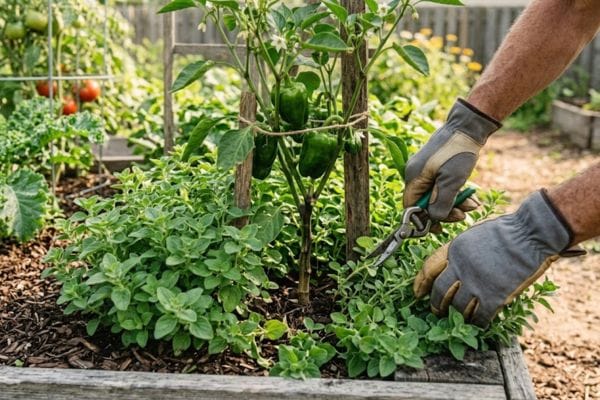
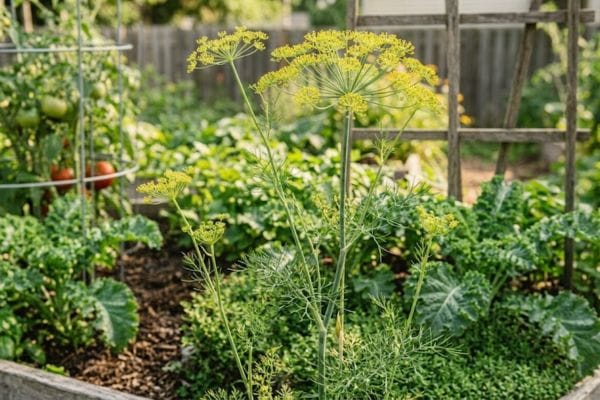
7. Dill
Dill works a bit differently than other sweet herbs. While the fine, feathery green foliage repels aphids and spider mites, the yellow blossoms bring in miniature predatory wasps. Don’t worry these wasps don’t sting humans, but they are deadly to scary green tomato hornworms. Dill also makes a perfect “trap crop,” meaning bad bugs will choose to chew it instead of your prize vegetables.
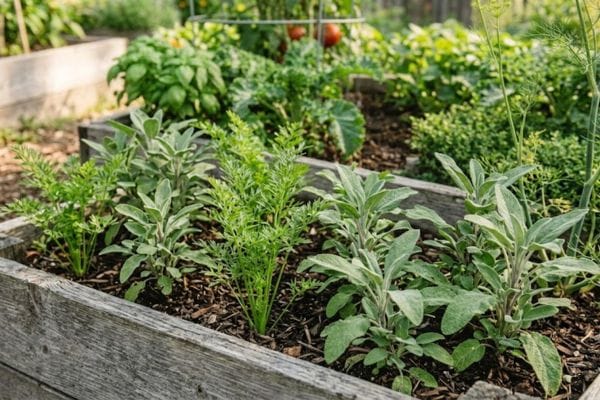
8. Sage
Carrot rust flies lay tiny eggs that turn into hungry maggots that tunnel through your root veggies, leaving them brown and ruined under the dirt. Planting quick-growing sage plants around your root zone completely stops this cycle. The deep, musky scent of sage leaves completely overpowers the sweet smell of the growing carrots, making it impossible for the flies to find them.
9. Chives
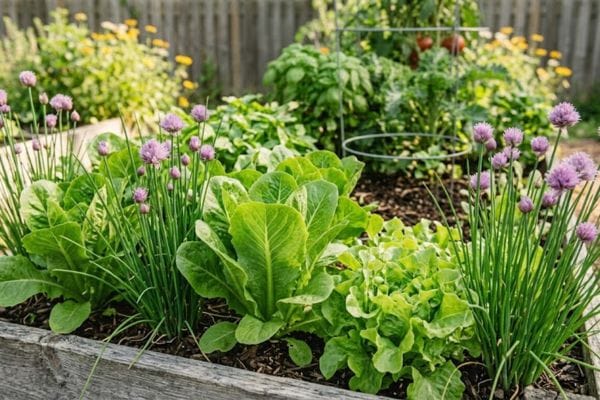
Chives carry a sharp, sulfur-like garlic smell that tiny aphids absolutely detest. They make fantastic, space-saving neighbors for delicate salad lettuce, celery, and young pepper plants. As a really neat bonus, chives naturally fight off fungal spores, which drastically lowers the chances of common leaf blight and powdery mildew spreading through your wet vegetable rows after a heavy rain.
10. Cilantro / Coriander
Cilantro sprouts up incredibly fast from seed, especially if you get it down into the dirt during the cooler parts of early spring or autumn. It’s excellent for keeping bad spider mites and potato beetles away from your crops. If you let a few cilantro plants bolt in the summer heat and grow pretty white flowers, they will draw in hoverflies, which love to snack on aphids.
How do you arrange herbs in a vegetable garden for best results?
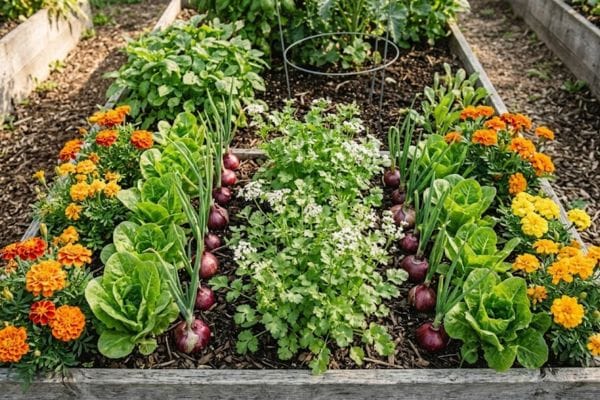
Just picking up a few herb pots from the garden center won’t do much if you don’t put them in the right spots. If you put all your helper herbs in one corner and leave your vegetables on the other side of the yard, the shield won’t do a thing. You want to mix everything up thoroughly. Integrating your plants this way makes companion planting easy, and gardeners call this layout trick interplanting.
The Mix-and-Match Method: Don’t plant solid rows of just one thing. Put down a vegetable, then an herb right next to it, then another vegetable. This breaks up the visual look and the smell pattern of your garden beds, making it tough for bugs to take over.
The Perimeter Wall: Plant a crowded row of chives, marigolds, and rosemary all along the very outer edges of your garden boxes. This sets up an actual barrier of heavy scent that flying pests have to cross before they can even get close to your crops. For flying pests that manage to bypass your aromatic herb shield, hanging a few weather-resistant Garsum Fruit Fly Sticky Trap for Indoor and Outdoor, 36 Pack Fungus Gnat Killer for Houseplant, Mosquitos, Flying Insect, White Flies around your raised beds is a simple, chemical-free way to catch bugs on the spot.
Ground Cover Protection: Put low-growing herbs like thyme or oregano right under tall plants like staked tomatoes or climbing peppers. It saves space, blocks weeds from getting sun, keeps the soil damp, and guards the main stalks of your food crops.
If you love the self-sufficient feeling of harvesting your own organic backyard crops and want to explore more ways to secure fresh, healthy food right from home, check out our step-by-step guide on DIY Indoor Hydroponics: Grow Fresh Salads in Kitchen Cabinets – The Glowing Secret to 24/7 Home Greens to keep your kitchen packed with nutrient-dense produce all year round.
What are the biggest mistakes to avoid with companion planting?
Even though companion planting is an awesome organic hack, it’s still pretty easy to make a couple of simple mistakes that can hurt your overall food yield.
First, you can’t let your helper herbs completely crowd out your main vegetables. Because these herbs grow so fast from seed, they can turn into bullies pretty quickly. They will start stealing the daily sunlight, drinking up the water, and taking soil nutrients that your vegetables need to grow big. Keep some garden shears handy and trim your herbs back hard whenever they start touching your main crops.
Second, always match up plants that actually want the same type of weather and soil. For instance, never plant an herb that loves wet soil like lush green basil right next to a vegetable or herb that prefers bone-dry, sandy dirt like rosemary or sage. Check what each plant needs first so they can grow happily in the exact same box.
If you are looking to bring this gorgeous, organized look from your vegetable plot over to your outdoor entertainment spaces, checkout our guide on 10 Genius DIY Fire Pit Designs: How to Effortlessly Transform Your Backyard Into a Luxury Oasis to completely level up your landscaping.
The long-term rewards of an organic ecosystem
At the end of the day, switching things up and utilizing companion planting completely changes how you view your yard. Your vegetable garden stops feeling like a constant war zone where you have to spend cash on chemical sprays just to keep your plants alive. Instead, the whole plot slowly turns into a balanced, natural ecosystem that pretty much takes care of itself.
By simply tucking a few quick-growing, fragrant herbs like basil, mint, or thyme in between your everyday vegetable rows, you aren’t just saving your plants from devastating bug damage. Successful companion planting creates a gorgeous, amazing-smelling outdoor space filled with busy pollinators, rich living soil, and food that tastes fresh and clean. Take a deep breath, get your boots muddy, mix up your planting boxes, and let nature handle the hard part for you this year. Your plants, your family, and your peace of mind will honestly thank you for it.
FAQ :
Q1: Which herbs are best for repelling garden pests?
A: Highly aromatic herbs with strong essential oils are the absolute best for repelling pests. Basil is legendary for driving away aphids and hornworms, mint stops ants and beetles, rosemary repels cabbage moths, and thyme keeps destructive worms away. Planting these throughout your vegetable rows creates a natural, organic shield.
Q2: Which herbs grow best together?
A: Herbs that share the same sunlight and water requirements grow best together. For example, Mediterranean herbs like Rosemary, Thyme, Sage, Oregano, and Marjoram love full sun and dry soil, making them perfect companions. On the other hand, water-loving herbs like Basil, Cilantro, and Parsley grow beautifully together in moisture-retentive soil.
Q3: What herbs can be planted in October?
A: October is an excellent time to plant cool-season and hardy perennial herbs. Herbs like Cilantro (Coriander), Parsley, Dill, Chives, Fennel, and Garlic Chives thrive in the pleasant autumn temperatures. It is also a great month to establish root systems for hardy perennials like Rosemary, Sage, and Thyme before the peak winter arrives.