
This post may contain affiliate links, If you choose to buy through these links, I may receive a small commission at no additional cost to you.
I still remember the exact morning I snapped.
Fresh mug of dark roast in hand, sitting down to check emails, and within ten seconds a tiny, erratic black fly decided to slalom right past my nose. I swiped at it blindly, spilled lukewarm coffee down my desk, and watched in pure disgust as the bug landed safely on my Monstera’s wet soil. It didn’t even hurry.
If you have houseplants on your shelves, you’ve probably lived this exact same headache. Fungus gnats and stubborn kitchen fruit flies never send an RSVP. You buy one innocent bag of indoor potting mix or leave out a cluster of bananas, and boom: your peaceful living room suddenly turns into an indoor swamp.
The standard fix? Those awful neon-yellow adhesive sheets. Sure, they catch a few strays, but they look terrible. They stick to your bare skin, flutter in the draft, and turn your plant corner into an open cemetery of dead bugs.
There’s an older, far more elegant workaround: bringing in real bug eating plants.
Instead of buying disposable plastic traps every single month, you can recruit living biological backup. These specialized bug eating plants don’t just tolerate irritating bugs; they view your windowsill invaders as a high-protein feast.
Why Sticky Cards Stumble While Green Predators Feast
Sticky sheets wait around hoping a bug is dumb enough to slam into them. They do zero work against fruit flies hovering over your kitchen sink, and nobody wants guests staring at strips of yellow glue covered in dead flies.
Carnivorous plants play a completely different strategic game. Living in nitrogen-starved peat bogs for thousands of years taught them to lure their own meals with slick biochemistry. They produce invisible ultraviolet landing strips, exude sweet sugary nectar trails, and grow glittering moisture droplets that look like fresh drinking water to a wandering bug.
Once a gnat touches that leaf, it’s curtains. The plant absorbs the bug’s nitrogen directly through its tissue, fueling brand-new leaf growth in the process. It’s an effortless, self-cleaning trap sitting on your sunny shelf.
1. Cape Sundew (Drosera capensis): The Living Flypaper
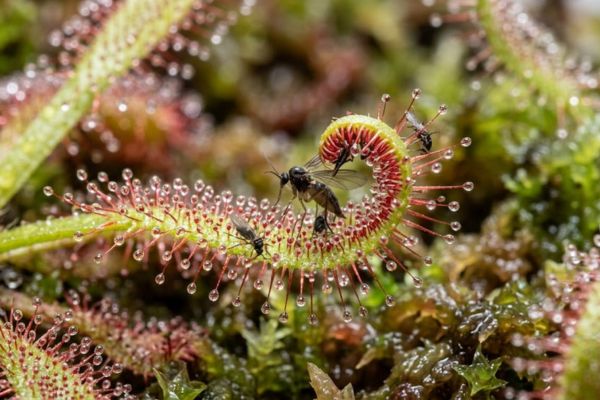
If you have gnats flying around your workspace right now, stop overthinking and start with the Cape Sundew.
Native to South Africa, it looks less like everyday indoor greenery and more like a bizarre marine anemone. It produces dozens of strap-shaped ribbons lined with vibrant reddish hairs. Each tiny hair tip holds a drop of crystal mucilage that sparkles in bright morning sun. To a thirsty gnat crawling up from dry potting soil, it looks like an oasis.
The insect taps the leaf for a sip, and the adhesive glues its legs instantly. As it panics, the neighboring hair tentacles slowly curl around the prey over a couple of hours, suffocating it while flooding it with digestive fluid. One well-grown Cape Sundew can pick off dozens of annoying gnats every single week without slowing down, and it’s tough enough to shrug off most beginner mistakes.
2. Butterworts (Pinguicula): The Velvet Gnat Trap
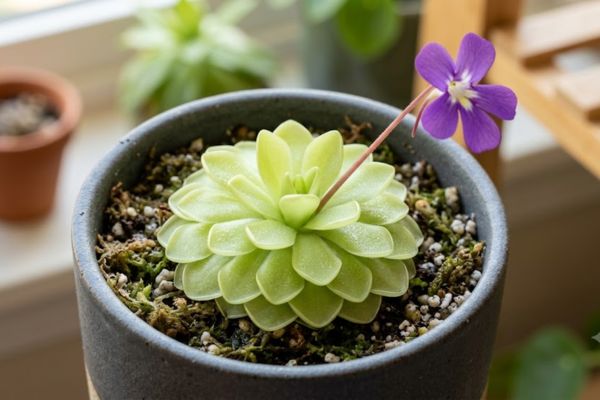
Maybe you don’t want alien-looking tentacles hanging around your aesthetic living room. If you prefer subtle, clean decor, meet Pinguicula growers usually call them “Pings.” These understated bug eating plants look almost identical to regular succulents.
Visitors usually mistake a Butterwort for an Echeveria until they look closer and spot the greasy sheen over the pale green leaves.
Those leaves contain thousands of microscopic glands. One set sweats out a sticky surface grease, while the other oozes digestive enzymes. When a fungus gnat lands, thinking it found a dry runway, its feet get stuck immediately. The plant doesn’t move or curl; it just dissolves the bug right where it landed, leaving behind an invisible dry husk.
Because Pings have tiny root networks, you can mount them in cute coffee mugs, shallow stone dishes, or porous pumice. Plus, they throw out delicate purple blooms that look shockingly like tiny orchids for months on end. They also make great companions if you run DIY indoor hydroponics to grow greens in your kitchen cabinets tucking a Ping nearby stops fungus gnats before they can ever reach your crops.
3. Tropical Pitcher Plant (Nepenthes): The Hanging Pitfall
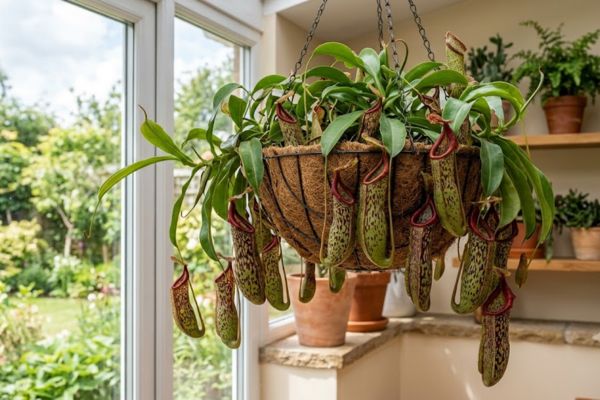
Avoid North American bog pitchers that require freezing outdoor winters; inside a cozy home, you want the tropical vine kind: Nepenthes.
These beauties produce lush green foliage that ends in slender tendrils, hanging ornate pitcher cups into the open air. With their mottled burgundy, red, and lime-green patterns, they look like designer pendant lamps.
The magic happens on the pitcher’s rim, called the peristome. It stays wet with fragrant nectar. When gnats, fruit flies, or larger blowflies crawl across to take a taste, they hit a slick waxy layer, lose their footing, and tumble down into a pool of enzymatic fluid. The steep, slick interior walls prevent them from crawling out, while the narrow neck stops them from flying away.
Hang one above your kitchen sink or in a bright bathroom where shower steam keeps the pitchers plump and full of fluid.
4. White-Topped Pitcher Plant (Sarracenia leucophylla): The Patio Patrol
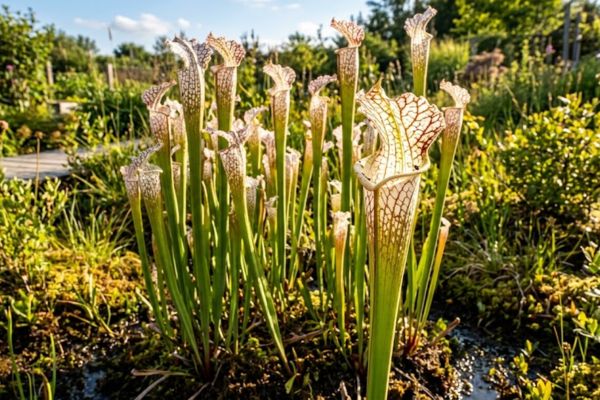
When your gnat troubles start outdoors around container gardens or balcony planters, bring in the tall trumpets of Sarracenia. If you’re currently working on quick balcony garden upgrades for small apartments to make the most of your space, adding these upright bug-eating plants gives you gorgeous greenery and effortless outdoor pest control in one go.
These wetland natives send up dramatic, hollow vertical chimneys reaching two feet tall. The upper hoods look like stained glass, patterned with bright white patches and deep burgundy veins.
Insects fly toward those translucent white sections thinking they’re escaping toward the sky. Instead, they hit the back wall and slide downward into the throat, which is lined with stiff, downward-pointing hairs. Those hairs prevent any backward climbing. The bugs exhaust themselves and slide down into the digestive bath at the base. By late summer, shining a flashlight behind the tubes reveals dark silhouettes of hundreds of trapped pests stacked up inside.
5. Venus Flytrap (Dionaea muscipula): The Mechanical Classic
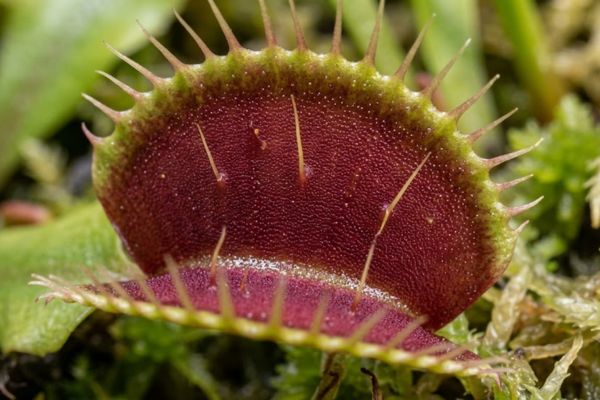
The Venus Flytrap is definitely the heavyweight celebrity among all bug eating plants, but let’s be totally transparent: it won’t fix your fungus gnat issue.
Fungus gnats are simply too light to trip the sensory trigger hairs. But if your home struggles with larger fruit flies or houseflies, the Flytrap provides pure, satisfying action.
Inside each trap sit three sensitive trigger hairs. To avoid wasting energy on falling rain or wind-blown dirt, the trap counts. An insect must touch two hairs within twenty seconds, or touch one hair twice in rapid succession. Once triggered, the lobes snap shut in a fraction of a second, interlocking their fringed edges like steel bars.
Just remember: never poke the traps with toothpicks or feed them dead bugs with tweezers. Closing on empty air burns precious energy, causing that specific trap to turn jet black and die.
Yellow Sticky Cards vs. Bug Eating Plants
| Feature | Yellow Sticky Cards | Bug Eating Plants |
| Aesthetic Value | Ugly plastic cards covered in dead bugs | Living, sculptural greenery that elevates your decor |
| Lifespan | Single-use; dry out every few weeks | Keeps growing, hunting pests year after year |
| Lure Method | Plain yellow paper reflection | Sweet nectar trails and natural UV light patterns |
| Waste Factor | Non-recyclable plastic and messy glue | Zero waste, living biological ecosystem |
| Upkeep | Peeling, tossing, and replacing | Sitting in a shallow saucer of clean water |
| Pest Targets | Random bugs that happen to crash in | Fungus gnats, fruit flies, and small aphids |
The Three Golden Rules of Carnivorous Plant Care
Growing predatory plants isn’t hard, but it is completely backwards from regular houseplant care. Treat them like a pothos or a snake plant and they’ll be dead within a month. While you can check detailed cultivar specs through the International Carnivorous Plant Society growing guides, keeping these three core rules straight will prevent almost every beginner mistake:
1. Pure Water Only
These plants evolved in nutrient-free bogs where they drank nothing but rain. Ordinary tap water, boiled water, and bottled drinking water are packed with dissolved salts and minerals that scorch their delicate roots.
Stick strictly to distilled water, reverse osmosis (RO) water, or collected clean rainwater.
Testing your source with an HM Digital TDS-3 Handheld TDS Meter makes it easy to confirm that the mineral reading stays strictly below 50 PPM before you water.
2. The Tray Method
Forget the usual advice about letting soil dry out between waterings. Bogs stay wet year-round.
Place your pots in a shallow saucer filled with about a half-inch of distilled water at all times.
Let the potting media soak up moisture from the bottom. (Keep Nepenthes in damp moss that drains freely instead of sitting in standing water).
3. Never Add Plant Food
Never pour liquid houseplant fertilizer into the pot, and don’t insert slow-release fertilizer spikes. Their roots cannot handle synthetic nutrients and will burn up immediately. Every bit of food they need comes straight from the pests they catch on their own.
Getting Started
If you want to clear pests out of your space naturally, try adding bug eating plants to your collection. Put a Cape Sundew and a small Mexican Butterwort directly beside your most troubled potted plants. To avoid getting loose peat moss and wet soil all over your counters while unboxing and setting them up, using a foldable Repotting Mat for Potting Soil Mess Control keeps the entire setup quick and mess-free. Keep their saucers topped off with pure distilled water, give them plenty of light, and let nature take care of your bug problem without a single whiff of bug spray.
Frequently Asked Questions (FAQ)
Q1: How can I naturally remove fungus gnats from my plants?
Place biological traps like Cape Sundews right beside your problem pots. At the same time, let the top two inches of your houseplant soil dry out between waterings to break the gnat breeding cycle, or spread a thin layer of coarse sand across the surface so adult gnats can’t reach the damp soil to lay fresh eggs.
Q2: What kills fungus gnats in house plants?
Adult flying gnats get trapped on the sticky foliage of carnivorous plants like Butterworts. To kill the larvae feeding on roots beneath the soil, water your plants with Bacillus thuringiensis israelensis (BTI). Drop a Mosquito Dunk into your watering can overnight; it introduces a safe, natural soil bacterium that kills larvae without harming your pets or houseplants.
Q3: What plant kills fungus gnats?
The Cape Sundew (Drosera capensis) and the Mexican Butterwort (Pinguicula) are hands down the most effective. Instead of waiting around, their leaves produce sweet, sticky beads that draw gnats right in. Once an insect touches the surface, it’s stuck for good, and the plant quietly breaks it down for food.
Q4: What are the best plants to eat fungus gnats?
Plants with sticky leaf surfaces are far better than pitchers or snap traps for tiny airborne pests:
Cape Sundew (Drosera capensis): The top performer by far, catching dozens of gnats every week on its dewy red tentacles.
Mexican Butterwort (Pinguicula): A discreet, low-profile succulent lookalike that acts just like living flypaper.
Avoid Venus Flytraps: While iconic, fungus gnats are simply too tiny and lightweight to trigger their mechanical trap hairs.