This post may contain affiliate links. If you choose to buy through these links, I may receive a small commission at no additional cost to you.
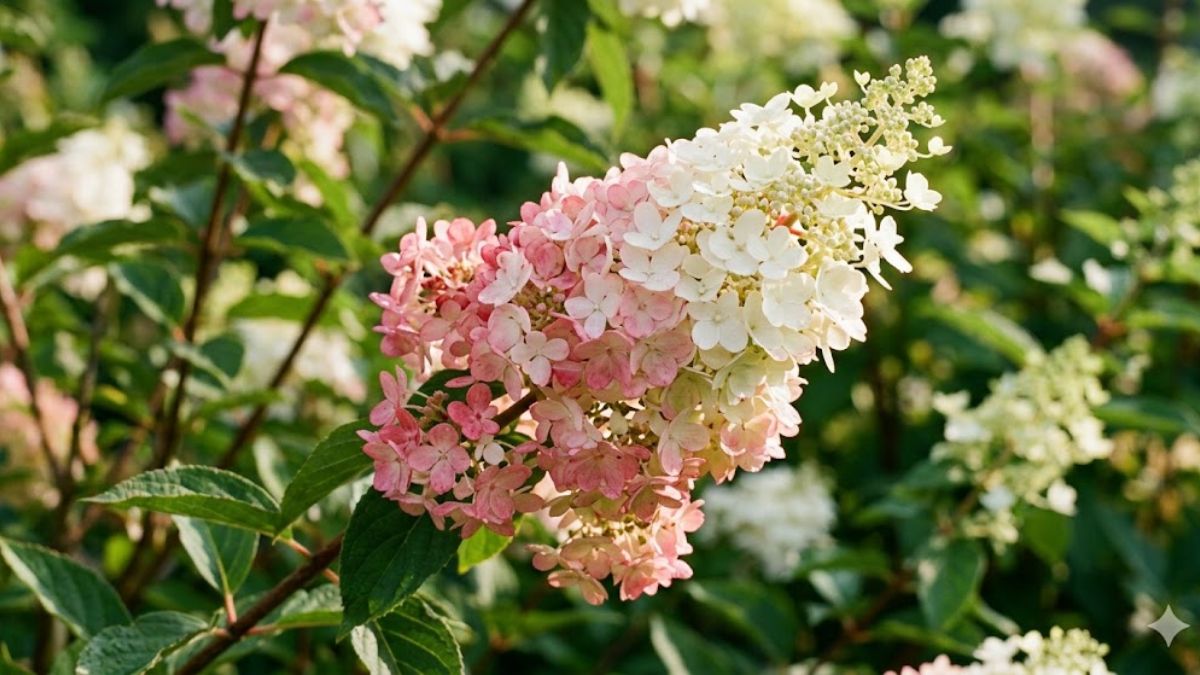
Imagine it’s a scorching July afternoon. You walk outside and wait, are those giant scoops of vanilla ice cream on a bush? That’s exactly what a Strawberry Sundae Hydrangea looks like at first. Give it two weeks, and those white flowers start blushing pink. By the time autumn rolls around, they’ve turned a deep, gorgeous strawberry red.
Look, if you haven’t added one of these to your yard yet, you’re missing out. Seriously. It’s the easiest garden “glow-up” I’ve seen in years. Most people think hydrangeas are “finicky divas” that wilt if the sun even looks at them. But this one? It’s different. It’s tough, it’s compact, and it acts like a living mood ring for your backyard. I’ve seen these things thrive everywhere from huge suburban gardens to tiny apartment balconies. Getting your Strawberry Sundae hydrangea care right is all you need to keep that show going all season.
The stunning color transition of the Strawberry Sundae hydrangea is a summer showstopper.
1. Why is everyone obsessed with the Strawberry Sundae variety?
It’s not just marketing hype; it’s a space thing. For a long time, we all wanted those massive “Vanilla Strawberry” vibes, but we didn’t want a 7-foot shrub taking over the whole yard. Not everyone has space for a monster plant that flops over the moment it rains.
The Strawberry Sundae Hydrangea (officially Hydrangea paniculata ‘Rensun’) is the “compact cousin” we’ve been waiting for. It stays around 4 or 5 feet the absolute sweet spot for modern yards. And the stems? They’re like iron. They hold those heavy flower cones straight up, so they don’t end up face-down in the mud after a summer storm. Strawberry Sundae hydrangea care starts with just letting this plant do its thing.
Before we dive into the nitty-gritty of growing these, here is a quick breakdown of what to expect from this shrub. This is the “cheat sheet” I wish I had when I started my first DIY garden project.
Feature
Details
Common Name
Strawberry Sundae Hydrangea
Botanical Name
Hydrangea paniculata ‘Rensun’
Hardiness Zones
USDA Zones 3–8
Mature Size
4–5 ft tall, 3–4 ft wide
Light Needs
Full sun to partial shade
Bloom Time
Mid-summer through late fall
Soil Preference
Well-draining, loamy, slightly acidic to neutral
Best For
Containers, small borders, or mass planting
2. Does Strawberry Sundae hydrangea need full sun or shade?
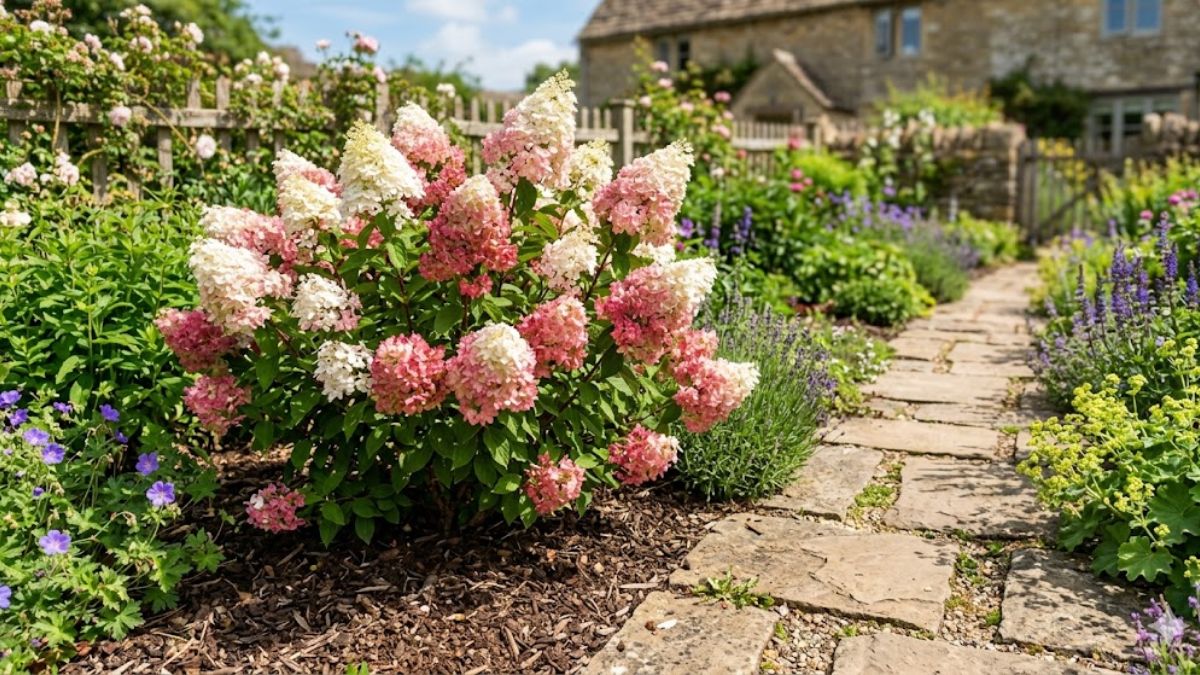
This is where most beginners mess up. Classic blue hydrangeas love the shade, but the Strawberry Sundae is a panicle hydrangea. These guys are total sun-worshippers.
In Cooler Places: Give it all the sun you can. At least 6 to 8 hours. The more light it gets, the deeper those pink and red colors will be in the fall.
In Hot Places: It still needs sun, but a little afternoon shade is a lifesaver. If the plant faces that harsh 4:00 PM afternoon sun, the blooms might scorch and turn brown before the beautiful pink tones even show up. Mastering Strawberry Sundae hydrangea care is really just a balancing act with the light.
For a deeper look at how different climates affect bloom color and plant health, you can refer to this detailed hydrangea growing guide from university experts.
These sun-loving shrubs need at least 6 hours of light to reach their full color potential.
3. How to get those famous multi-color blooms
People always ask me how to “turn” their hydrangeas blue or pink. With the blue ones, you have to be a chemist with the soil pH. But with the Strawberry Sundae? You can put the vinegar away. The color change is triggered by age and temperature.
Mid-Summer: Clean, crisp white.
Late Summer: Nights get cooler, and the base blushes pink.
Fall: The whole cone turns a deep “strawberry” red.
If yours isn’t changing, it’s usually too much shade or you’re over-feeding it nitrogen too late in the year. Let it be a little “hungry” in August and watch the colors pop.
To help your Strawberry Sundae Hydrangea thrive and reach its full color potential, you can use this Espoma Organic Holly-Tone plant food; it is widely considered the best fertilizer for acid-loving plants like hydrangeas.
4. The “Lazy Gardener” guide to planting
I’ve planted dozens of these, and the secret isn’t some fancy hormone. It’s the hole.
Dig Wide: Go twice as wide as the pot. The roots like to spread out, not just down.
Drainage: These plants hate “wet feet.” If your soil is heavy clay, mix in some compost.
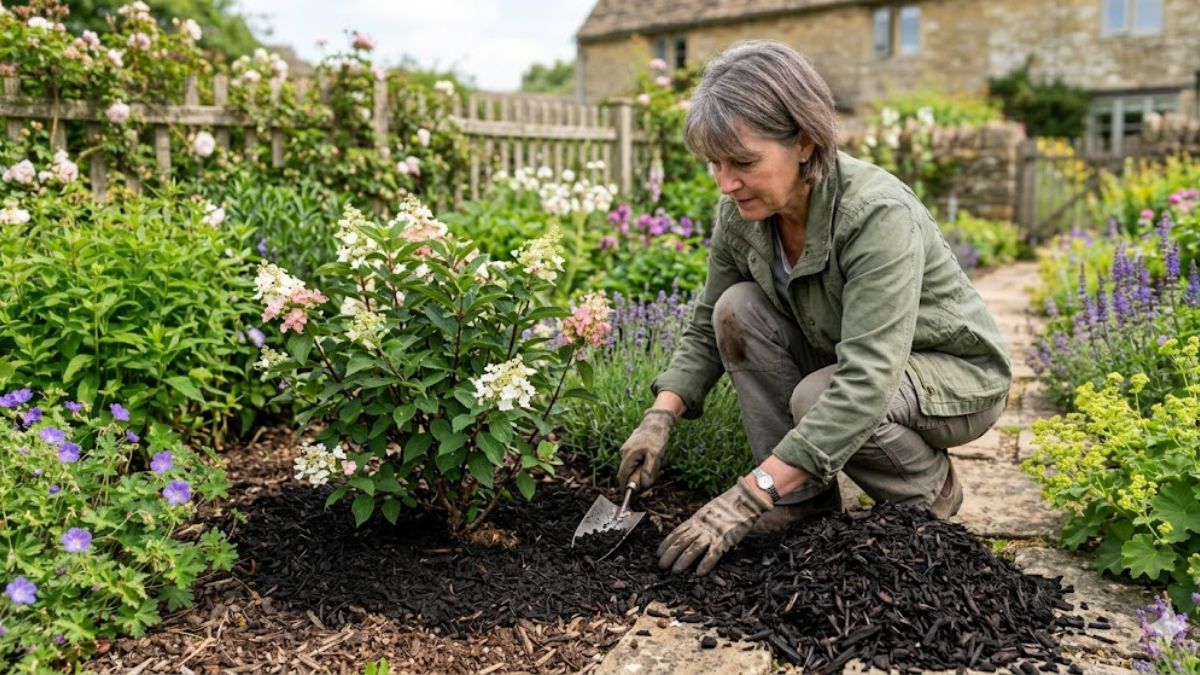
The Mulch Trick: Put down 2-3 inches of bark mulch. It keeps the roots cool. Just don’t pile it against the stem leave a little “donut hole” so the plant can breathe.
To maintain the moisture levels your hydrangeas love, adding a layer of organic mulch is essential. You can use this Zilla Coconut Husk Brick to create an effective moisture barrier; while often used for habitats, its 100% natural coconut fiber makes it an excellent organic mulch for retaining soil hydration.
Mulch is the secret weapon for keeping your hydrangea roots cool during hot summers.
5. Watering: How much is too much?
We’ve all seen hydrangeas do that “dramatic wilt” in the afternoon. They look like they’re dying, but usually, they’re just resting. Before you soak them, stick your finger an inch into the dirt. If it’s moist, walk away! Overwatering is a killer. Aim for a deep soak twice a week, and always water the base, not the leaves. Wet leaves are an invitation for mildew.
6. Pruning without the panic
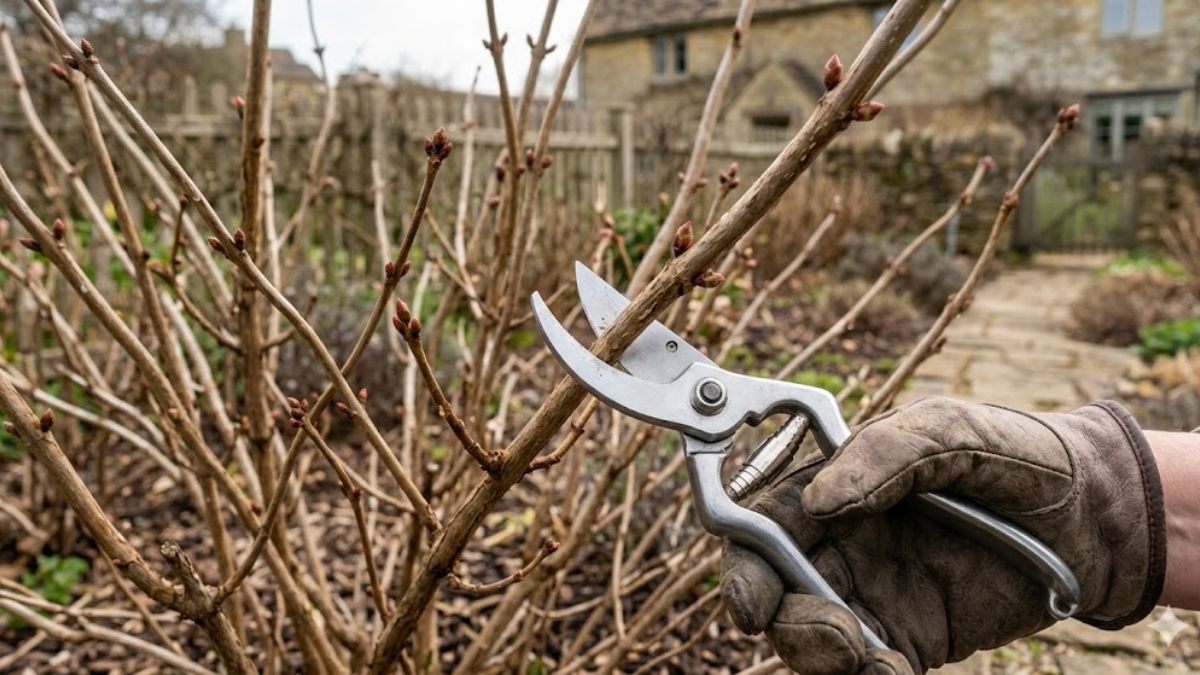
I know, pruning feels like you’re taking a chainsaw to a masterpiece. But the Strawberry Sundae is very forgiving because it blooms on “new wood.” * When: Late winter or early spring, just as the buds swell.
How much: Cut it back by about a third to keep it bushy.
The Toothpick Rule: If a branch is thinner than a pencil, snip it. It won’t be strong enough to hold those big flowers anyway.
Prune in late winter or early spring to trigger a massive explosion of flowers.
7. Can you grow Strawberry Sundae in pots?
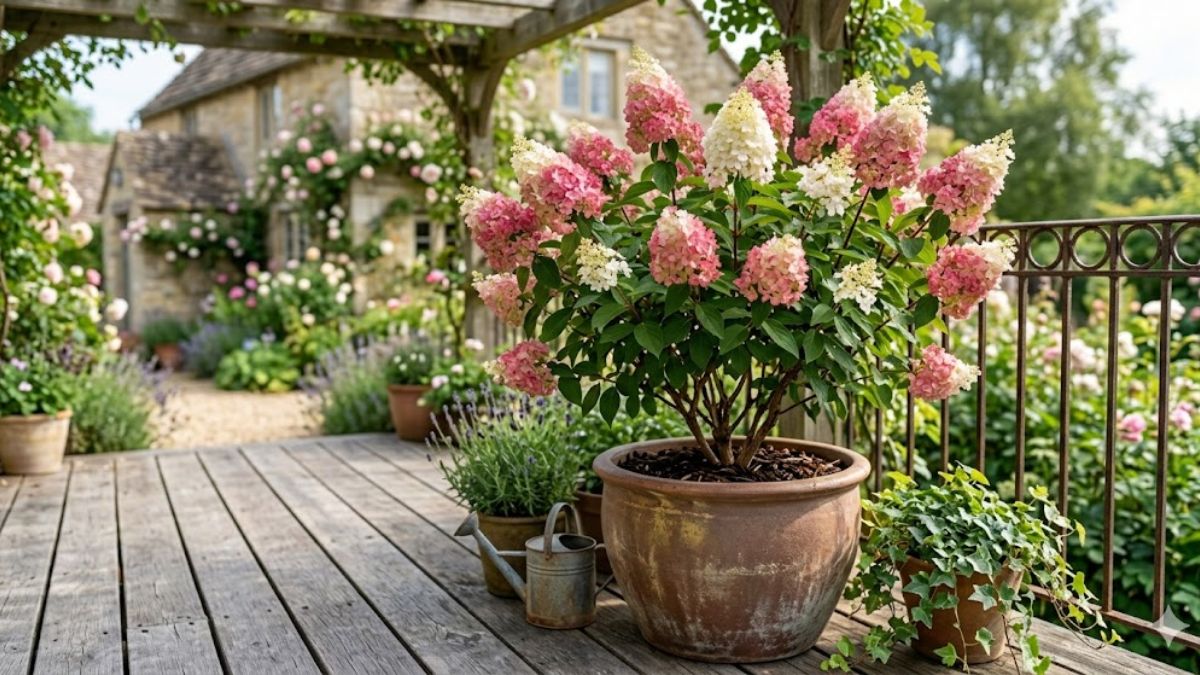
Yep, and it’s actually my favorite way to do it. Since they stay small, they don’t outgrow a big pot too fast.
Pot Size: Go for 16-20 inches wide at least.
Watering: Potted plants dry out way faster. In July, you might be watering every single morning.
No yard? No problem. These compact hydrangeas thrive in large patio pots.
8. Dealing with pests and “The Brown Leaf” problem
Even though these are tough, they aren’t bulletproof.
Aphids: Blasts of water from the hose usually do the trick.
Powdery Mildew: If it looks like flour is on the leaves, you need more air. Don’t crowd them.
Brown Spots: Usually from water sitting on the leaves. Again: water the dirt!
9. Ready to watch your garden transform?
If you want a plant that makes people stop and say “What is that?”, this is it. It’s low-maintenance for a beginner but looks pro. Stick to a solid Strawberry Sundae hydrangea care routine and you’re golden. There’s nothing like seeing those huge red cones holding strong after a storm.
So, what’s the plan for your garden this year? Tucking one into a corner or going the pot route? Let me know in the comments I love hearing about your “Sundae” progress!
FAQ
Q1: How do you care for a Strawberry Sundae hydrangea?
Think “Sun-Water-Prune.” Give it at least 6 hours of sun (trust me, it needs it for the color). Keep the soil moist but don’t let it turn into a swamp. Then, just do a quick trim in late winter. It’s that simple.
Q2: How to look after a hydrangea?
Consistency is everything. They are “water hogs,” so don’t let them bone-dry. Use mulch to keep things cool and throw some fertilizer at them in the spring. If they droop in the afternoon sun, don’t panic : They usually perk back up at night
Q3: Do hydrangeas develop blue or pink flowers?
It depends on the type. The “Bigleaf” ones are a science experiment with soil pH. But the Strawberry Sundae is a panicle variety its color change happens because of the weather and its age. No chemistry degree required!
Q4: How to plant hydrangea Sundae Fraise?
Pick a sunny spot with good drainage. Dig a hole twice as wide as the root ball. Mix in some compost, plant it, and give it a massive soak. Don’t forget that 2-inch layer of mulch it makes all the difference for a new plant.