
This post may contain affiliate links, If you choose to buy through these links, I may receive a small commission at no additional cost to you.
I used to think that when the sun went down, my backyard garden essentially went to sleep. Like most people, I spent my mornings tracking the bees buzzing around my squash blossoms. I checked on my tomatoes under the bright afternoon sun. Once dusk hit, I’d lock the back door and pull the curtains. Consequently, I forgot about the plants until the next morning.
But last summer, I went outside late at night to check on a leaky garden hose. What I saw completely blew my mind.
My yard wasn’t asleep at all. In fact, it was absolutely bursting with life. Under the moonlight, a whole secret shift of nocturnal pollinators was throwin’ a massive party in the dark. Specifically, I saw giant hawk moths the size of hummingbirds, specialized beetles, and lacewings.
Unlocking the Secret Shift
That’s when I realized I was missing out on half of my garden’s true potential. By only growing plants that open during the day, I was completely ignoring the night shift.
When you strategically use The Moonlighting Garden:7 Shocking Night-Blooming Plants Hack, you build a continuous, 24-hour pollination bridge. For instance, the incredible scents and bright white petals of evening blooms draw in massive waves of nocturnal beneficial insects.
And here is the kicker. Those bugs don’t just disappear when the sun comes up. Instead, they stay in your yard and lay eggs. Predators like lacewings eat pests and simultaneously jump-start the daytime ecosystem. As a result, your fruit trees and vegetable crops produce double the yields for absolutely zero extra cost. Therefore, let’s look at the secret night-blooming plants you need to grow to supercharge your garden.
| Garden Work Shift | Active Timings | Main Pollinators & Beneficials | Primary Impact on Your Yard |
| Day Shift | Sunrise to Dusk | Honeybees, Butterflies, Hoverflies, Wasps | Initiates crop cross-pollination; manages daytime pests. |
| Night Shift | Dusk to Sunrise | Hawk Moths, Sphinx Moths, Lacewings, Beetles | Creates a continuous 24-hour pollination bridge; doubles fruit yields. |
What is a Moonlighting Garden and Why Does It Boost Yields?
To understand why this strategy works globally, you have to look at how pollination actually functions. This applies everywhere from suburban backyards in New York to regional farms in India. Most people think honeybees do all the heavy lifting. While they are great, daytime pollinators are easily stressed. For example, they struggle during intense summer heatwaves, sudden afternoon downpours, or heavy winds.
Overcoming Daytime Vulnerabilities
If a rainstorm keeps the bees in their hives during the morning, your vegetable blossoms won’t get pollinated. As a result, those flowers simply fall off without ever setting fruit. It’s an absolute heartbreak for any grower.
However, the moonlighting system completely solves this vulnerability. By embedding night-opening flora into your landscape design, you can launch The Moonlighting Garden concept to create a secondary security net. Nocturnal insects like the Sphinx moth are heavy-duty, strong flyers. Furthermore, they don’t care about a light breeze or cooler evening drops in temperature. Because they fly for miles guided by scent alone, they land on your evening blooms and cross-pollinate your nearby daytime vegetable crops in the process. Utilizing specialized night-blooming plants documented on Wikipedia ensures that these night shift insects have a reliable food source, stabilizing your entire backyard ecosystem.
7 Shocking Night-Blooming Plants You Need to Plant This Week
You can’t just pick random greenery and expect a luxury harvest. To pull off this specific garden hack successfully, you need a high-impact mix. Ultimately, aim for biomass heavyweights and intensely fragrant plants that light up under the stars. Setting up The Moonlighting Garden requires choosing varieties that act as strong visual and scent markers for nighttime beneficials.
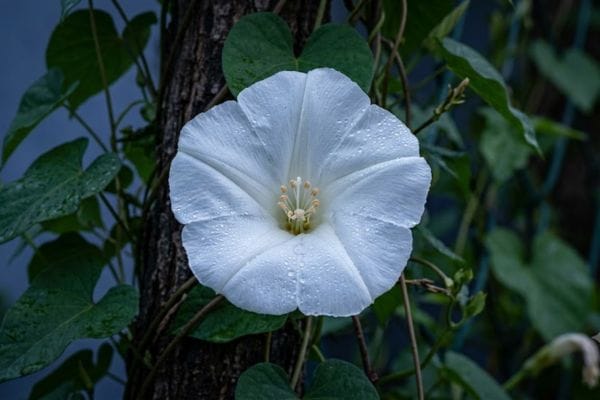
1. The Moonflower (Ipomoea alba)
If you are familiar with morning glories, you will love moonflowers. While morning glories open up to greet the early sunrise, moonflowers do the exact opposite. Right as dusk sets in, their massive, iridescent white buds untwist. Then, they burst open in a matter of two to three minutes. It’s an absolute spectacle to watch with a warm drink in the evening.
The Power Factor: They release a powerful, sweet perfume that can travel across an entire neighborhood block. Consequently, this scent acts like a homing beacon for giant hawk moths. These moths possess long tongues perfect for pollinating deep blossoms. Therefore, they will happily hit your backyard fruit trees while they’re visiting.
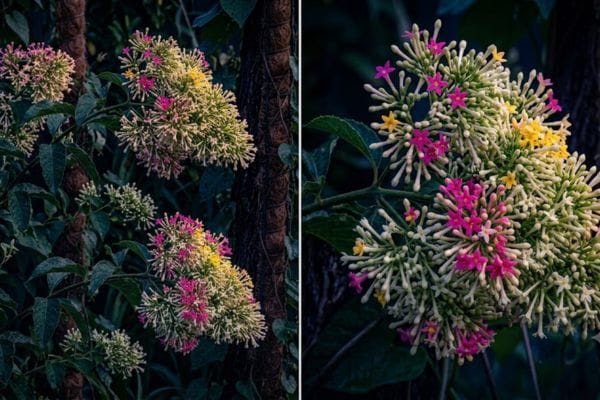
2. Night-Blooming Jasmine (Cestrum nocturnum)
Don’t let this shrub fool you during the daytime. It looks like a totally ordinary, uninspiring green bush. But the second the stars come out, its tiny, star-shaped flowers unleash a massive change. Indeed, they create one of the most intensely intoxicating fragrances in the entire plant kingdom, turning your plot into a true example of The Moonlighting Garden.
The Power Factor: The aroma is so intense that it draws in beneficial predatory insects from miles away. As a result, these nighttime visitors help keep aphid and caterpillar populations completely in check while you sleep. This ensures your daytime vegetables remain totally undamaged without using nasty chemical sprays.

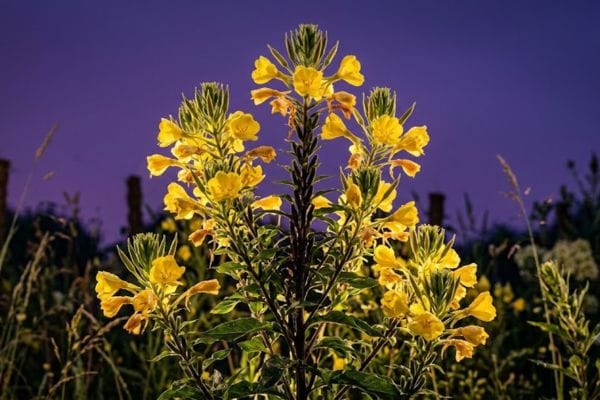
3. Evening Primrose (Oenothera biennis)
This hardy, gold-flowered beauty is a masterclass in survival timing. The blossoms stay tightly closed all through the harsh heat of the day. Obviously, this setup preserves their precious moisture and nectar. Then, right as the sun dips below the horizon, they snap open. Thus, they reveal vibrant yellow petals that practically glow in the dark, acting as a brilliant reflective point for The Moonlighting Garden.
4. Four O’Clocks (Mirabilis jalapa)
As the name implies, these brilliant flowers wake up and open for business right around late afternoon every single day. Afterward, they stay wide open all through the night. They flash shades of deep pink, bright yellow, and pure white before curling back up by mid-morning.
The Power Factor: Four O’Clocks are an absolute magnet for hoverflies and lacewings. First, the adults feed on the evening nectar. Then, they lay their eggs right on your garden foliage. When those eggs hatch during the day, the larvae turn into voracious predators. Once active, these larvae quickly hunt down and eliminate thousands of harmful backyard pests such as thrips and spider mites.
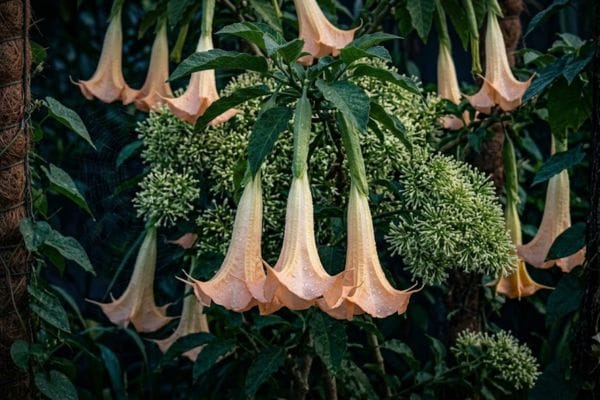
5. Angel’s Trumpet (Brugmansia)
This is a true showstopper of a plant. It features massive, pendulous flowers that hang down like elegant bells. During the day, they hang quietly and release almost no scent at all. But as night falls, the flowers tilt upward slightly. Concurrently, they emit an exotic, musky, sweet fragrance that is utterly mesmerizing and essential for The Moonlighting Garden layout.
A Crucial Note: While Angel’s Trumpet is breathtakingly beautiful, every single part of this plant is toxic if ingested. It is an elite nocturnal pollinator magnet, but safety comes first. For that reason, if you have curious toddlers or pets that love to chew on backyard greenery, skip this one and stick to safer options like moonflowers.
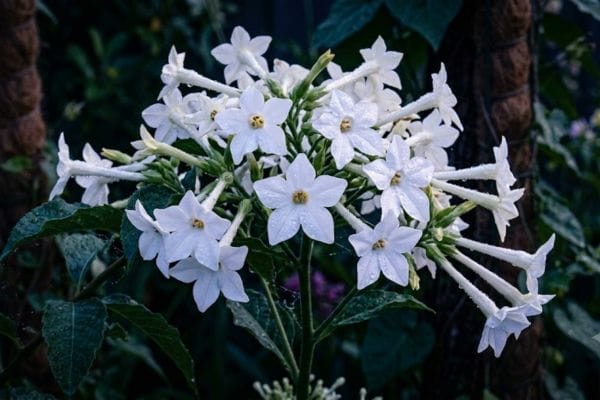
6. Flowering Tobacco (Nicotiana alata)
This isn’t the stuff used for commercial agricultural production. Instead, it’s an ornamental variety grown specifically for its elegant, starry blossoms and rich evening aroma. The petals come in gorgeous shades of lime green, deep crimson, and pale white.
The Power Factor: The white and pale green varieties are incredibly reflective under moonlight. Because nocturnal moths see in wavelengths that are highly attuned to pale colors, these plants act like bright neon signs. In short, they guide helpful bugs straight into the center of your backyard food plot.
7. Sea Holly (Eryngium maritimum)
While some varieties bloom during the day, true Sea Holly is different. Remarkably, it features metallic blue and silver bracts that take on an almost otherworldly, glowing sheen under the stars. The textured, architectural cones look completely unique compared to traditional soft garden petals. Moreover, they remain sturdy throughout changing weather conditions, grounding the visual aesthetic of The Moonlighting Garden.

How to Design Your Night Garden Layout for Maximum Results
To get the absolute best results from your evening plants, don’t just scatter them randomly around your yard. Instead, you want to place them intentionally. This creates the biggest impact for both the bugs and your own family.
| Garden Zone | Ideal Plant Varieties | Primary Functional Benefit |
| Fence / Trellis Infrastructure | Moonflowers, Climbing Night Vines | Draws flying nocturnal insects high up over the crop canopy. |
| Central Raised Bed Plots | Flowering Tobacco, Sea Holly, Daytime Veggies | Catchment zone where passing moths drop off tracking pollen. |
| Bed Perimeter Borders | Four O’Clocks, Evening Primrose | Acts as a low, protective rim to lure pest-devouring larvae. |
| Patio / Windowsills | Night-Blooming Jasmine | Disperses heavy aromatherapy fragrances directly into home spaces. |
By planting the vines along the back borders, you draw flying insects high over your entire garden plot. As they fly downward toward the lower border plants like Four O’Clocks, they are forced to pass right through your central vegetable patches, dropping off pollen along the way. Designing your space this way maximizes the biological power of The Moonlighting Garden.
Moreover, while you are strategically building this nighttime ecosystem, you can simultaneously upgrade other areas of your backyard. For instance, if you want to pair your glowing evening blossoms with a cozy gather spot under the stars, check out our guide on 10 Genius DIY Fire Pit Designs: How to Effortlessly Transform Your Backyard Into a Luxury Oasis.
Best Night-Blooming Plants for Pots and Small Balconies
You don’t need a massive country estate or a giant plot of land to make this strategy work. Even if you live in a high-rise city apartment, you can still run this hack. It works perfectly for a rental home with a small concrete patio using container gardening. By arranging containers intelligently, you can successfully establish The Moonlighting Garden on a tiny balcony footprint.
Similarly, if you want to extend this round-the-clock growing system from your balcony straight into your kitchen, you can apply specialized lighting techniques indoors as well. To learn how to achieve this setup easily, read our step-by-step guide on DIY Indoor Hydroponics: Grow Fresh Salads in Kitchen Cabinets – The Glowing Secret to 24/7 Home Greens.
Smart Container Choices
Plants like Night-Blooming Jasmine and Four O’Clocks love excellent root drainage. Therefore, grow them in fabric containers like the Gardzen 5 Gallon Thickened Fabric Grow Bags to allow air to reach the roots while keeping the soil from getting soggy.
Vertical and Hanging Hacks
Additionally, you can drop a simple bamboo tripod trellis or use a bendable stakes system like the Craft911 Bendable Moss Pole Monstera Plant Support into a large container pot. Plant moonflower seeds at the base. Consequently, the vines will climb up vertically. They take up almost zero floor space while maximizing the scent release at eye level.
Similarly, Flowering Tobacco grows beautifully in sturdy hanging planters. Hang them from a balcony rafter. This setup allows the evening breeze to catch the fragrance. Finally, it carries the scent directly through your open windows, naturally cooling and refreshing your living space.
Common Mistakes to Avoid When Planting a Night Garden
Mixing High-Chemical Pesticides with Night Blooms
The biggest tragedy is drawing thousands of beautiful nocturnal pollinators to your yard only to wipe them out. Unfortunately, this happens easily with chemical sprays applied during the day. If you use chemical bug killers for daytime pests, those residues stay active on the petals all night long. Therefore, switch to natural pest management routines instead. For example, introduce predatory insects, use neem oil sprays, or hand-pick large pests so your night shift workers stay completely safe while flying through The Moonlighting Garden boundaries.
Over-Watering the Clay Soil at Dusk
Dumping tons of water on your plants right before the sun goes down is a bad idea. Specifically, it is a prime recipe for fungal diseases like root rot and powdery mildew. Ideally, leftover water should dry up naturally during the warmer hours of the day. However, because there is no sun at night, the water just sits on the leaves. This pattern chokes the roots. As an alternative, always do your main watering routines in the early morning. This gives the topsoil time to dry out cleanly before the night-bloomers start their evening show.
Keeping Your Backyard Safe and Healthy
Planting Toxic Varieties Near Unsupervised Pets
As mentioned with Angel’s Trumpet, some dramatic night-blooming varieties carry natural toxic compounds. Naturally, they use these as a defense mechanism. If your dogs or cats treat your garden beds like a personal buffet, look out. Always double-check the toxicity ratings before planting The Moonlighting Garden additions. Instead, stick to completely safe, non-toxic evening options like common evening primrose or standard moonflower vines.
Frequently Asked Questions
Q1: What is the night-blooming flower featured in Crazy Rich Asians?
A: If you remember that stunning party scene in the movie Crazy Rich Asians, the characters all gather around with their phones to watch a legendary, ultra-rare flower open up. That plant is called the Tan Hua flower (scientifically known as Epiphyllum oxypetalum). Most gardeners know it as the Queen of the Night or the Night-Blooming Cereus.
It’s an orchid cactus that does something completely wild. Specifically, it only blooms for a single night out of the entire year! The gorgeous, white, dinner-plate-sized flowers open up right around midnight. Then, they release an intensely beautiful, fresh fragrance. Afterward, they completely wither and die before the morning sun hits them. Ultimately, it’s the symbol of fleeting luxury.
Q2: Which flowers bloom in moonlight?
A: There is actually a whole secret family of flora that relies entirely on moonlight and the cool evening air to open up. Unlike daytime flowers that use bright neon colors to attract bees, moon-loving plants are almost always pure white or pale silver. They grew this way because these light shades perfectly reflect the faint glow of the moon. Consequently, this design makes them highly visible to nocturnal insects looking for a classic The Moonlighting Garden arrangement.
The heavy hitters in this category include Moonflowers, Night-Blooming Jasmine, Evening Primrose, and Flowering Tobacco. If you walk past these plants during the day, they look like totally ordinary, sleepy green bushes. But the second the moonlight hits them, they snap open. Then, they release a massive wave of perfume that fills your entire backyard.
Q3: What flower has a 24-hour bloom?
A: While most flowers stay open for days or even weeks, a few unique varieties live out their entire life cycle in a strict 24-hour window. The most famous one is the Daylily (Hemerocallis). Each individual daylily blossom opens up at sunrise and dies by evening, lasting exactly one day.
On the flip side of the clock, you have the Moonflower vine. The moonflower opens at dusk and collapses by the very next morning. This means its active, stunning life is cut short in less than a day. Therefore, these plants have adapted to put all of their biological energy into one massive, high-impact show to attract pollinators instantly.
Turning Nighttime Biology Into Real Garden Freedom
At the end of the day, shifting your mindset to include a moonlighting garden system is about more than just adding pretty flowers. Ultimately, it’s about realizing that nature has engineered a beautiful, highly efficient 24-hour cycle. This system can handle the hard work of crop production for you if you just give it the space to run.
Instead of fighting against the elements, you can step back. For instance, stop spending hundreds on synthetic boosters. Don’t stress over why your vegetable blossoms are dropping off without setting fruit. Instead, let the night shift take over by executing The Moonlighting Garden design. Grab a few seeds and pick a corner of your yard or patio to plant this weekend. As a result, you can watch the evening transformation happen right before your eyes. Your garden will turn into a thriving, high-yield paradise while you sleep soundly inside.