
This post may contain affiliate links, If you choose to buy through these links, I may receive a small commission at no additional cost to you.
There is a massive lie going around the interior design world right now, and it honestly annoys me.Flip through any modern interior design magazine or swipe through upscale home tours right now, and you’ll be absolutely bombarded with the term “Quiet Luxury” aesthetic. They show you these gorgeous, minimalist, deeply calming spaces filled with massive textured canvases, heavy bespoke linens, and custom stone coffee tables.
But then you look at the price tags. A single travertine bowl costs $300. A textured throw pillow costs $150. A minimalist floor lamp costs $900.
It makes you feel like your home can only look sophisticated if you have a massive bank account. But here is the truth: luxury is not about how much money you spend; it is about how you edit your space. You do not need thousands of dollars to clear out the visual noise and create a space that feels deeply intentional, rich, and tailored.
Look, I actually pulled off a complete Quiet Luxury Living Room: DIY High-End Decor Hacks Under $100 makeover in my own place. No expensive contractor tools, no complex woodshop setup just basic materials, a weekend of free time, and some common-sense styling hacks.
If your space currently feels a bit cheap, messy, or just plain boring, you can fix it. And no, you don’t need a massive budget to make it happen.
1. How Can I Make My Living Room Look Rich on a Budget?
Honestly, making a room look high-end isn’t about buying shinier items. It’s actually the exact opposite. Expensive spaces feel good because everything has breathing room. Designers call this managing the “Visual Weight” of a room. The colors flow together naturally, and the physical textures do all the heavy lifting instead of loud, distracting patterns.
DESIGNER RESOURCE: For more high-end styling inspiration, you can explore these pro curator tips on Architectural Digest’s Budget Living Room Design Guide.
Before spending even a single dollar of your hundred-bucks budget, do these three things:
First, just empty the room out. Take everything off the shelves, clear out the side tables, and pull down the wall art. Throw it all into plastic boxes and hide them in the hallway. Starting with a totally blank slate stops you from trying to decorate around your old clutter.
Second, simplify your colors. Rich homes don’t mix five or six bright shades. Pick one soft, warm neutral for the main wall color, a secondary deeper shade for the curtains or large chairs, and just one metal finish—like brushed brass or antique bronze for the tiny details.
Third, stop buying tiny decor. The biggest budget mistake is picking up five small, cheap trinkets to fill an empty tabletop. It just looks like clutter. Go big instead. A single, massive tree branch put inside a giant, plain glass jar looks incredibly upscale. That’s how you get a true, curated quiet luxury living room feel without trying too hard.
ALSO READ: Want to elevate your living room corners with some low-maintenance statement greenery? Check out our ultimate guide on Stop Growing Boring Green: 10 Jaw-Dropping Colorful Houseplants That Actually Thrive on Neglect.
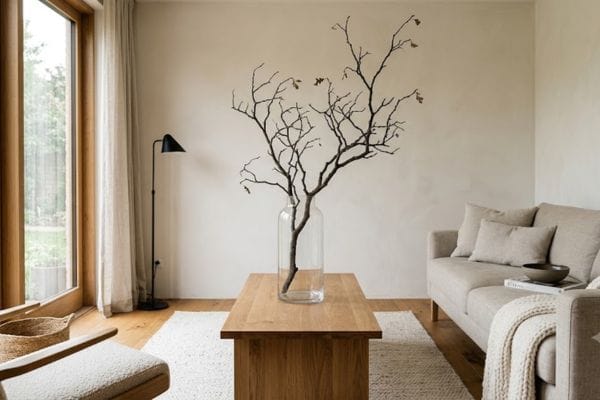
2. What Paint Colors Make a Living Room Look Expensive?
Paint is the ultimate budget cheat code. A gallon is pretty cheap, but the transformation is massive. Just stay away from those cold, clinical hospital whites or overly bright shades. High-end design thrives on “muddy” or complex colors neutrals that change look depending on how the window light hits the room.
If your goal is a high-end quiet luxury living room space without the cost, stick to these three simple paths:
Warm Minimalism: Soft beiges, creams, and warm alabasters. These tones melt away harsh corner shadows and make small, tight spaces feel instantly open.
Moody Luxury: Deep, complex colors like a muted forest olive or dark charcoal. These add serious architectural depth to flat, boring builder-grade drywall.
Earthy Sophistication: Flat greiges and soft ochre tones. They keep the space feeling grounded and mimic the exact natural stone colors you see in luxury catalogs.
Before painting your trim, make sure to seal any ugly gaps along your baseboards using a high-quality product like the Flex Caulk Waterproof and Weatherproof Hybrid Polymer Sealant to get that perfectly smooth, custom finish.
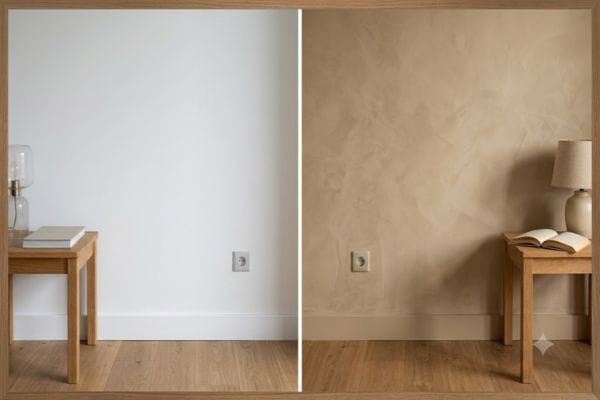
A Quick Trick: Paint your baseboards and window trim the exact same color as the walls. Keep the walls completely matte and use a satin finish for the trim. It gets rid of those ugly visual breaks, and your ceilings suddenly look way higher.
3. DIY Textured Wall Art: The Secret to High-End Walls
Check out any upscale home online. You won’t find tiny photo frames or cheap posters scattered all over the place. Usually, to ground a quiet luxury living room, there’s just one giant, heavily textured canvas hanging right above the main sofa. Buying one of those at a gallery can easily cost you $500 or more.
I made mine for under $25 over a weekend. Here is exactly how to do it:
First, go track down a cheap canvas. You can buy a basic blank one at a craft store, or just grab a massive, ugly old painting from a thrift shop for ten bucks. The picture underneath doesn’t matter at all since we are burying it.
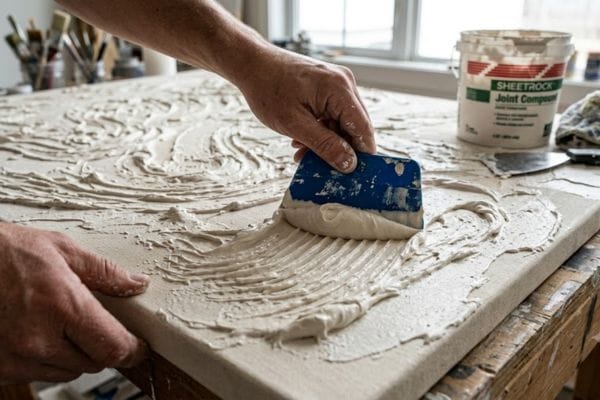
Next, buy a small bucket of standard wall joint compound the basic plaster used to fix holes in drywall. It costs about five dollars at the hardware store. Grab a plastic putty knife or even an old gift card and just slap the mud all over the canvas. Don’t make it smooth. Leave big, messy, sweeping lines and rough ridges.
Let it dry for a full day. It might get some tiny cracks as it cures, but honestly, that’s what you want. It makes it look like authentic, ancient stone art.
Finally, paint the whole thing. Grab a leftover sample pot of your wall paint or some cheap matte acrylic paint and coat the canvas. When the warm evening light hits those rough plaster edges, the shadows look absolutely incredible.
4. Easy Furniture Flipping: How to Make Cheap Tables Look Like Stone
Real travertine and marble tables look stunning, but they weigh a ton and cost a fortune. You can completely fake the look using a basic wooden or laminate coffee table you already own.
To get that authentic stone look, grab a can of Rust-Oleum Stops Rust Multi-Color Textured Spray Paint in Aged Iron, give your old table a light sanding, hit it with Apply a basic primer first, then spray the texture in thin, light layers. Once it dries down, coat it with a flat, totally matte clear sealer. The table ends up looking and feeling just like solid, heavy limestone.
Go grab a can of stone-textured spray paint from the local hardware store. Give your old table a light sanding, hit it with a basic primer, and then spray the stone texture in a couple of thin, even passes. Once it dries down, coat it with a flat, totally matte clear sealer. The table ends up looking and feeling just like solid, heavy limestone.
Another great trick uses simple wooden dowels. If you want a truly refined quiet luxury living room setup, use wood glue to line up thin half-round dowels side-by-side right across the flat doors of a boring media console. Paint the entire piece a deep matte black or an espresso brown. It turns a basic flat-pack piece of furniture into a custom, ribbed designer centerpiece.
5. How Do Designers Style a Couch on a Budget?
Your sofa is the biggest piece of furniture in the space, so it controls the whole room’s energy. If it’s covered in saggy, flat, colorful pillows, the whole place looks untidy. Designers use a very specific recipe to get that plump, expensive look:
Buy larger covers: Throw out those small 16×16 inch throw pillows. They always look cheap. Upgrade to 20×20 or 22×22 inch covers.
The insert secret: Never buy cheap polyester fiberfill stuffing. It clumps up immediately. Use real feather or down-alternative inserts instead. And here is the main rule: always buy inserts that are exactly two inches larger than your pillow covers. Stabbing a 22×22 insert inside a 20×20 cover makes the pillow look incredibly heavy, full, and high-end.
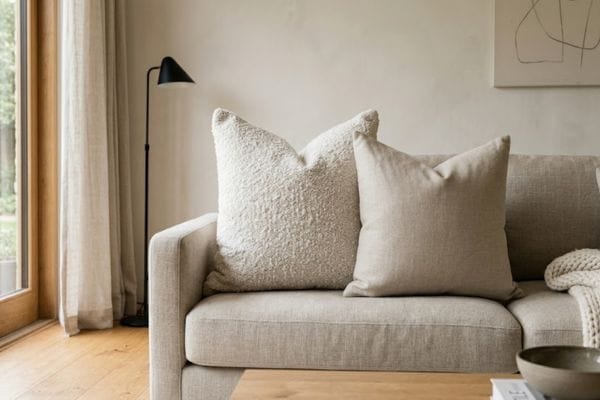
Mix up the weaves: Stop buying matching pillow sets. It looks like a cheap department store display. Mix the textures instead put a rough, heavy boucle pillow right next to a smooth matte linen one, and drape a chunky knit throw blanket over the side. Keep the colors similar, but vary the actual feel.
6. What Are the Best Rental-Friendly High-End Lighting Hacks?
Bright, cold overhead lights kill a luxury vibe instantly. Luxury living rooms depend exclusively on soft, layered ambient lighting to set the mood. You want light coming from different corners and heights floor lamps, table lamps, and accent lighting not blasting down from the center of the ceiling.
If you are renting or can’t afford to hire an electrician, try this:
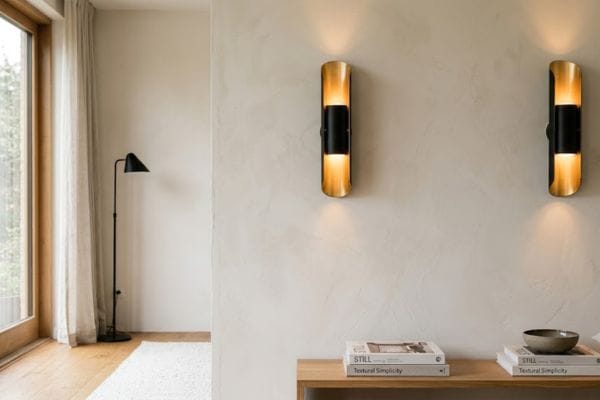
Buy two beautiful, cordless wall sconces that fit your style. Screw or stick them directly to the wall exactly where you want them but ignore the wiring completely. Instead, buy a cheap pack of rechargeable, remote-controlled LED puck lights. Stick the puck lights right inside the empty bulb sockets with a bit of mounting tape.
Now you have gorgeous accent lighting with a remote control, and you didn’t spend a single cent on electrical work. Turn them on in the evening, flip off the main ceiling switch, and the room instantly feels like a boutique hotel lobby.
Quick Checklist for Your $100 Makeover
Before you go shopping for anything new, walk through your room and check off these boxes:
[ ] Have I removed all tiny, small decorative items from the surfaces?
[ ] Are my curtains hung high and wide, all the way to the ceiling?
[ ] Have I hidden all visible television cables and charging wires behind furniture?
[ ] Did I choose one clear metal finish (like brass) to use consistently throughout the room?
[ ] Are my pillow covers stuffed with slightly larger inserts for a plump look?
The Golden Rule of Cheap Luxury: Less is Always More
At the end of the day, quiet luxury isn’t a design style you can just go out and buy it’s more about the discipline of leaving things out. The biggest mistake people make when decorating on a tight budget is feeling like they have to fill up every single empty corner and tabletop with something.
Let the room breathe. Let the natural light hit your DIY textured canvas without blocking it with clutter. When you give your eyes and your furniture some actual space to move, the entire living room feels lighter, calmer, and effortlessly expensive.
ALSO READ: Loving the calm, clutter-free vibe? Take your home minimalism to the next level and cut your monthly expenses with our guide on The Unsubscribed Home: How to Use Digital Minimalism for a Calm Life and Save Big Every Month.
You don’t need thousands of dollars to build a home you love. Just clear out the extra noise, pick your colors carefully, and tackle one small project this weekend. You’ll be amazed at how far a hundred bucks can actually go.
FAQ :
Q1: What makes a living room look luxury?
Ans: Luxury is not about high price tags; it is about intentional curation and the absence of visual clutter. High-end living rooms look expensive because they focus on oversized elements (like a single large branch instead of multiple tiny knick-knocks), a cohesive and limited color palette, varied high-quality textures (such as linen, velvet, and stone), and layered warm lighting instead of harsh overhead bulbs.
Q2: What is the 60-30-10 rule for living rooms?
Ans: The 60-30-10 rule is a classic interior design formula used to balance colors perfectly in a space. Setting up a balanced quiet luxury living room relies heavily on this approach:
60% is your dominant color, which is usually a soft neutral used on walls and large area rugs.
30% is your secondary color, used for furniture and curtains to add depth.
10% is your accent color, reserved for small decor pieces, pillows, or metal finishes like brass to create pop points without overwhelming the eye.
Q3: What are 5 things making a living room look dated?
Ans: A living room can instantly look tired and outdated if it features these five design mistakes:
Matching furniture sets: Buying a matching sofa, loveseat, and armchair straight out of a showroom catalogue.
Short, skimpy curtains: Hanging curtain rods right above the window frame instead of all the way up to the ceiling.
Too many small decorative items: Scattering tiny plastic frames or cheap trinkets across surfaces, creating micro-clutter.
Harsh, cool overhead lighting: Relying on single, bright white bulbs that flatten the room’s dimension.
Visible electronics cables: Letting messy television cords and phone chargers dangle openly along walls and floors.