
This post may contain affiliate links, If you choose to buy through these links, I may receive a small commission at no additional cost to you.
Let’s be real for a second.
Walking into a grocery store lately feels like a coordinated attack on your bank account, doesn’t it?
You go in for a gallon of milk and some eggs, and somehow, you leave with a $100 receipt and a massive sense of regret.
Believe me, I’ve been there.

A few months back, I was scrolling through my banking app and I literally felt a knot in my stomach.
Even though I consider myself a careful person, my food spending was just… out of control.
I realized then that clipping a few random coupons wasn’t going to save my soul. If you want a designer look without the high price tag, you should also check out my guide on Want a Designer Look on a Budget? 8 Genius Ways to Save Money on Your Next Home Makeover.
I needed a total lifestyle pivot to save $500 on groceries.
After about ninety days of messing things up and trying again, I actually managed to slash $500 off my monthly grocery bill.
And nope, I didn’t have to live on instant ramen to make it happen.
This isn’t about giving up your favorite morning coffee; it’s about outsmarting a retail system that is literally designed to make you overspend.
If you’re tired of feeling “broke” the moment you hit the checkout counter, here is the raw, unedited strategy I used to save $500 on groceries and claw my budget back.
1. The “Ingredients Only” Rule: Stop Paying for Someone Else’s Knife Skills
The biggest trap in every modern supermarket? The pre-cut produce section.
I used to grab those pre-washed salads and chopped onions because I told myself I was “too busy.”
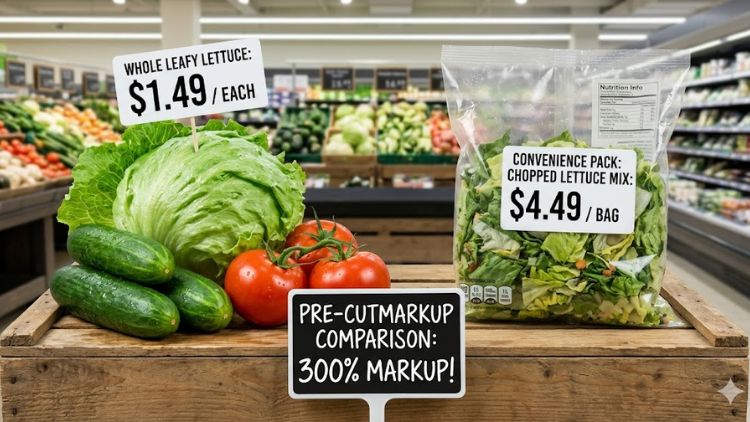
But the truth? I was paying a 300% markup just because someone else used a knife for me.
The Real Math: A whole head of lettuce is like $1.50, but that bag of chopped salad? It hits $4.50 or more.
My Move: Buy the raw stuff.
I now spend 20 minutes on Sunday afternoons doing my own chopping to save $500 on groceries.
To track your portions accurately and avoid food waste, using a high-quality Etekcity Food Kitchen Scale is a smart way to manage your budget and your health. It’s honestly the fastest way to see your total bill drop. Immediately.
Honestly, it’s the fastest way to see your total bill drop. Immediately.
Pro Tip: If it’s in a fancy plastic tub and says “ready to eat,” you’re paying a convenience tax. Just keep walking.
2. Your Store Layout is Basically a Casino
Did you know grocery stores are engineered like casinos to keep you trapped inside?
Grocery stores strategically place essentials like milk, eggs, and meat in the back to force you to walk through the entire store.
They want to force you past those flashy displays of “Limited Edition” cookies and overpriced snacks.
I started doing what I call the “Perimeter Sprint.” I stay on the very edges of the store where the actual, real food lives (produce, dairy, meat).
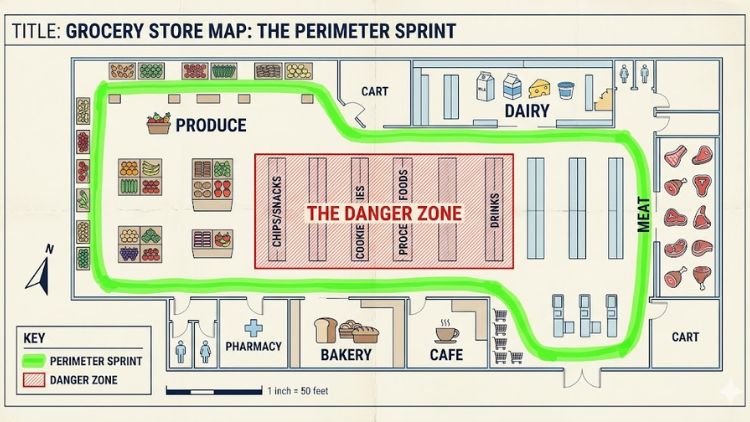
The middle aisles? Those are “The Danger Zone.”
That’s where all the high-margin, processed junk hides.
Unless I have a very specific item on my list, I don’t even glance down those aisles anymore.
Instead of paying for plastic bags at the checkout, investing in a set of TOPDesign Cotton Tote Bags is a simple way to stay organized and save money every time you shop.
3. The Store Brand Secret: It’s the Same Stuff, Guys
Switching to store brands was a bit of a blow to my ego at first.
I grew up thinking generic brands were “cheap” or just plain bad.
Man, was I wrong.
In a lot of cases, the store brand (like Kirkland or Great Value) is made in the exact same factory as the expensive ones.
The “Switch One” Method: Next time you’re shopping, just swap out three staples : like flour, salt, or canned beans for the store version.
The Result: Your bank account will thank you, and I swear your taste buds won’t know the difference while you save $500 on groceries.
4. Flip the Script with the “Inverse” Meal Plan
Most people make a list of what they want to eat and then go buy the stuff.
That’s probably the most expensive way to shop, period.
Instead, I flipped the script. I call it “Inverse Meal Planning.”
First, I see what’s already sitting in my pantry.
Then, I check the weekly store flyer to see what’s actually on sale right now.

I build my meals around the deals, not my random cravings.
If chicken is $6 a pound but pork is on sale for $2, guess what? We’re eating pork this week.
Being flexible is exactly how that $500 stays in my pocket.
5. Look for the Tiny Numbers (The Unit Price)
Stores love using “Price Anchoring” to mess with our heads.
You see a giant sign saying “10 for $10!” and your brain just screams “BUY IT!”
But look at the tiny print on the shelf tag. That’s the Unit Price (price per ounce or pound).
Don’t be fooled by the size buying a ‘Value Pack’ can sometimes cost you more than buying individual smaller items.
Sometimes buying two smaller jars is actually cheaper than that giant “Family Size” one.
The unit price is the only honest thing in the building : don’t ignore it if you want to save $500 on groceries.
6. Take a “Shelfie” Before You Head Out
I can’t tell you how many jars of cumin I’ve bought just because I “couldn’t remember” if I had some at home.
At one point, I literally had six.
Now, before I leave the house, I take a “Shelfie” a quick photo of my fridge and pantry.
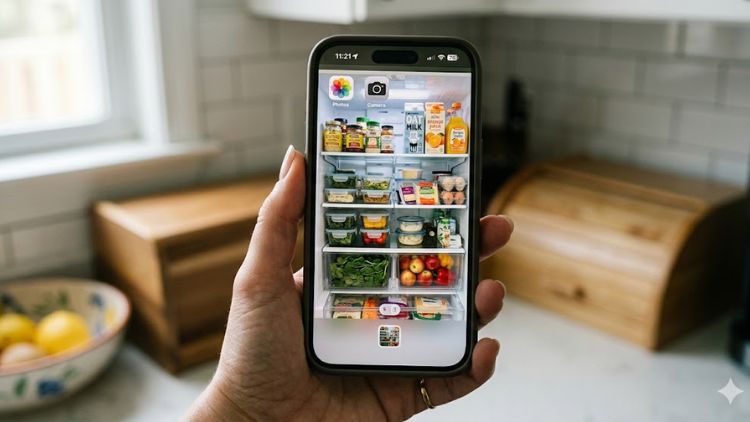
If I’m standing in the aisle wondering if I’m out of eggs, I just check the photo on my phone.
The Rule: Don’t buy a backup of anything until the one you have is 90% gone. Period.
7. Digital Gold: Use Those Cash Back Apps
if you aren’t using your phone to get money back, you’re basically throwing cash in the trash can.
This isn’t your grandma’s coupon clipping; it’s way easier.
I use a combo of two things:
Rebate Apps: I use things like Ibotta or Fetch. Just scan the receipt after shopping and get some cash back.
Store Apps: Most store apps have coupons that aren’t applied automatically.
I spend five minutes in the car before I go in “clipping” deals in the app. It adds up to $50 a month easily.
For more details on how these rewards work, you can visit the official Ibotta help center to see how easy it is to start earning money back today.
The $500 Challenge
Look, I know this might feel like a chore at first.
But once these habits click, they just become second nature.
Saving $500 a month isn’t just about the money; it’s about the freedom to upgrade your life. For more ways to save while improving your home, see these Eco-Home DIY Upgrades: 10 Ways to Boost Property Value.
It’s about having a vacation fund or a safety net for when life gets weird.
Try just two of these tips this week. Don’t go crazy.
Once you see that first $100 in savings on your receipt, you’ll never want to shop the old way again.
FAQ :
Q1: What is the 3 3 3 rule for groceries?
This is a simple strategy to avoid overbuying. Every time you go to the store, try to limit yourself to:
3 Proteins: (e.g., Chicken, Eggs, Beans)
3 Vegetables: (e.g., Spinach, Carrots, Broccoli)
3 Fruits: (e.g., Apples, Bananas, Berries) By sticking to this “3-3-3” limit, you force yourself to be creative with what you have and stop filling your cart with random items that eventually go to waste.
Q2: How to save $500 in a month?
Most people think you need to stop eating to save $500. Not true. The easiest way is the “Divide and Conquer” method. Cut $200 from your food bill by skipping pre-cut fruits and name brands. Save another $150 by eating out just two fewer times. Find $100 by canceling that gym membership or streaming sub you don’t use. The last $50? Just stop buying “impulse” items at the checkout line. It’s totally doable.
Q3: What is the 5 4 3 2 1 grocery rule?
This is the ultimate hack for people who hate making long lists. When you shop, grab:
5 types of veggies.
4 types of fruit.
3 types of protein (meat, tofu, or eggs).
2 types of grains or starches (rice, pasta, or bread).
1 treat for yourself (because we’re humans, not robots). This ensures you have enough for a full week of diverse meals without overspending on junk.
Q4: What are 7 ways to save money?
If you want a quick “money diet,” try these:
Track every cent for one week. You’ll be shocked where it goes.
Unsubscribe from marketing emails so you aren’t tempted by “Sales.”
Use the 24-hour rule for online shopping leave it in the cart and sleep on it.
Cook in bulk on Sundays.
Check your tires. Low tire pressure actually makes you spend more on gas!
Switch to a high-yield savings account so your money grows while you sleep.
Ask for a discount. Whether it’s your internet bill or an insurance quote, just asking often works.