This post may contain affiliate links, If you choose to buy through these links, I may receive a small commission at no additional cost to you.
Step outside for a second and look at your yard. What are you actually looking at?
If you’re like most people on my street, it’s just grass. Plain green grass. We dump endless buckets of water on it, waste our Saturday mornings walking behind a noisy mower, and throw cash at fertilizer bags. All for what? Grass we can’t even eat.
Honestly, one day I just got sick of it.
Two summers ago, I was looking at my water bill and almost lost my mind. Hundreds of bucks gone just to keep turf green. Meanwhile, a bag of basic organic greens at the store was getting ridiculous. So I took a shovel, tore out a big patch of lawn, and dropped actual edible plants into the dirt instead.
Best choice I ever made.
That was my personal step into the foodscaping revolution. Forget the fancy buzzwords on social media. It’s just swapping out useless turf for plants that actually put dinner on your table without making your house look like a mess.
1. Why People Are Scrapping Their Lawns
Let’s be honest mowed lawns are kind of a scam anyway. Back in the day, having a big patch of clean grass was just a way to flex on your neighbors that you had land to waste.
Nobody cares about that anymore. Things are too expensive. We want stuff that looks nice but actually does something useful. This is why more homeowners are joining the foodscaping revolution to rebuild their outdoor spaces.
Quick Comparison: Grass vs. Growing Food
| What’s the Deal? | Plain Old Lawn | Edible Yard |
| What You Get | Nothing (just grass to cut) | Real organic food every week |
| Water Bill | Massive, mostly wasted | Low if you use basic drip lines |
| Weekend Work | Endlessly pushing a mower | Planting, picking, and eating |
| How It Looks | Flat green sheet | Layered, colorful, looks high-end |
| Grocery Impact | Zero | Keeps cash in your pocket |
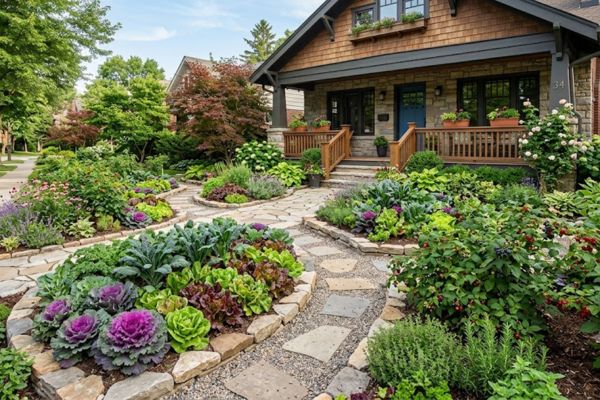
Look, participating in the foodscaping revolution doesn’t mean your front yard has to look like a messy farm with ugly dirt rows. You just mix fruit bushes, herbs, and cool-looking crops right into your current garden beds.
It still looks like a luxury setup it just happens to feed you too. If you want to pair your edible garden with a cozy outdoor relaxation spot, check out these 10 Genius DIY Fire Pit Designs to Transform Your Backyard.
2. How to Do This Without HOA Complaints
First thing everyone asks me: “Won’t my yard look like an overgrown weed patch?”
Nobody wants nasty letters from their HOA or side-eyes from neighbors. The secret to keeping it clean comes down to basic structure.
Set Hard Edges: Put down real stone, brick, or thick wooden borders around your beds. Sharp edges tell everyone’s brain “this is a planned garden, not a wild mess.”
Play with Colors: Drop dark purple kale next to bright marigolds. Or stick feathery asparagus behind low red lettuce.
Watch Your Heights: Put taller dwarf fruit trees near the back fence, medium berry bushes in the middle, and creeping herbs like thyme along your concrete paths.
Easy Plants to Start With
Don’t go crazy on day one and buy 40 different seeds. You’ll get tired, lose track, and end up with dead plants everywhere.
When starting your journey in the foodscaping revolution, pick tough perennial stuff and simple crops that basically grow themselves.
3. My Top Picks for Starters:
Blueberry Bushes: Great white flowers in spring, sweet berries in summer, and deep red leaves in autumn. Looks way better than those boring hedge bushes people buy at big box stores.
Lacinato (Tuscan) Kale: Deep blue-green leaves with awesome texture. Looks like an expensive tropical plant.
Alpine Strawberries: Great ground cover instead of weeds. Plus, you can grab a handful of tiny, super-sweet berries every time you step outside.
Rainbow Swiss Chard: Bright pink, yellow, and red stems. Super flashy in a front bed.
Rosemary and Lavender: These live forever, stay green through cold months, smell great, and bugs hate them.
4. Converting Grass Without Digging (Sheet Mulching)
Digging up a stubborn lawn with a shovel is a fast track to a sore back. I don’t do that anymore. I use sheet mulching instead.
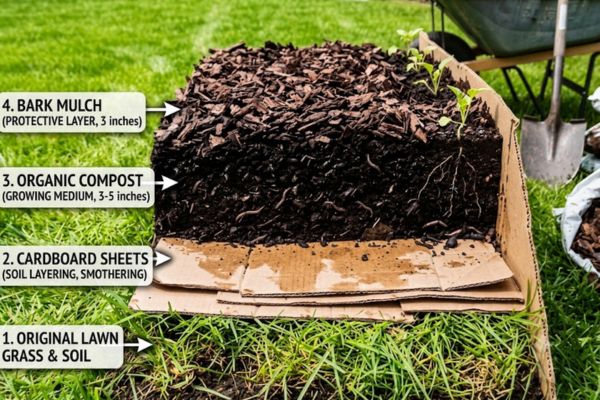
You basically smother the grass and let it rot underneath, which builds amazing dark soil automatically. According to gardening research from the Oregon State University Extension Service, sheet mulching is one of the most effective no-till methods to naturally decompose turf grass and improve soil structure without heavy tilling.
The Sheet Mulch Stack
| Layer | Material | What it does |
| Top | 2-3 inches of bark mulch or straw | Stops weeds, holds water in |
| Middle | 2-3 inches of cheap compost | Feeds plants right away |
| Base | Thick plain cardboard (overlap 6 inches) | Smothers grass, blocks light |
| Bottom | Your old lawn (cut super short) | Rots down into free plant food |
5. How to do it:
Mow the grass down as low as your mower can go.
Flat out plain cardboard over everything (tape removed). Overlap edges by a few inches so grass can’t sneak through gaps. If you don’t have enough plain shipping boxes lying around, grab a roll of this Heavy Duty Biodegradable Weed Barrier Garden Paper on Amazon to cover large lawn areas cleanly before mulching
Soak that cardboard completely with your garden hose.
Dump your compost on top, then slap the mulch on over that.
Cut a small slit through the layers to plant seedlings right away, or just let it sit over winter. By spring, you’ll have soft, dark soil ready for anything.
6. Sneaking Past Strict Neighborhood Rules
If you have a strict HOA, just use stealth techniques to bring the foodscaping revolution to your front lawn.
Swap out standard hedge bushes for blueberry plants. Mix basil, parsley, and structural rosemary right in with your flower beds. Most HOA inspectors won’t even notice they’ll just see a neat, well-kept yard with green plants and nice flowers.
Keep the walkways clear of dead leaves and don’t let weeds take over. If it looks intentional, people leave you alone.
7. Real Math: What Do You Actually Save?
A simple 200-square-foot front bed will run you maybe $150 to $250 for some compost, mulch, and starter plants.
What that bed yields in a year:
| Crop Type | Approximate Value |
| Fresh Herbs | $80 (no more $4 tiny plastic packs) |
| Tomatoes | $120 |
| Berries | $100 |
| Salad Greens & Kale | $150 |
| Lower Water Bill | $100+ |
| ESTIMATED TOTAL | ~$550+ saved |
You break even in season one. By year two and three, your berry bushes and perennial herbs are established, and it’s basically free food sitting in your yard. Looking for more smart ways to lower your weekly food spending alongside gardening? Check out my guide on How to Stop Wasting Money and Save $500 on Groceries
8. Mistakes I Made (So You Don’t Have To)
Planting Only One-Season Crops: Don’t just plant radishes and lettuce. When you pull them, you’re left with empty dirt holes. Keep 60% of your space in perennial bushes and herbs that stay put year-round.
Forgetting About Soil: Plants eat what’s in the dirt. Throw a fresh layer of compost over your beds at least once a year.
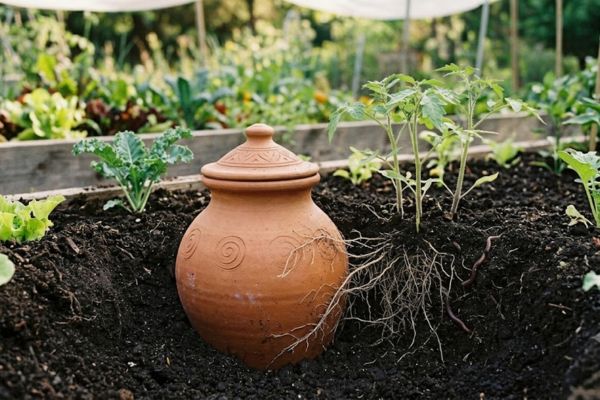
Watering by Hand: Hauling a hose through the yard every evening becomes a tedious chore very quickly. Put in a basic drip timer or use buried terracotta olla pots so the ground stays moist on its own. Instead of dragging a hose every evening, you can bury a set of Back to the Roots Self-Watering Terracotta Olla Pots on Amazon to deliver steady root-level hydration for up to a week.
Wrapping Up
Joining the foodscaping revolution doesn’t require a massive farm out in the countryside. Start small this week
Start small this week. Pick one tiny corner of your front yard, throw down some cardboard, add compost, and plant something you actually like eating.
Once you walk out your front door and pick fresh ingredients for dinner, you’ll wonder why you wasted so many years cutting grass.
FAQ :
Q1: How can I grow more food when I don’t have much space?
Think vertical instead of wide.
Use simple trellises, fences, or wall pockets for crops like cucumbers, pole beans, and small tomatoes that love to climb up. Try square-foot gardening too plant in tight grid patterns inside raised beds instead of leaving big empty dirt paths between rows. You can also tuck shade-loving greens directly underneath taller plants like peppers or tomatoes to use the exact same dirt twice.
Q2: Is there any plant you can harvest in just 7 days?
Microgreens and sprouts are your best shot if you’re in a rush.
Things like radish, mustard, and broccoli seeds germinate super fast on a bright windowsill and give you edible microgreens in roughly 7 days. Mung beans and lentils don’t even need dirt just a glass jar and a rinse of water gets you fresh sprouts in 3 to 5 days. If you want a full garden vegetable out in the dirt, radishes are the absolute fastest, taking about 20 to 25 days from seed to plate.
Q3: What vegetables have been grown in space?
Astronauts up on the International Space Station (ISS) grow fresh salad greens using specialized LED setups.
Red Romaine lettuce and Mizuna mustard were among the very first crops harvested and eaten up there in zero gravity. NASA also grew radishes because they take up very little space and grow fast, alongside dwarf Hatch chili peppers to give crew meals some actual flavor and extra vitamins.